 English
 русский
 Deutsch
 日本語
日本語
Why Office Chairs Need a Lockable Gas Spring
A standard gas spring keeps an office chair height-adjustable — but it cannot hold a fixed position under lateral or uneven load. The moment a user shifts their weight, leans to one side, or applies pressure from an angle, a non-locking spring may drift. For most casual seating this goes unnoticed. For prolonged desk work, precision tasks, or users with specific ergonomic requirements, that drift becomes a real problem.
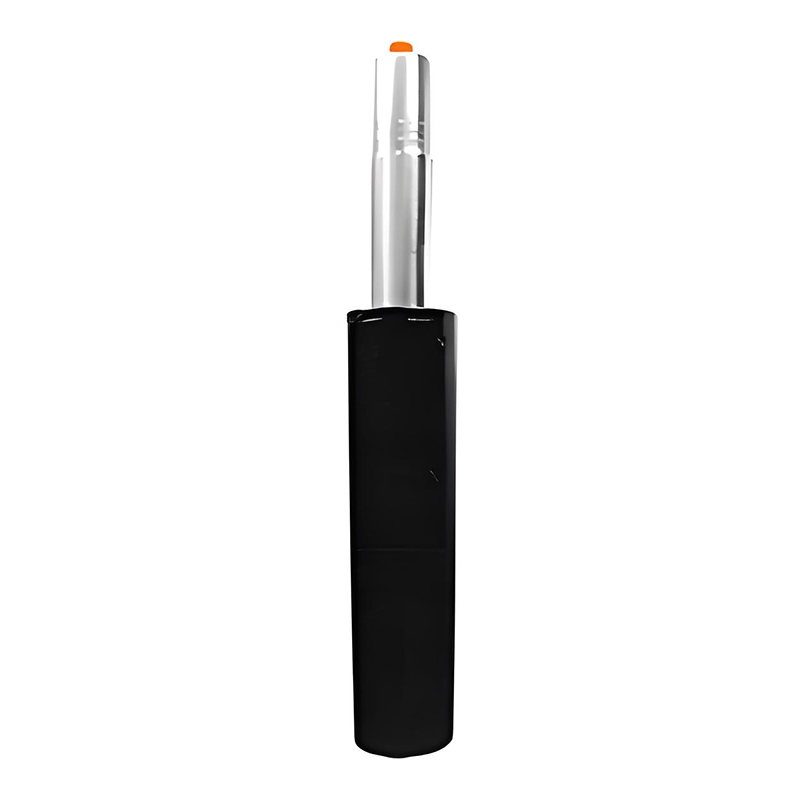
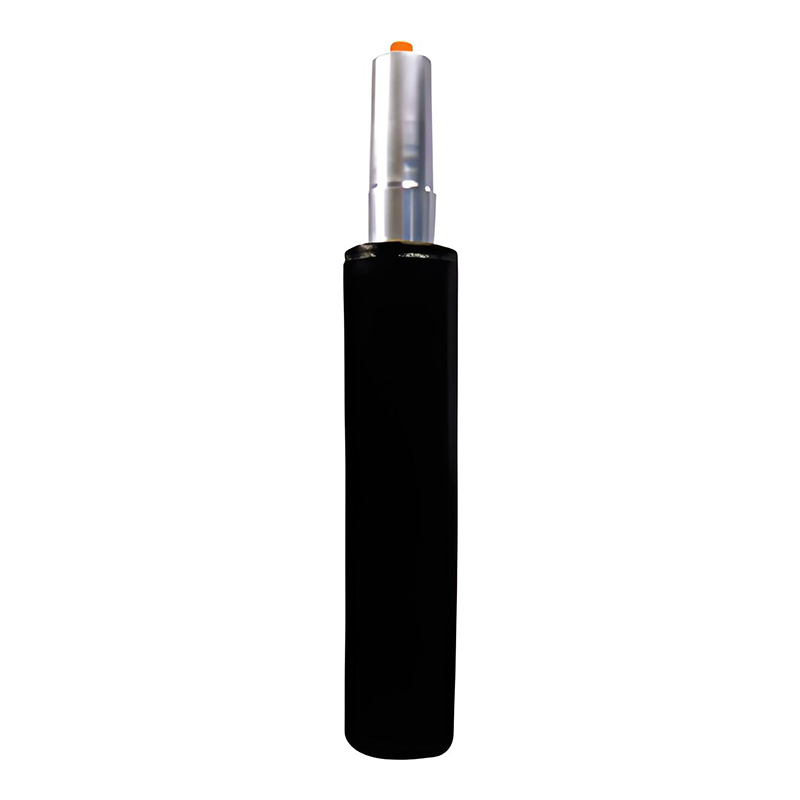
A lockable gas spring for office chair solves this by adding a mechanical or hydraulic locking valve to the standard nitrogen-filled cylinder. Once the user releases the lever and reaches their desired seat height, the valve closes and the piston rod is held firmly in place — regardless of load direction. The seat neither sinks nor rises until the user deliberately releases it again.
The ergonomic case for this is straightforward. According to OSHA's ergonomics guidelines, chairs that allow precise and stable height adjustment are central to preventing musculoskeletal strain in office environments. A lockable mechanism ensures the height stays exactly where it was set — not where gravity eventually pulls it. For details on how office chair gas springs differ from basic lift cylinders, see how gas springs support office chair ergonomics and comfort.
Content
How a Lockable Gas Spring Works in an Office Chair
The core of any gas spring is a sealed cylinder filled with compressed nitrogen. When the piston rod is pushed inward, pressure increases slightly; when released, that pressure pushes the rod back out — creating the smooth, counterbalanced lift that office chairs are known for.
What separates a lockable version is a release valve positioned between the pressure chamber and the piston rod pathway. When the valve is closed, the rod is hydraulically locked — it cannot move in either direction under normal operating loads. When the user presses the seat lever, the valve opens, allowing gas to flow and the rod to move freely. Release the lever, and the valve snaps shut again at whatever position the rod has reached.
Two locking modes are common in office chair applications:
- Elastic locking — the locked position has a slight, spring-like give. This absorbs minor shocks and feels more comfortable for long sitting sessions. Most office and task chairs use this mode.
- Rigid locking — the rod is held completely firm with no elastic movement. This suits industrial seating, precision workstations, or chairs used in healthcare settings where accidental shifts matter.
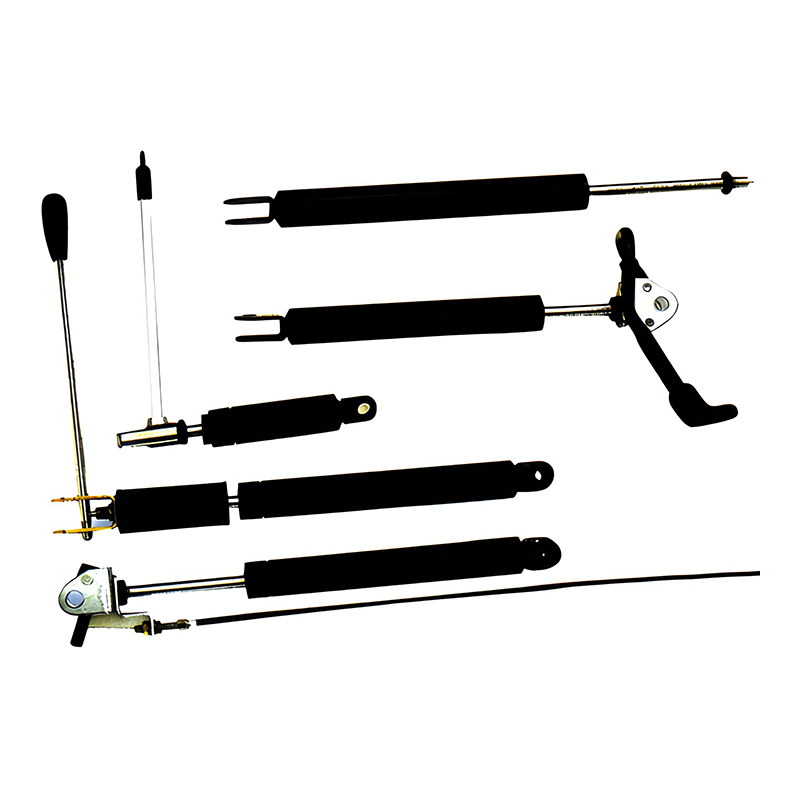
The release mechanism itself varies: it may be a push-button under the seat, a side lever integrated into the chair mechanism, or a cable-actuated trigger for ergonomic arm placement. For a deeper look at how adjustable locking systems are engineered for both comfort and industrial use, the article on adjustable locking gas spring working principles and industrial uses covers the topic in full.
Key Specifications to Check Before Buying
Not every lockable gas spring fits every office chair. Compatibility depends on four core parameters, and getting any one of them wrong means the component either won't fit or won't perform correctly.
- Outer diameter (OD) of the stem — the vast majority of office chairs use a 50 mm standard stem diameter. Confirm this before ordering, as specialty chairs (bar stools, heavy-duty executive chairs) may differ.
- Stroke length — this is the total travel distance of the piston rod, typically expressed in millimeters. A longer stroke means a wider height adjustment range. Standard office chairs usually work with strokes between 50 mm and 120 mm; standing-desk chairs or tall-user variants may require up to 180 mm.
- Force rating (Newtons) — this determines how much load the spring counterbalances. For a typical office chair supporting users up to 120 kg, a force rating in the 1,000–1,500 N range is common. Heavy-duty versions go higher. Undersizing the force leads to a chair that sinks under body weight; oversizing makes the lift feel stiff and unresponsive.
- Overall extended length — the total length of the spring at full extension must match the chair's geometry. Measure the existing cylinder if replacing; consult the chair manufacturer's specs if sourcing for OEM production.
According to OSHA's computer workstation guidance, seat height should be adjustable across a meaningful range to accommodate users from the 5th to 95th percentile — roughly 16 to 21 inches from the floor. A lockable gas spring with appropriate stroke ensures that range is not only achievable but stays locked wherever a user sets it. Browse the full range of office chair gas lift cylinders for standard and heavy-duty use to compare dimensions and force ratings.
Rigid vs. Elastic Locking: Which Is Right for Your Chair?
The choice between rigid and elastic locking is often overlooked when sourcing a replacement or specifying a new component — yet it has a direct effect on how the chair feels to sit in day after day.
| Feature | Elastic Locking | Rigid Locking |
|---|---|---|
| Feel when locked | Slight cushioned give | Completely firm, no movement |
| Comfort for extended sitting | Higher — absorbs micro-shocks | Lower — more stable but less forgiving |
| Best applications | Task chairs, executive chairs, gaming chairs | Industrial seating, medical exam chairs, precision workstations |
| Position accuracy | High, with minor flex | Absolute |
| Noise level | Near-silent | Near-silent |
For standard office environments — task chairs, executive chairs, and ergonomic seating used for desk work — elastic locking is almost always the right call. It mirrors the feel users expect from a well-built chair: firm enough to stay put, with just enough give to feel alive under movement. Rigid locking belongs in environments where accidental shifts carry real consequences, such as dentist chairs, factory seating with vibration exposure, or height-adjustable operator seats on machinery.
Installation Tips and Common Mistakes
A lockable gas spring is a sealed, pressurized unit — it cannot be disassembled or recharged in the field. Replacement is the correct approach when one fails, and the process is straightforward if a few rules are followed.
- Always install rod-down — gas springs for office chairs must be mounted with the piston rod pointing downward. This keeps the internal lubricating oil in contact with the seals, which is critical for long service life and smooth operation. Inverted mounting causes premature seal wear and oil starvation.
- Avoid side loading — the cylinder is designed for purely axial (up-down) force. If the chair base or seat plate is misaligned during installation, lateral forces will accelerate wear on the seals and guide bearings. Ensure the taper cone on both ends seats fully before applying weight.
- Do not lubricate the chrome rod — the rod's surface finish is precisely machined to work with the internal seals. External lubricants attract dust and can actually degrade seal performance over time.
- Replacement timing — the most reliable indicator that a lockable gas spring has reached end of life is loss of locking force: the seat slowly sinks even when the valve is nominally closed. A second sign is difficulty releasing — the actuator feels stiff or requires excessive force. Neither condition improves with time; replace promptly.
How to Source a Reliable Lockable Gas Spring
Quality varies significantly in this product category. The internal valve tolerances, seal materials, and chrome rod surface finish all affect how long a lockable gas spring holds its position and how many locking cycles it can reliably complete. A well-manufactured unit should handle tens of thousands of cycles without measurable force decay.
When evaluating suppliers, look for these indicators of quality manufacturing: gas springs produced to BIFMA (Business and Institutional Furniture Manufacturers Association) standards for office chair components, chrome rod hardness and surface roughness specifications provided on request, and documented cycle-life testing data. For commercial procurement or OEM applications, manufacturers who offer custom force ratings, stroke lengths, and locking mode selection are preferable to those who supply off-the-shelf sizes only.
Customization matters more than it seems. A gas spring specified precisely for the chair geometry and user weight range will outlast a generic unit — even if the generic one is dimensionally compatible. Visit our lockable gas spring product range to explore available configurations, or contact our engineering team to discuss specifications for your application.