 English
 русский
 Deutsch
 日本語
日本語
Content
- 1 What Is a Gas Spring and How Does It Work?
- 2 Gas Spring for Office Chair: Anatomy of the Most Common Application
- 3 Gas Spring Support and Gas Spring Lift Support: Industrial and Automotive Uses
- 4 Lockable Gas Spring: How Position-Holding Works
- 5 Adjustable Locking Gas Springs: Variable Force for Demanding Applications
What Is a Gas Spring and How Does It Work?
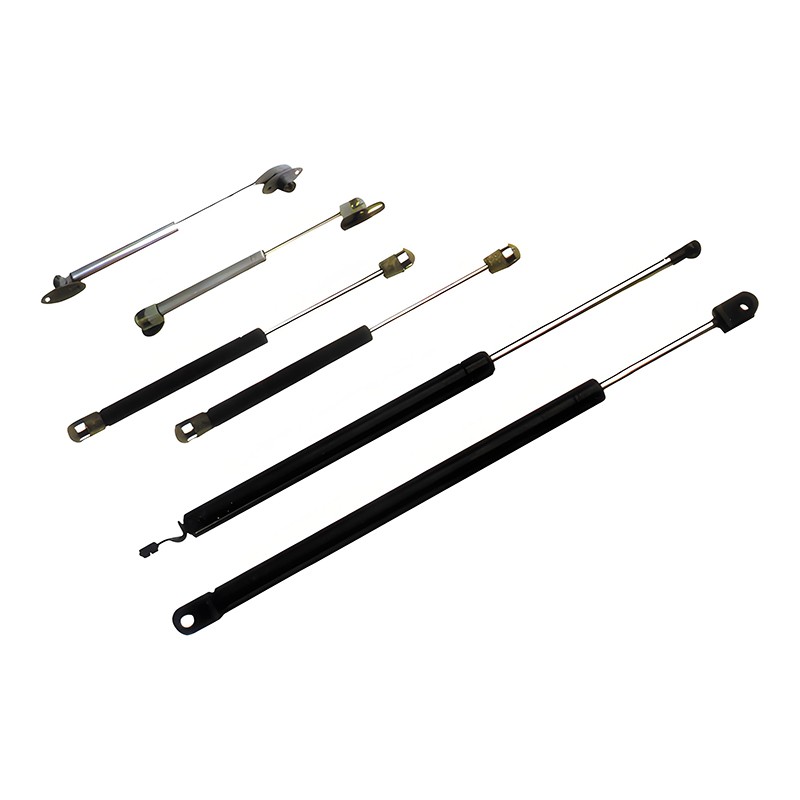
A gas spring is a sealed cylinder containing compressed nitrogen gas and a small volume of hydraulic oil, with a piston rod that extends or retracts under the influence of the internal pressure differential. When the rod is free to move, the compressed gas pushes it outward with a consistent, controlled force across the full range of travel. This makes gas springs fundamentally different from coil springs — where resistance increases progressively as the spring compresses — since a gas spring delivers relatively constant force throughout its stroke, producing smooth, predictable motion that is well-suited to height adjustment, counterbalancing, and controlled positioning applications.
The internal oil serves two functions: it lubricates the piston seal to extend service life, and it acts as a damper that controls the speed of rod extension, preventing sudden or uncontrolled movement. The ratio of gas pressure to oil volume in the cylinder determines both the extension force and the damping characteristic, and these values are set permanently at the time of manufacture. This is why gas springs are specified by force rating (in Newtons or pounds-force) and stroke length rather than by a variable setting — selecting the correct specification at the point of purchase is essential, as the force cannot be meaningfully adjusted after manufacture in standard gas springs.
Gas Spring for Office Chair: Anatomy of the Most Common Application
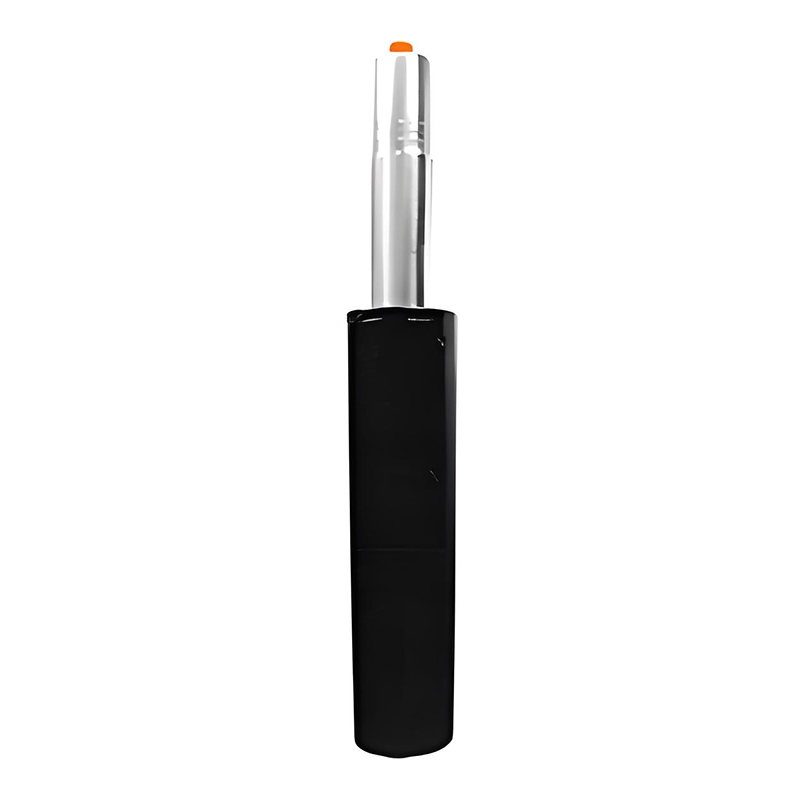
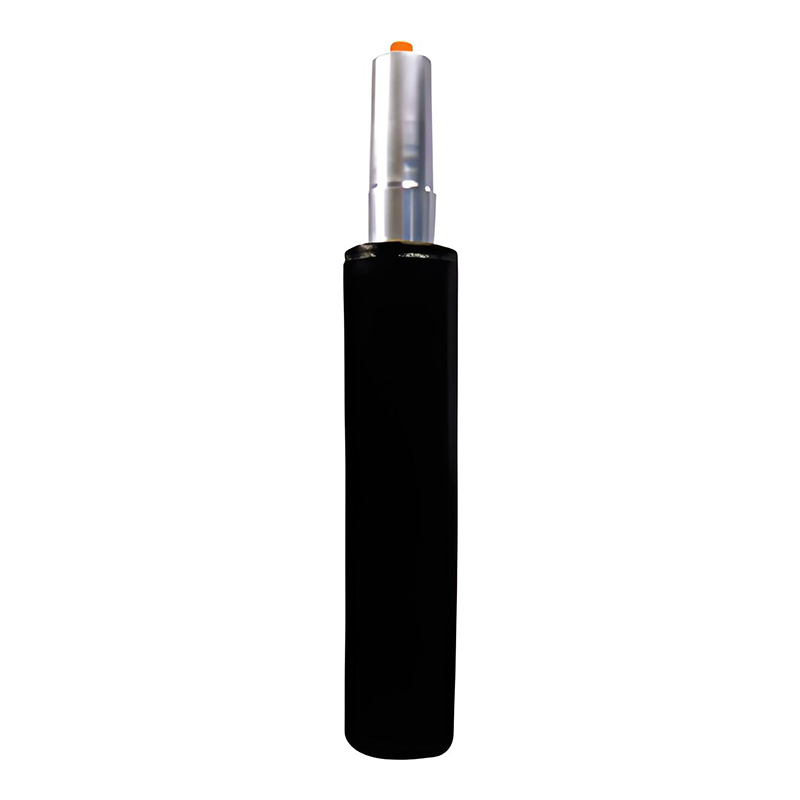
The gas spring for office chair — also called a pneumatic cylinder, chair cylinder, or chair gas lift — is the component inside the central column of virtually every height-adjustable office chair produced in the last four decades. It is a specialized variant of the industrial gas spring family, engineered specifically for the repeated short-stroke, high-cycle-count demands of seat height adjustment under dynamic loading conditions.
An office chair gas spring operates differently from most other gas spring applications in one important respect: it is a triggered gas spring, meaning the rod is locked in position by default and only moves when the user depresses the actuating lever, which releases a valve and allows the gas pressure to act on the piston. Releasing the lever re-locks the cylinder instantly at whatever height has been reached. This trigger mechanism — the small button or paddle on the underside of the seat — is the interface between the gas spring's internal pressure and the user's sitting height.
Standard Office Chair Gas Spring Specifications
- Stroke length: Typically 100mm to 150mm for standard office chairs; extended-stroke cylinders of up to 200mm are available for tall chairs or standing-desk-height stools.
- Force rating / weight capacity: Standard cylinders support users up to approximately 120–135 kg (265–300 lbs). Heavy-duty cylinders are available rated for 180–250 kg and above for bariatric or commercial-grade applications.
- Outer tube diameter: The most common standard is 50mm (Class 4), which fits the majority of aftermarket chair bases and seat mechanisms. Measure the existing cylinder's outer diameter before ordering a replacement to confirm compatibility.
- BIFMA or EN certification: Quality cylinders carry BIFMA (Business and Institutional Furniture Manufacturers Association) or EN 1335 certification, confirming they have been tested for cycle life, load capacity, and gas containment integrity.
Gas Spring Support and Gas Spring Lift Support: Industrial and Automotive Uses
Gas spring support applications extend far beyond office seating. In industrial machinery, cabinetry, automotive design, medical equipment, and aerospace applications, gas springs serve as counterbalance and positioning devices wherever a hinged, sliding, or pivoting panel needs to be held open, lowered in a controlled manner, or positioned at a specific angle without mechanical latches or continuous manual support.
Gas spring lift support — the variant most familiar to vehicle owners — is the compression or tension strut that holds open a car hood, trunk lid, hatchback, or tailgate. These components are compression gas springs: the rod is in a compressed state when the panel is closed, and as the panel is opened, the gas pressure assists the lift, counteracting the panel's weight and holding it open at full extension. When a lift support fails — typically due to gas seal degradation that reduces internal pressure over time — the symptom is a panel that no longer stays open unassisted, or that falls closed unexpectedly.
| Application | Gas Spring Type | Typical Force Range | Key Feature |
|---|---|---|---|
| Office chair height adjustment | Triggered (lockable) | 800–2,500 N | Valve-locked at all positions |
| Car hood / trunk lid | Compression lift support | 100–600 N | Holds panel open at full extension |
| Cabinet / furniture lid | Compression, free-moving | 50–400 N | Controlled opening/closing speed |
| Medical equipment positioning | Lockable gas spring | 200–1,500 N | Position-holding under dynamic load |
| Industrial machine guard | Tension gas spring | 100–800 N | Pulls panel closed from open position |
Lockable Gas Spring: How Position-Holding Works
A lockable gas spring — also called a locking gas spring or position-hold gas spring — incorporates an internal valve mechanism that freezes the piston rod in place at any point in its stroke when the actuating trigger is released. This is the defining capability that separates a lockable unit from a standard free-moving gas spring, and it is what makes lockable gas springs indispensable in applications where a panel, platform, or assembly must be held at an intermediate position under sustained load rather than simply at full extension or full compression.
The locking mechanism works by blocking the internal gas flow path between the two sides of the piston. In the locked state, the compressed gas on one side of the piston cannot equalize with the lower-pressure side, so the piston — and the rod attached to it — cannot move regardless of the external force applied, up to the rated load limit. Triggering the valve reopens this flow path, allowing the gas pressure to act and the rod to move freely until the trigger is released again.
Lockable gas springs are the preferred solution in applications such as ergonomic monitor arms, adjustable workstation surfaces, medical examination tables, dental chairs, and industrial positioning fixtures — anywhere that a user needs to set and hold a specific position hands-free while working. The key specification to verify for these applications, beyond force rating and stroke, is the side load tolerance of the lockable unit. Standard gas springs are designed for axial loading only; lockable gas springs used in articulating arms or multi-axis mounts must be specified with adequate side load capacity to prevent seal damage and premature failure.
Adjustable Locking Gas Springs: Variable Force for Demanding Applications
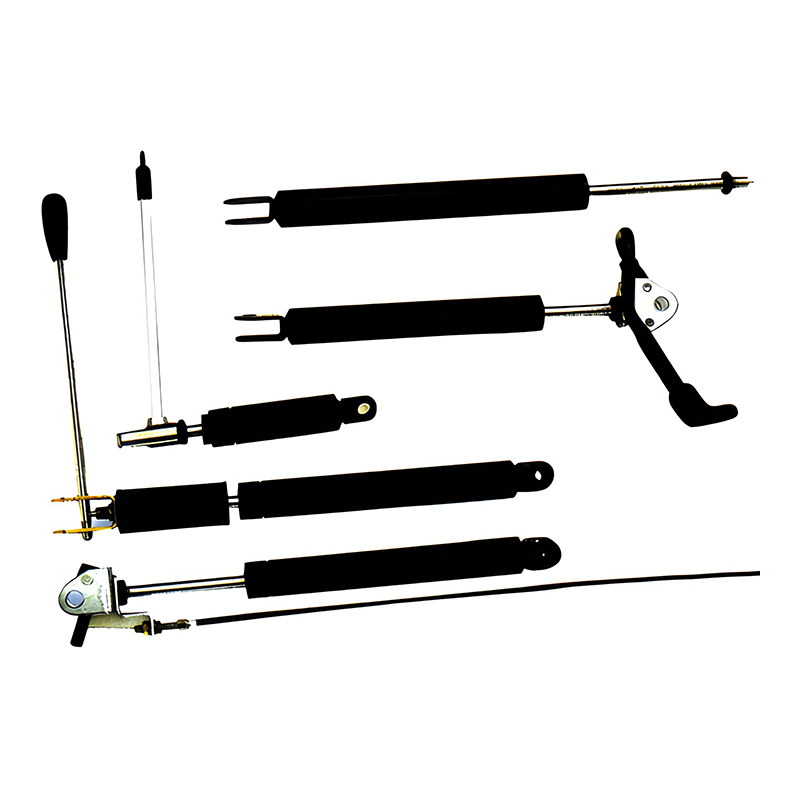
Adjustable locking gas springs take the position-holding capability of standard lockable units a step further by allowing the extension force itself to be varied after installation. This is achieved through an external adjustment valve — typically a needle valve accessible from outside the cylinder body — that allows a controlled volume of gas to be released, permanently reducing the internal pressure and therefore the extension force. Some premium variants allow force to be increased as well through a refill port, enabling bidirectional adjustment within the cylinder's rated range.
The practical benefit is significant in applications where load conditions change over time or are not precisely known at the design stage. A workstation lift table that will be used with different monitor configurations, for example, can have its gas spring force tuned on-site to match the actual load rather than requiring the designer to specify a fixed-force unit months before installation conditions are finalized. Similarly, height-adjustable platforms used in assembly lines or packing stations can be re-tuned as the equipment layout evolves without replacing the gas springs themselves.
Selection Checklist for Adjustable Locking Gas Springs
- Force range: Confirm the minimum and maximum force the unit can be adjusted to covers the expected load variation across all use cases. Do not select a unit whose minimum force exceeds the lightest load scenario — the cylinder cannot be adjusted below its lower limit without disassembly.
- Stroke length: Match stroke to the required travel range with a 10–15% margin. Operating a gas spring at the extreme limits of its stroke accelerates seal wear.
- End fitting compatibility: Ball-and-socket, clevis, or threaded end fittings must match the mounting points on the application structure. Mismatched end fittings introduce bending moments that shorten service life.
- Operating temperature range: Internal gas pressure is temperature-dependent. For applications in cold storage, outdoor environments, or heated industrial settings, confirm the cylinder's specified operating temperature range against the expected conditions.
- Cycle life rating: Heavy-use applications such as production line fixtures or frequently adjusted workstations should be specified with cylinders rated for the anticipated cycle count — typically expressed in tens of thousands of full-stroke cycles — to avoid premature seal failure in service.