 English
 русский
 Deutsch
 日本語
日本語
Press the lever under your office chair seat and the whole thing rises smoothly, holds its position under your full body weight, then drops again at the next press. That effortless mechanism — repeated hundreds of thousands of times over the life of a chair — is handled entirely by a single component: the pneumatic chair cylinder. Understanding how it works, why it eventually fails, and which specifications actually matter is the starting point for anyone sourcing, specifying, or replacing chair gas springs at scale.
Content
How a Pneumatic Chair Cylinder Works
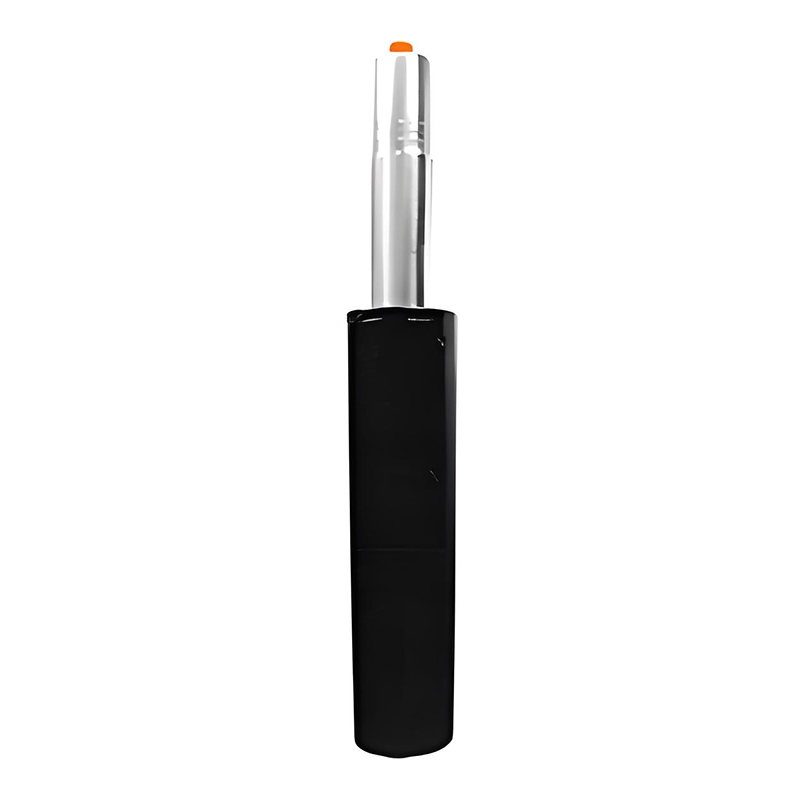
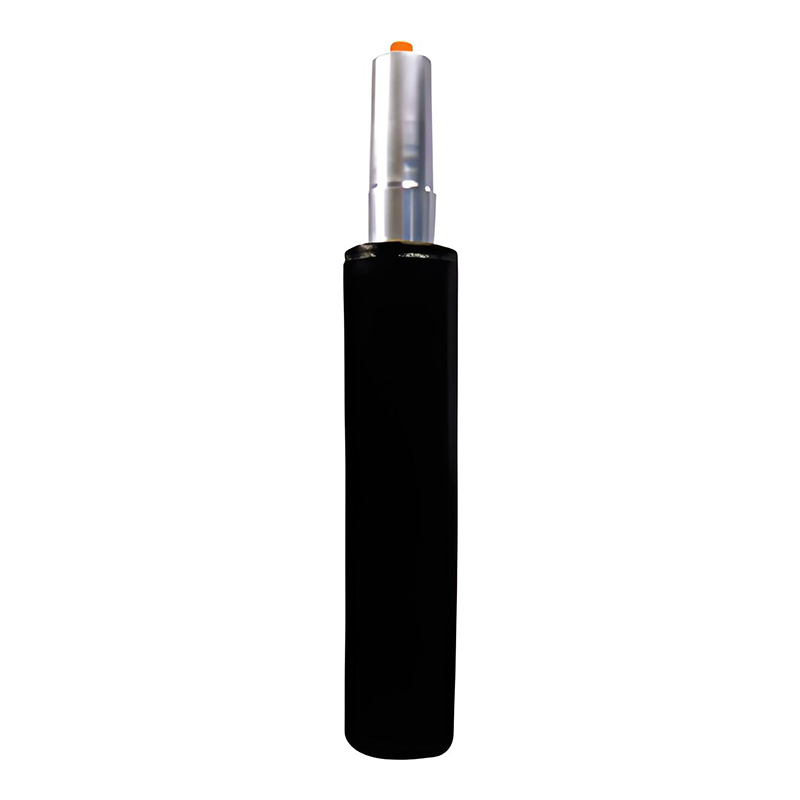
A pneumatic chair cylinder — also called a gas lift, gas spring, or chair gas cylinder — is a sealed unit filled with high-purity nitrogen gas, typically at a concentration above 99%. Nitrogen is chosen specifically because it is chemically inert: it won't react with the internal components, won't degrade seals over time, and maintains stable pressure across a wide temperature range.
Inside the cylinder, a piston rod moves through a precisely machined inner tube. When the user activates the chair's adjustment lever, a valve opens at the top of the cylinder. With the valve open and the user's weight removed from the seat (or partially reduced by standing slightly), the compressed nitrogen pushes the piston upward, raising the seat. When the user sits back down and releases the lever, the valve closes and the piston locks in position — holding the chair at the selected height regardless of the load applied above it.
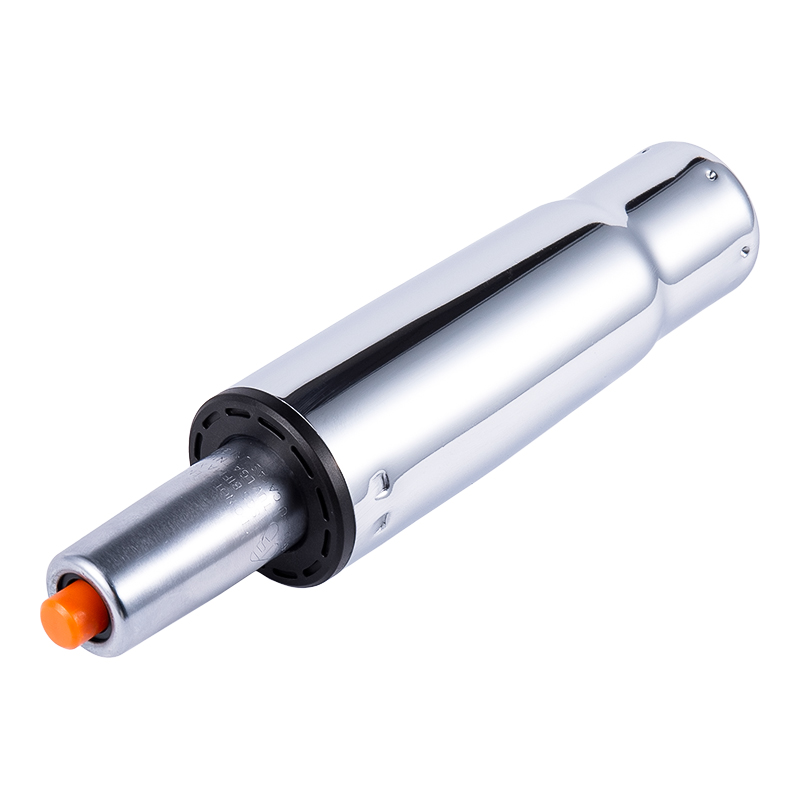
The outer cylinder provides structural support and houses the inner tube. A wiper seal at the top of the outer cylinder prevents contamination from entering while also retaining the nitrogen charge. The tapered lower end of the cylinder fits into the chair base's center socket; the tapered upper end fits into the seat plate mechanism. Both connections rely on friction-fit tapers rather than threads, which is why removing a stuck cylinder requires a pipe wrench or dedicated removal tool rather than simply unscrewing it.
One important distinction: despite being commonly called "hydraulic" in retail descriptions, genuine quality chair cylinders are pneumatic — gas-filled, not oil-filled. Hydraulic designs exist but are significantly more expensive and are not standard in office chair applications.
Common Signs That Your Chair Cylinder Is Failing
Cylinder failure rarely happens without warning. The most recognizable symptom is gradual sinking: the chair descends slowly while occupied, forcing the user to readjust height repeatedly throughout the day. This happens when the internal valve no longer seals completely, allowing nitrogen to bleed past the piston under load. The chair may hold its height when empty but sink as soon as body weight is applied — a reliable indicator of valve wear rather than a total pressure loss.
A second failure mode is the opposite: the cylinder becomes stuck and refuses to adjust at all. This typically occurs when the valve mechanism seizes due to corrosion, contamination, or mechanical wear in the activation pin. The lever still moves, but nothing happens. In some cases the cylinder has simply bottomed out and needs replacement; in others, particularly with lower-grade cylinders, the internal tube has collapsed under excessive lateral load.
Unusual resistance during height adjustment — where the chair rises or lowers in jerky increments rather than smoothly — often indicates seal degradation or contamination inside the cylinder. A properly functioning pneumatic cylinder should travel through its full stroke with consistent, smooth resistance. Any grinding, sticking, or uneven movement is a sign the unit is nearing end of life.
Some inferior cylinders fail more dramatically. Cylinders filled with impure gas, using substandard steel tubes, or with inadequate weld quality at the base can develop cracks under sustained load. This is why material quality and certification matter — a cylinder failure under a seated user is a safety event, not just an inconvenience.
Key Specifications to Understand Before Buying
Cylinder specifications are not interchangeable. Selecting the wrong size or class creates functional problems at best and safety risks at worst. The following parameters define what a cylinder can and cannot do.
| Specification | What It Means | Typical Range |
|---|---|---|
| Stroke length | Total height adjustment range from fully compressed to fully extended | 2.5" – 5.5" (65–140mm) |
| Collapsed height | Minimum height of the cylinder when fully compressed — determines the chair's lowest seat position | 270mm – 420mm |
| Outer diameter | Must match the chair base socket; most standard chairs use 50mm OD | 50mm (standard) |
| Class / load rating | Indicates structural grade and load capacity; Class 4 is the highest standard grade | Class 2 / Class 3 / Class 4 |
| Weight capacity | Maximum safe static load; varies by class and design | 150kg – 450kg+ |
Stroke length is the specification buyers most frequently get wrong. A 5.5-inch stroke cylinder installed in a chair designed for a 3-inch stroke will extend beyond the base geometry and create instability. Conversely, a short-stroke cylinder in a tall-user application leaves insufficient adjustment range. Always confirm the stroke requirement against the chair's original specification before ordering replacements.
Class 4 is the benchmark for quality office chair cylinders and should be the minimum specification for any commercial or professional application. Class 4 cylinders undergo standardized testing protocols — including rotation, push/pull, and impact cycles — and must meet defined performance thresholds throughout. Our office chair gas lift cylinders for standard and heavy-duty applications cover the full range of stroke lengths and load requirements across both Class 3 and Class 4 specifications.
Choosing the Right Pneumatic Cylinder for Different Chair Types
Chair type and end-user profile both influence which cylinder specification is appropriate. The same Class 4 label covers a broad range of designs; matching the right variant to the application prevents both over-engineering and underspecification.
Standard office chairs and executive chairs represent the largest volume application. These chairs typically require a 4"–5" stroke cylinder with a 50mm OD and a collapsed height in the 290–350mm range, accommodating seated users from roughly desk height to a comfortable ergonomic position. The primary variable is weight capacity: standard-duty cylinders rated to 150–200kg are adequate for most office environments, while heavy-duty variants rated above 300kg are appropriate for chairs intended for heavier users or high-cycle commercial use. Our standard height heavy-duty office chair gas lift cylinders are designed specifically for this segment, combining Class 4 load performance with universal fitment geometry.
Boss chairs and high-back executive chairs often have heavier seat mechanisms and higher base-to-seat distances. These applications benefit from cylinders with longer collapsed heights to maintain proportional seat positioning, and the higher structural loads from heavier upholstered seat pans favor Class 4 heavy-duty specifications. Surface finish also becomes relevant in premium chair contexts — our black electroplating adjustable office chair gas lift cylinder replacement provides both the performance specification and the aesthetic finish expected in executive chair applications.
Bar stools and counter-height seating require a fundamentally different cylinder profile. The height range for bar stool applications typically spans 580–800mm from floor to seat — significantly higher than standard office chair geometry — which demands longer cylinders with greater extended lengths. The loading pattern also differs: bar stool users often apply eccentric loads from off-center sitting positions, placing higher lateral stress on the cylinder body. Purpose-designed bar stool gas springs for height-adjustable stool applications address these geometry and load requirements with appropriate dimensional and structural specifications.
Quality Standards That Matter in Chair Gas Springs
Certification claims on cylinder packaging are only meaningful if they reflect verified testing against defined standards. Two certifications carry genuine weight in the chair component industry: BIFMA and SGS.
BIFMA (Business and Institutional Furniture Manufacturers Association) sets the performance standards most widely referenced for commercial office furniture in North America. BIFMA's seating standards include specific cycle testing requirements for gas lift mechanisms — a cylinder claiming BIFMA certification must have completed a defined number of actuation cycles without measurable performance degradation. This is a functional test, not just a dimensional check.
SGS certification indicates that the product has been tested by an independent third-party laboratory against specified criteria. For chair cylinders, SGS testing typically covers dimensional compliance, load capacity, and material verification. The combination of BIFMA performance testing and SGS independent verification provides meaningful quality assurance — more so than self-declared specifications without third-party validation.
At the material level, nitrogen purity above 99% is the relevant threshold for gas filling. Lower-purity nitrogen may contain moisture or oxygen, which accelerates internal corrosion of the cylinder tube and piston rod, degrading seal performance and shortening service life. Steel tube quality — specifically wall thickness uniformity and weld integrity at the base — determines resistance to the lateral loads that cause cylinder body failure. These are manufacturing parameters that aren't visible in a finished product, which is why supplier transparency about production processes and testing protocols matters when qualifying a new cylinder source.
For buyers specifying cylinders at volume, requesting test reports alongside product samples — rather than accepting certification claims alone — is the most reliable way to confirm that what arrives in production matches what was validated during qualification.