 English
 русский
 Deutsch
 日本語
日本語
What a Gas Spring Actually Does in a Reclining Chair
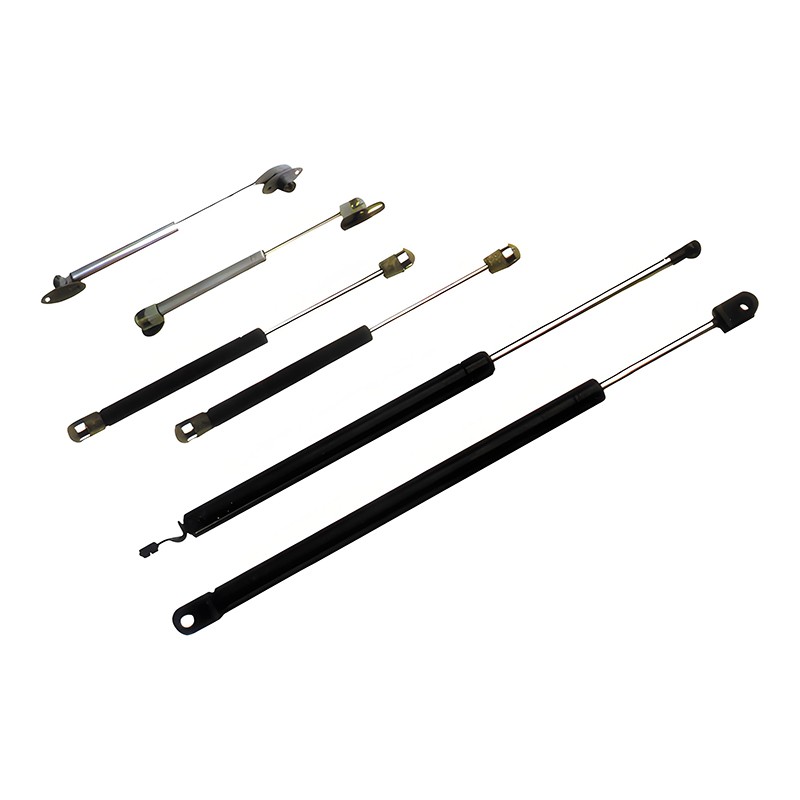
Pull the lever on a recliner and the backrest moves smoothly, holds at any angle, and returns without slamming. That controlled motion isn't a simple hinge — it's a gas spring doing the work. The component uses compressed nitrogen sealed inside a steel cylinder to generate a consistent outward force through the piston rod. In a reclining chair, this force counterbalances the weight of the backrest (and sometimes the footrest mechanism), so the user needs only light effort to move between positions.
The physics are simple but the engineering tolerance is not. Too little force and the backrest feels heavy, requiring effort to recline. Too much force and the chair snaps upright the moment pressure is released, making it difficult to hold a mid-recline position. A correctly specified gas spring makes both transitions — reclining and returning — feel effortless and fluid.
Beyond the backrest, some recliner designs use a second gas spring in the footrest or lift mechanism. Power-assist lift chairs — common in medical and senior-care contexts — use a larger-bore, higher-force gas spring to help the user move from seated to standing. Each application has different force and stroke requirements, so they cannot be interchanged without recalculating the specification.
Content
The Role of Locking: Why Recliner Gas Springs Need to Hold Position
A reclining chair that can only recline to preset stops — fully upright or fully reclined — is far less useful than one that holds at any angle the user chooses. That infinite adjustability requires a locking gas spring: a unit where the internal release valve can freeze the piston rod at any point in its stroke.
Without a locking mechanism, the backrest returns to equilibrium whenever the user stops applying pressure. The chair has no memory of position. With a lockable gas spring designed for precise position control, the user pulls the lever, reclines to their preferred angle, releases, and the chair holds there — securely, without drift — until the lever is pulled again.
This matters more than it might seem. Research on workplace posture cited in OSHA's ergonomics guidelines notes that chair backrests should recline at least 100°–110° from vertical to support a neutral spinal posture. A non-locking spring can achieve that angle momentarily — but only a locking spring keeps the user there without requiring them to maintain constant backward pressure. For medical applications, where a patient may be reclined for a procedure or rest period, a drifting backrest is not just uncomfortable: it's a safety issue. For a structural comparison of how lockable designs differ from standard springs, see how lockable and standard gas springs differ in structure.
Types of Reclining Chair Gas Springs by Application
The same core technology — a nitrogen-filled cylinder with a locking valve — gets configured very differently depending on what the recliner is designed to do and who will use it.
- Home recliner chairs — typically use elastic locking gas springs in the 100–400 N force range, with strokes of 80–150 mm. Comfort is the priority: the elastic lock gives the backrest a slightly cushioned feel when held in position, which most home users prefer over a completely rigid stop. The lever or cable release is usually integrated into the chair's armrest or side frame.
- Office recliners and executive chairs with tilt-lock — these use springs calibrated to the specific seat mechanism geometry, often with a wider force tolerance to accommodate the full range of user body weights. The stroke may be shorter than a home recliner since the tilt angle range is smaller, but the locking precision needs to be higher to prevent gradual drift during a full workday. Support gas springs for furniture and industrial applications cover this segment.
- Medical and patient chairs — blood collection chairs, infusion chairs, and rehabilitation recliners require rigid locking (no elastic give) because the position must remain fixed even when a clinician applies force during a procedure. Force ratings are higher (often 400–800 N) to handle heavier frames and users, and the materials must meet hygiene and corrosion-resistance standards. Stroke lengths can reach 200 mm or more for chairs that transition from upright to near-horizontal.
Key Parameters: Force, Stroke, and Mounting Angle
Three numbers define whether a gas spring will work correctly in a reclining chair — and getting any one of them wrong produces a chair that either won't recline properly or won't hold its position under real-world use.
- Force (Newtons) — calculated based on the weight of the components being supported (backrest, headrest, footrest if linked) and the mechanical advantage of the mounting geometry. This is not the user's body weight; it's the weight the spring itself must counterbalance. Overestimating force produces a chair that fights the user when reclining; underestimating produces one that collapses under the backrest mass alone.
- Stroke length (mm) — the total distance the piston rod travels from fully compressed to fully extended. In a recliner, this translates directly to the range of backrest movement. Measure the existing spring if replacing; calculate from geometry if designing new. A stroke that is too short limits how far the chair reclines; too long and the spring bottoms out before the chair reaches its designed maximum recline angle.
- Mounting angle — gas springs perform best when mounted close to vertical (rod pointing downward). As the mounting angle increases toward horizontal, the effective force output changes and the internal lubrication becomes less reliable. Most recliner mechanisms mount the gas spring at an angle between 15° and 45° from vertical. This angle must be factored into the force calculation and declared to the manufacturer when ordering custom units.
Understanding the full range of mounting configurations helps avoid specification errors. The guide on end mounting methods and fitting options for gas springs covers bracket types, ball joints, and clevis mounts in detail — all of which appear in recliner chair assemblies.
Elastic vs. Rigid Locking for Recliners
The decision between elastic and rigid locking in a recliner context is driven by user experience priorities — and the two modes produce a noticeably different feel.
| Characteristic | Elastic Locking | Rigid Locking |
|---|---|---|
| Feel when backrest is locked | Soft, cushioned resistance | Completely immovable |
| Absorbs shock when user shifts weight | Yes — reduces jarring | No — transfers load directly to frame |
| Ideal for | Home loungers, office recliners, gaming chairs | Medical chairs, dental chairs, procedure recliners |
| User experience | Natural, comfortable for long periods | Clinical, precise, reassuring in care settings |
| Safety in clinical use | Acceptable for non-procedure applications | Required where position must not shift at all |
Elastic locking dominates home and office applications for a clear reason: people sitting in a recliner naturally shift, fidget, and change weight distribution. A rigid lock transmits every one of those micro-movements as a jolt against a completely immovable stop. Over an evening of reading or a full workday, this becomes fatiguing. Elastic locking absorbs those shifts silently and keeps the chair feeling alive rather than mechanical.
Rigid locking earns its place where the chair is a piece of clinical or precision equipment first, and furniture second. A blood collection chair that shifts even 2° during venipuncture is a safety problem. The operator needs absolute position certainty — and elastic give, however slight, undermines that.
How to Choose and Source the Right Gas Spring
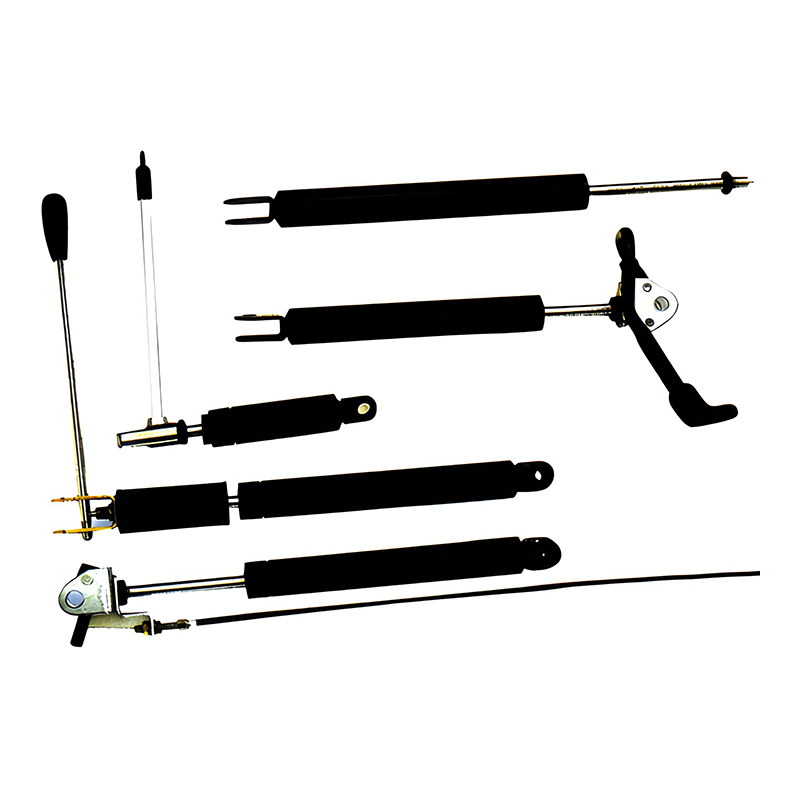
Replacing or specifying a gas spring for a reclining chair starts with measurement, not browsing. The three parameters above — force, stroke, and mounting angle — need to be known before evaluating any product. For replacements, measure the existing spring at full extension and compression, note the end fitting types (ball joint, clevis, flat bracket), and check whether the locking mode is elastic or rigid by how the backrest feels when locked.
For OEM or custom furniture production, the process is reversed: start with the chair's mechanical design, calculate the required force from the component weights and geometry, then specify the spring to match. A manufacturer who can supply custom force ratings in 50 N increments, adjust stroke length in 10 mm steps, and offer a choice of end fittings gives significantly more design flexibility than one with fixed catalog sizes.
Certifications worth verifying include cycle-life testing data (a quality recliner spring should handle 50,000+ full-stroke locking cycles without force decay), corrosion resistance test results for applications in humid environments, and compliance with BIFMA standards for furniture-grade applications. Explore our lockable gas spring product range for detailed specifications, or reach out to discuss custom configurations for your reclining chair design.