 English
 русский
 Deutsch
 日本語
A drawer type is rarely one decision. The same cabinet can be called an “undermount drawer,” a “metal box drawer,” or a “soft-close drawer,” yet those labels describe three different specifications: the box, the slide, and the closing device. That distinction matters because load rating, extension, and mounting tolerance change together. The practical way to compare different drawer types is to specify them in layers—box construction, slide mechanism, and front/clearance—and only then compare finish or internal storage layout.
High-value conclusion: start with the real load and required extension, then choose the box and slide as a matched pair. A 45 kg slide fitted to a 25 kg box is not a 45 kg drawer; it is a mismatch that usually appears later as sag, noise, or a front-panel alignment complaint. For most furniture projects, undermount slides with a stable metal or doweled wood box give the best balance. Side-mount roller slides remain the low-cost route for light storage.
Content
- 1 Drawer types start with the box, not the front
- 2 Slide types are the real performance divider
- 3 Compare drawer types by load, extension, and tolerance
- 4 Hidden indicators that decide drawer quality after installation
- 5 Where different drawer types show up in application planning
- 6 A five-step selection path that protects margin and user experience
- 7 Gas springs belong beside the drawer bank, not inside it
- 8 Maintenance and compliance checks that protect the specification
- 9 What to specify before the next drawer order
Drawer types start with the box, not the front
The drawer box is the structural tray that carries the load and transfers it to the runners. Two drawers with identical fronts can behave very differently once the box is loaded with plates, tools, or files. In procurement, the box specification should state material, joint method, bottom panel thickness, and expected load.
Solid wood drawer boxes
Beech, maple, and birch boxes with dovetail or doweled joints remain common in higher-end cabinets because they are repairable and visually familiar. They need sensible clearance for humidity movement, usually a few millimetres depending on width and finish. A well-built 16–19 mm solid wood box is comfortable in the 35–50 kg range with the correct slide, but the bottom panel and joint quality decide whether it stays square.
Metal drawer boxes
Steel and aluminium boxes offer thin walls, stable dimensions, and easy cleaning. They suit kitchens, office pedestals, and medical furniture where repeatable fit matters. Typical systems handle roughly 40–75 kg, but abrasive contents and concentrated point loads can wear coatings and create rattle. Check front-fixing brackets and bottom clearance before approving the design.
Tandem and matched drawer systems
A tandem or system drawer pairs a factory box with a specific runner family. Assembly is fast and alignment is predictable, which is valuable for repeat production. The trade-off is design flexibility: side clearance, rear clearance, and front adjustment are tied to the system. Confirm the cabinet internal width before promising a custom front size.
Box first: joint method and bottom panel control racking resistance.
Slide second: extension and load rating set the usable duty.
Front last: reveal, fixing, and adjustment determine the visible result.
Slide types are the real performance divider
When buyers compare different drawer types, they often compare slides without naming them. The runner family determines how far the drawer opens, how much load it carries, and how much installation tolerance is available.
- Side-mount slides: visible from the side, economical, commonly 25–45 kg. Good for light cabinet and furniture drawers where cost matters more than hidden hardware.
- Undermount slides: hidden below the box, usually full extension, often 35–75 kg. They demand accurate bottom machining and clean cabinet geometry.
- Center-mount slides: a single central runner for light furniture drawers, often 10–25 kg. Simple and low cost, but less stable under off-centre loads.
- Ball-bearing slides: smooth travel and higher load capacity, commonly used in workshop and tool storage from 35 kg up to 100 kg or more.
- Roller slides: budget-friendly and tolerant of minor misalignment, but generally less precise than ball-bearing or undermount systems.
- Soft-close and push-open: these are closing features, not a separate load class. Check damper force, door-front weight, and the 2–5 mm opening gap needed for push-to-open.
Compare drawer types by load, extension, and tolerance
Planning ranges only. Confirm exact load and cycle data with the selected hardware supplier before releasing a production order.
Hidden indicators that decide drawer quality after installation
The visible drawer front tells you little about adjustment risk. In factory audits, a small number of hidden conditions consume most of the rework time. The weighting below is a qualitative planning view, not a laboratory benchmark.
30%
Slide alignment
25%
Load margin
18%
Front reveal
15%
Damper wear
12%
Finish and cleaning
Where different drawer types show up in application planning
Application context changes the specification more than catalogue photographs do. A kitchen pot drawer, an office filing pedestal, and a workshop tool drawer may all be “full-extension drawers,” but their load profile, cycle life, and cleaning expectations are different.
- Kitchen 38%: deep pot drawers, cutlery inserts, soft-close, moisture resistance.
- Office 24%: pedestals and filing drawers, lock options, 35–50 kg duty.
- Workshop 18%: tool drawers, ball-bearing slides, 80–100 kg duty.
- Bathroom 12%: vanity drawers, corrosion resistance, smooth cleaning.
- Medical and lab 8%: quiet movement, light loads, cleanable surfaces.
A five-step selection path that protects margin and user experience
- Define the real load: contents plus drawer front plus a dynamic factor. For repeated opening, a 1.3–1.5 safety margin is a practical starting point.
- Choose extension before brand: full extension helps deep drawers and corner access; partial extension may be enough for light bedside or display furniture.
- Pair box and slide: check bottom panel thickness, side clearance, rear clearance, and fixing screw positions. Undermount systems are less forgiving than side-mount systems.
- Set the tolerance budget: a cabinet with wide dimensional variation should not be paired with a tight-tolerance undermount drawer without extra fixture control.
- Validate compliance and service: request cycle data, corrosion reports, and spare-part availability. The ROI lever is usually standardization: one slide platform across several cabinet widths reduces SKUs, training, and warranty diagnosis.
Gas springs belong beside the drawer bank, not inside it
A gas spring is not a drawer slide. It controls lift force, holding position, and return motion. In drawer-heavy furniture, it usually appears above the drawer bank: a lift-up flap on a wall cabinet, a heavy worktop, or an adjustable seat. Specifying a support gas spring with the cabinet system prevents the common mistake of using the drawer slide to absorb flap or worktop loads.
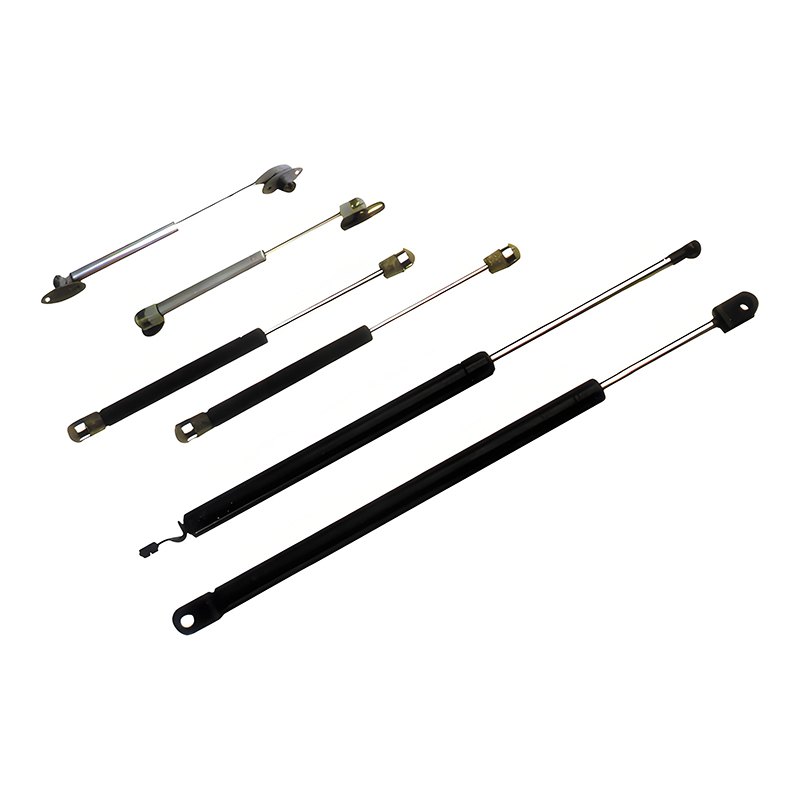 Compact Support Gas Spring for Cabinet Lift ApplicationsCompact gas spring for lift-up cabinet flaps and worktops stops at any height and offers 40–1200 N force across multiple stroke options.View Product →
For a worktop or storage lid that must hold a position while the drawer is loaded, a lockable gas spring is often more suitable than a friction hinge. Automatic lift struts suit overhead compartments that need assisted opening. These are adjacent motion decisions, not replacements for drawer slides. Cabinet and machinery support applications are covered in more detail in our guide to gas spring supports in cabinet and machinery.
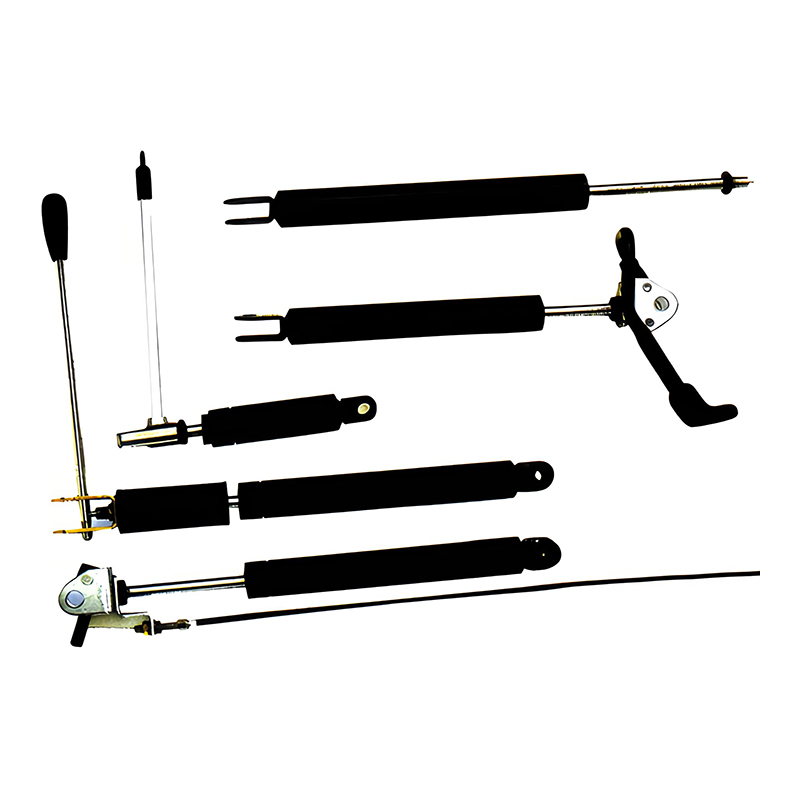 Lockable Gas Spring for Adjustable Chair and Seat PositionsLockable gas spring holds office-chair backrests and seats at desired angles, with 450–1200 N support and smooth, quiet adjustment for repeated positioning.View Product →
Maintenance and compliance checks that protect the specification
- Cycle test: domestic furniture often targets 50,000 open-close cycles; contract and workshop use may require more. Record the load used during the test.
- Load and deflection: check the drawer at full extension, not only closed. Sag at full extension is a common source of front-panel rubbing.
- Clearance: keep a 2–3 mm front reveal where adjustment is needed, and follow the slide maker’s side and rear clearance exactly.
- Corrosion: bathroom and coastal projects need a defined finish and salt-spray expectation, especially for visible metal boxes.
- Standards and documents: reference EN 15338 for extension elements or ANSI/BIFMA X5.5 for desk products where relevant, and keep supplier test reports with the approved sample.
What to specify before the next drawer order
Write the drawer specification in layers: box material and joint, slide family and extension, rated load at full extension, mounting tolerance, closing feature, finish, and test evidence. That format makes different drawer types comparable without relying on vague labels. It also separates the drawer slide from adjacent hardware such as support or lockable gas springs, so each component carries the load and motion it was designed for.