 English
 русский
 Deutsch
 日本語
日本語
A facility engineer once ordered a 400 N gas spring for a machine guard straight from a catalogue. It worked for two months, then failed to hold the guard open above 30 °C. The opposite happens too: a seat lift specified for 80 kg cannot raise a 100 kg operator because the dynamic force was never verified at the correct stroke position.
Here is the conclusion up front: a custom damper is not a premium accessory. It is what you get when bore size, gas pressure, rod diameter, seal compound and end fittings are matched to the actual application. Standard parts suit standard conditions; custom parts remove uncertainty caused by temperature, speed, load and cycle life.
High-value conclusion: Before buying another damped motion device, verify the full design envelope, not just the nominal force. A custom damper costs modestly more at the start and lowers replacement frequency, warranty claims and redesign effort.
Content
- 1 Core Principles: What Makes a Damper Truly Custom
- 2 Type-by-Type Data Comparison for Custom Dampers
- 3 Hidden Metrics That Dictate Field Performance
- 4 Where Custom Dampers Show Their Real Value
- 5 ROI and Sourcing: Why Custom Usually Beats Catalogue
- 6 Maintenance and Compliance: Keeping the Custom Damper Honest
Core Principles: What Makes a Damper Truly Custom
The physics behind a gas-spring damper is simple: a fixed amount of nitrogen gas is sealed inside a cylinder, and the gas is compressed when the rod enters. The resulting force depends on rod diameter, gas pressure, piston area and sealing-system friction. Change one parameter, and the whole force curve moves.
These four variables define the custom damper:
Gas pressure and bore
They define the nominal extension force. Five bar can be enough to convert a sagging lid into a stable platform.
Rod diameter and finish
The rod sets the difference between extension and compression forces and protects against corrosion. Chrome-plated rods resist wear; black electroplated finishes suit decorative interiors.
Sealing compound
High temperature calls for fluororubber seals; high cycle rates call for low-friction seals. People usually notice this only after a leak appears.
End fittings
Wrong mounting creates side loads, which accelerate wear and reduce effective stroke.
In practice, a custom damper starts from the load and works backwards: choose the bore, stroke, gas filling and seal package, then validate with samples. The basic mechanics of gas spring rods explain why the rod area, not the full piston area, is the active surface that determines the force difference between compression and extension.
Lockable gas springs: when position holding matters
Lockable versions add a valve mechanism that holds the piston rod in place at any point in the stroke. Applications such as adjustable armrests, medical bed frames and workstations need this: the user sets a position and expects it to stay, even under changing external load. The lock sleeve and release mechanism both affect damping feel, side-load tolerance and release effort. If the damper must hold a load indefinitely, the internal sealing concept has to be designed differently from a free-moving support unit.
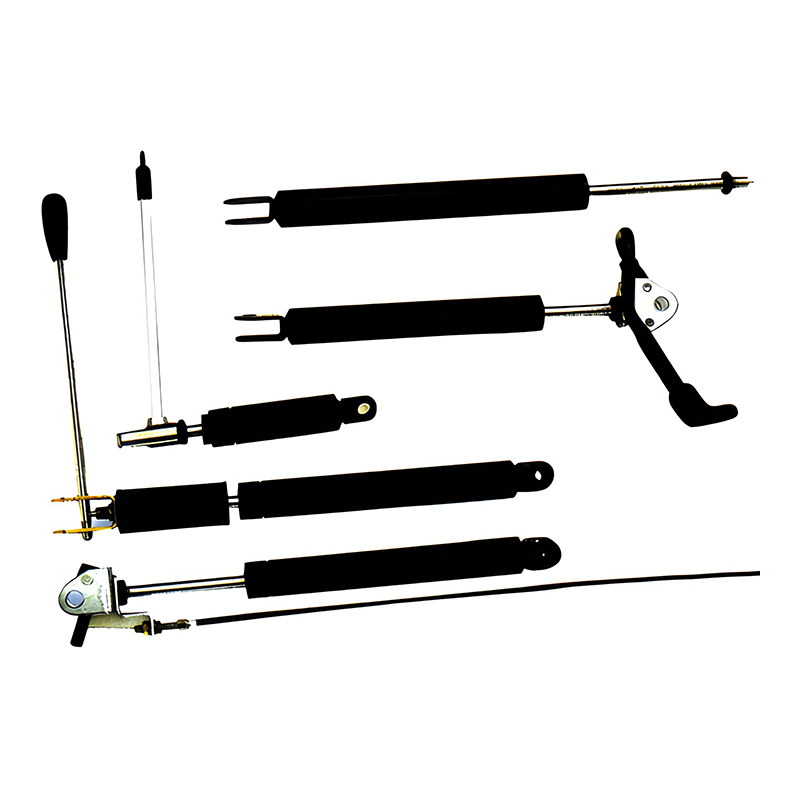 Lockable Gas Spring for Stable Position HoldingLockable gas spring with internal dual-lock valve that stops at any point in its stroke, ideal for adjustable armrests and medical bed frames requiring stable positioning.View Product →
Type-by-Type Data Comparison for Custom Dampers
Not every damper performs the same job. The table below summarises what you can reasonably specify for the main gas spring families found on our production lines.
| Type | Force Range (N) | Stroke Range (mm) | Typical Duty | Prototype Lead Time |
|---|---|---|---|---|
| Standard support gas spring | 50-1,000 | 50-500 | Lids, hatches, panels | ~15 working days |
| Lockable gas spring | 100-1,500 | 80-400 | Adjustable seating, medical equipment | ~20 working days |
| Autoreturn gas spring | 100-800 | 50-300 | Spring-loaded covers, return gates | ~15 working days |
| Seat lift cylinder | 150-2,000 | 100-300 | Office chairs, bar stools | ~15-25 working days |
These figures are starting points, not guarantees. The final force curve and envelope are determined by operating temperature, cycle rate and mounting geometry. The main difference between a lockable and a standard gas spring is the internal locking sleeve; the lockable vs standard comparison detail explains how that sleeve changes free-stroke behaviour and over-centre locking.
If your product needs a controlled return stroke, an autoreturn gas spring is typically configured with a lower-friction seal and a stronger compression bias so the lid closes back under control. For applications where the unit must hold a panel at a fixed position without a latch, a locking type is usually the more robust route.
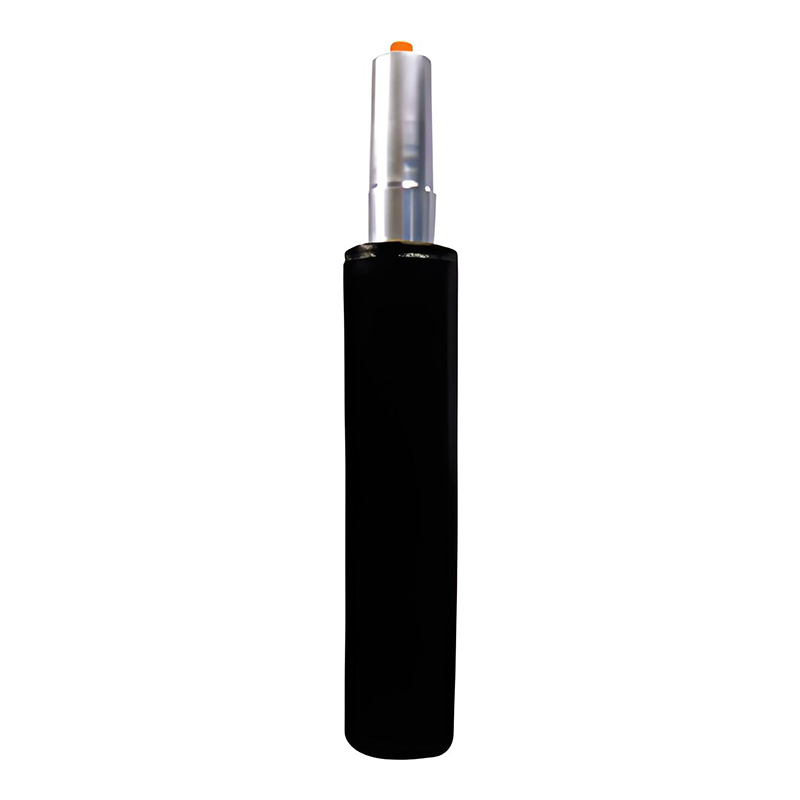
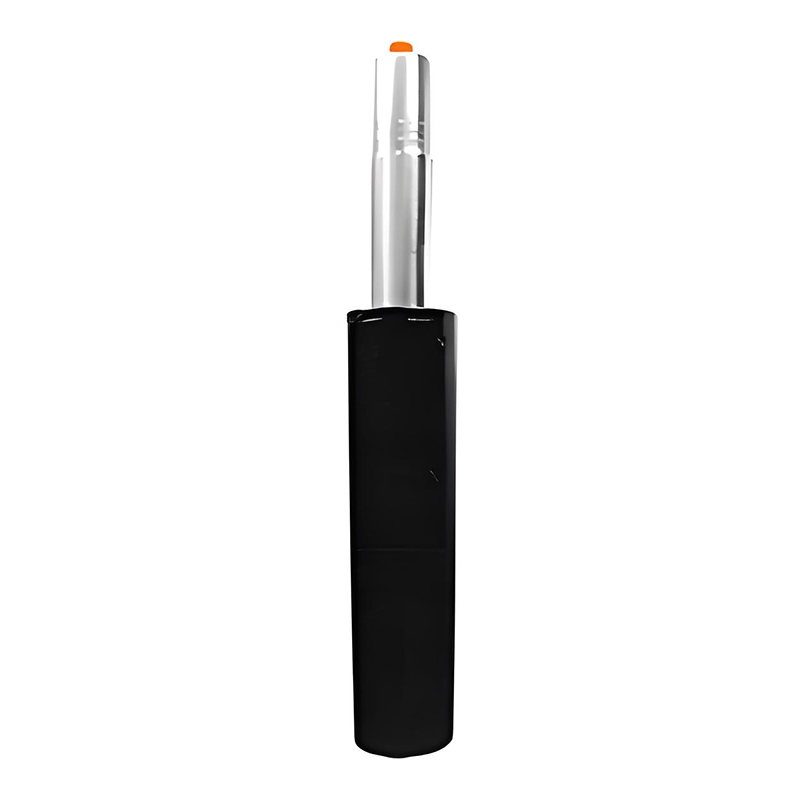 Compact Auto-Return Gas Spring for Space-Constrained ApplicationsThis compact auto-return gas spring eliminates height adjustment for a smaller footprint, automatically returning to its preset position when vacated, suiting precision tools and medical devices.View Product →
Hidden Metrics That Dictate Field Performance
Nominal force is the number most buyers see. In practice, five hidden metrics decide whether a custom damper survives in the field.
- Friction ratio — the static force required to start movement is higher than the dynamic force. High seal friction makes the unit feel sticky at low speed and inconsistent under rapid input.
- Temperature sensitivity — gas pressure follows the ideal gas law. A damper rated at 20 °C can lose 10-15% of its nominal force at -10 °C and gain a similar amount at +60 °C. Good design puts the target force at the midpoint of the real working range.
- Speed dependence — damping behaviour changes with rod speed. A slow, controlled stroke for a medical lid needs a different orifice scheme than a guard cover that must resist a sudden push.
- Corrosion and surface treatment — chrome-plated rods resist wear better; electroplated black surfaces fit decorative furniture applications. The choice alters service life and warranty exposure.
- Force tolerance — common mass-market products are quoted at ±10% relative to nominal force. A manufacturer that tests every stage can hold a tighter band, which is what consistency-driven OEMs need.
In our test data, seal compound is the largest contributor to long-term force loss. The chart below shows measured force retention after repeated cycling:
98% - Custom
87% - Standard
96% - Custom
82% - Standard
Force retention after 100,000 (left pair) and 200,000 (right pair) cycles.
Specifying a custom damper without these metrics is like buying a tyre by diameter only: it fits the wheel but may fail on the road. The practical fix is to provide the manufacturer with a short duty cycle profile: number of strokes per day, environmental temperature range, and the maximum holding period for lockable types.
Where Custom Dampers Show Their Real Value
Across our order book, custom dampers appear when a motion profile must be repeatable, safe, or comfortable. Office seating and furniture reward tuning for weight distribution; automotive parts demand stable force from -30 °C to +80 °C; industrial machinery values locking capability and corrosion resistance; medical equipment prioritises smooth motion and adjustability.
- Office seating & furniture — 35%
- Automotive — 30%
- Industrial machinery — 20%
- Medical & consumer — 15%
Industrial guard covers, access panels and hatches
For heavy guard covers and access panels, a support gas spring is the workhorse. It holds the load continuously, avoids sudden closure and removes the need for counterweights. Customising force to cover weight and pivot position is the first step; rod surface finish and seal selection protect against dust, coolant mist and washdown agents.
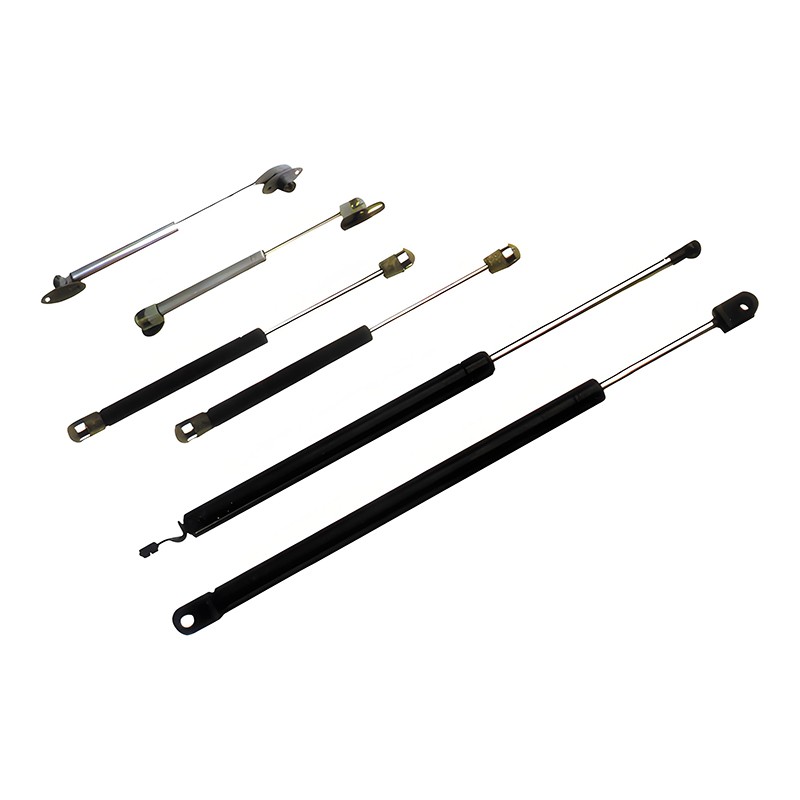 Support Gas Spring for Heavy Panels and CoversSupport gas spring with a compact build that holds heavy covers at any height, simplifying installation and reducing system cost compared to counterweights.View Product →
ROI and Sourcing: Why Custom Usually Beats Catalogue
The piece cost of a custom damper is slightly higher. The system cost, however, is usually lower once you include installation time, adjustment labour, premature replacements and safety-related investigation.
- Define the motion profile — specify open/close force, operating speed, opening angle and cycle frequency.
- Establish mechanical constraints — available stroke, mounting centres, space for the cylinder body, side-load risk.
- Set environmental limits — temperature range, humidity, dust, chemicals and required surface finish.
- Validate with prototypes — measure force at multiple rod positions and temperatures before approving mass production.
- Commit to batch production — a documented custom spec reduces scrap, inspection time and field failure rate.
We follow this sequence on every OEM order. As a full-process manufacturer with engineering support, Changzhou Andefu can also work from customer drawings or samples, which shortens the path from concept to a validated part. That is the practical meaning of “custom” in a custom damper: the manufacturer is designing around your duty cycle, not around a catalogue.
Maintenance and Compliance: Keeping the Custom Damper Honest
A custom damper will not hold its precision forever. Routine checks should cover the rod surface for scratches, the seal area for oil film and the force at both the beginning and end of stroke. Lubrication intervals depend on the application: furniture may be checked annually, automotive parts after 50,000 cycles.
Compliance matters when products cross borders. Components sold to automotive and electronics customers are usually expected to meet REACH or RoHS requirements; structural parts need mechanical safety verification for the regions they are sold in. Ask the manufacturer for supporting documentation before the first audit.
ADF supports this with in-process inspection, automated production lines and a 6,000 m² facility with 15 lines, giving a practical basis for consistent custom output.