 English
 русский
 Deutsch
 日本語
日本語
An engineer fits a gas spring to a 12 kg machine guard and expects it to hold the cover at any angle. At room temperature the guard balances perfectly. On a cold morning the same guard sags, and the supplier receives a complaint about a faulty batch. The spring is not broken. The specification simply treated a gas spring as a perfectly constant-force device, and that misunderstanding is worth correcting before you order production quantities.
Short answer: gas springs are near-constant-force devices, not mathematically constant-force devices. Across the full stroke, a well-manufactured spring rises by only about 3–10% in output force, and that force drifts roughly 3.4% for every 10 °C change in ambient temperature. Size for the lowest operating temperature, and a gas spring will behave almost exactly as the force curve promises.
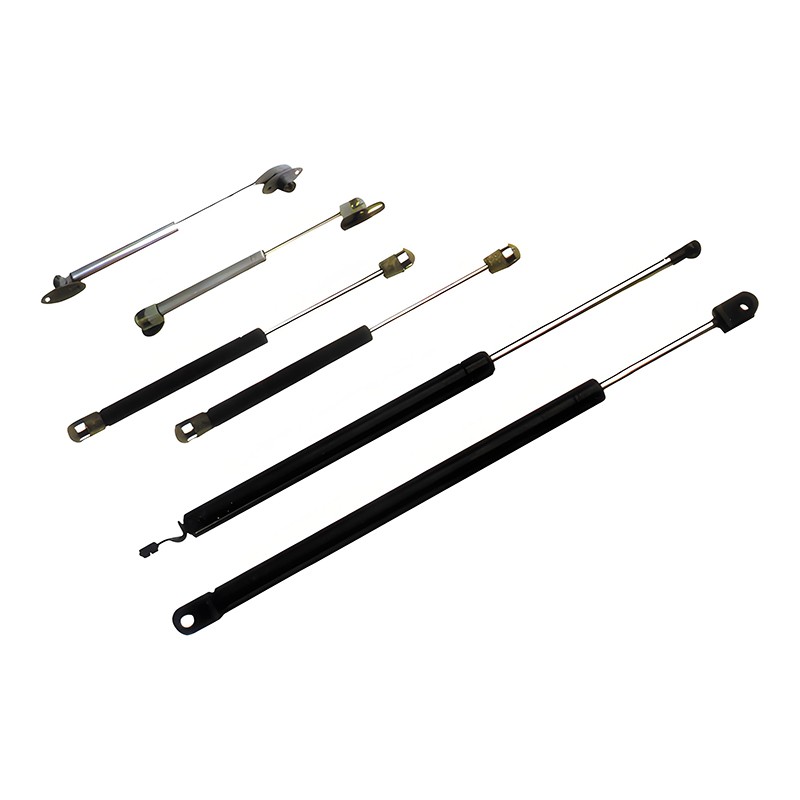
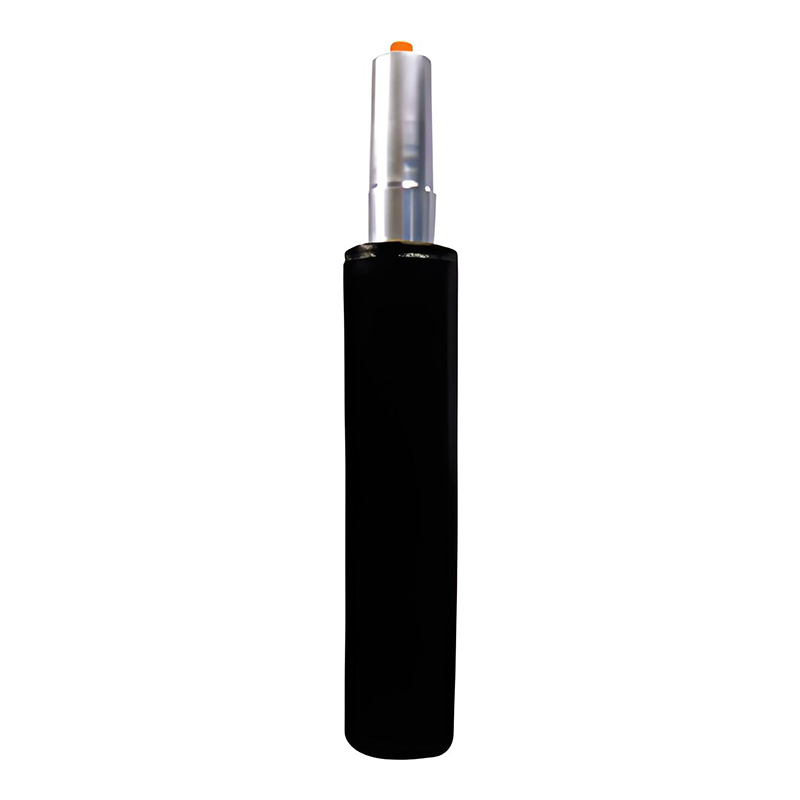
 Chair Gas Cylinders for Height-Adjustable SeatingThis supplier listing focuses on gas cylinders for office chairs, bar stools, and similar seating, offering standard and custom height-adjustment solutions with durable construction.View Product →
A steel cylinder, a precision-ground rod, a charge of pressurized nitrogen, and a small volume of oil: this is the entire platform behind the phrase "constant force." The following sections explain how this construction creates a flattened force curve, how to read force data correctly, and where near-constant behavior breaks down in real applications.
Content
- 1 Why Gas Springs Are Called Constant-Force Devices
- 2 The Real Force Curve: What the Data Sheet Does Not Show
- 3 Gas Spring vs. Coil Spring vs. Lockable Gas Spring
- 4 Where the Force Characteristic Matters Most
- 5 Selecting the Correct Force: A Six-Step Checklist
- 6 Maintenance and Compliance: Protecting the Near-Constant Force
Why Gas Springs Are Called Constant-Force Devices
The force of a gas spring comes from gas pressure acting on the cross-sectional area of the piston rod, not on the cylinder bore. Since rod area is fixed and nitrogen pressure stays relatively stable through the stroke, the resulting force is far flatter than any mechanical spring curve.
- The gas law works in your favor. When the rod enters the cylinder, it displaces only a small fraction of the total gas volume. In a typical spring, the volume reduction over the full stroke is 3–10% of the gas chamber, so pressure rises gently and the force curve stays nearly horizontal.
- Force is set by charge pressure at the factory. Manufacturers like ADF tune each spring to a specified P1 extension force at a reference temperature. Changing the nitrogen pressure changes the force without changing the geometry, which is why custom force settings are a standard service rather than special engineering.
- Oil is for damping, not for force. A measured oil charge is pushed through small passages at the end of the stroke to control the final movement. This damping is velocity-dependent, so a slow-moving lid feels softer than a thrown-open one.
- Seal friction creates hysteresis. The force you feel while pushing the rod in (P2) is lower than the force while it extends, by a gap of typically 5–12%. This is normal seal and guide friction, and it explains why a static force measurement is always given as a range, not one number.
If you want to review the internal construction in more detail, our explainer on how gas spring rods work walks through the piston, seal stack, and gas charge step by step.
The Real Force Curve: What the Data Sheet Does Not Show
On a test bench, a "constant-force" gas spring produces a slightly rising curve. A unit rated at 500 N extension force typically reads around 500 N fully extended and 520–550 N fully compressed. A coil spring, by comparison, starts near zero and climbs linearly with deflection.
Gas spring force across stroke
Coil spring force across deflection
Bar heights compare force as a percentage of rated output at corresponding stroke positions. A 500 N gas spring stays within roughly 500–542 N; a coil spring must deflect 100% to reach its rated force.
Temperature is the hidden variable. Nitrogen follows the gas law, so force shifts about 3.4% per 10 °C. The same 500 N spring reads roughly 517 N at 30 °C and around 483 N at 0 °C. Outdoor equipment must be sized at the coldest operating temperature, not at the workshop temperature.
Gas Spring vs. Coil Spring vs. Lockable Gas Spring
The right comparison depends on your load. A lid that must stay balanced at any angle is a different engineering problem from a suspension that must absorb shock. The table below summarizes the behavior that matters at the purchasing desk.
| Parameter | Standard gas spring | Mechanical coil spring | Lockable gas spring |
|---|---|---|---|
| Force-stroke profile | Nearly flat; 3–10% rise from full extension to full compression | Starts near 0 and rises linearly with deflection | Nearly flat while moving; locks to hold the rod at an intermediate position |
| Rated force reference | P1 at full extension | Force at a specific deflection | P1 at full extension, plus locking force rating |
| Damping | Integrated oil damping at end of stroke | Usually none | Integrated oil damping and a lock valve |
| Position holding | Not available | Not available | Available on demand |
| Typical service life | 20,000–100,000+ cycles depending on specification | Very long in low-cycle use | 20,000–50,000 cycles for the lock mechanism |
| Temperature sensitivity | About 3.4% per 10 °C | Minimal | About 3.4% per 10 °C while free-moving |
| Best-fit applications | Lids, hatches, seats, consoles, machine guards | Suspensions and static preload | Folding seats, monitor arms, medical beds, adjustable handles |
The practical takeaway: if you need position holding, a standard spring cannot be retrofitted. Select the lockable variant from the start, because retrofitting a lock valve into an existing cylinder is rarely cost-effective.
Where the Force Characteristic Matters Most
A mid-sized manufacturer such as ADF sees a fairly predictable order mix. The near-constant curve is valuable wherever the counterbalanced load stays roughly constant, and it creates problems only when a designer expects a fixed force regardless of temperature or rod position.
- Seating and ergonomic furniture — 35%
- Automotive tailgates, hoods, and trunk decks — 27%
- Industrial machine guards and access panels — 20%
- Medical, marine, RV, and consumer goods — 18%
The percentages are an illustrative mix drawn from typical order books of spring suppliers in this product category; actual numbers vary by region and season. Seating dominates because an office chair gas lift must hold a body weight with only a small rise in force across the height-adjustment range, and a lockable gas spring is needed whenever that chair also has to lock in a set position. Bar stool gas springs follow the same logic at shorter strokes.
For sliding panels, retractable covers, and self-closing access hatches, the requirement is different: the spring must push the load back to a home position with a defined return force. An auto-return gas spring is built for exactly this case:
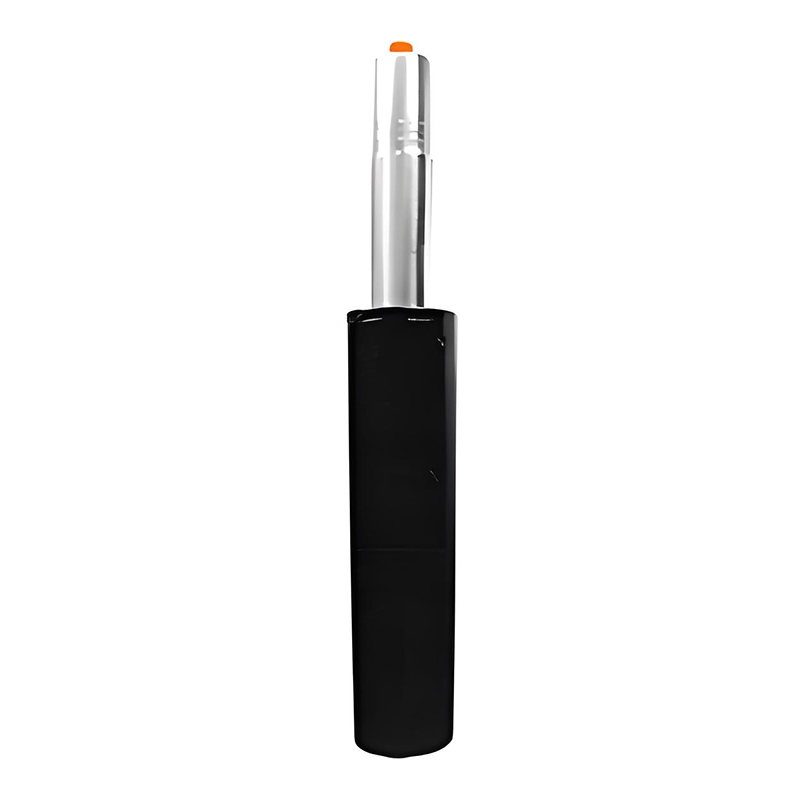 Auto-Return Gas Springs for Compact MechanismsCompact gas springs designed to return equipment to a preset position automatically, suitable for sliding panels, covers, and small mechanical systems where space is limited.View Product →
Whatever the industry, do not copy a successful specification from one application into another. A tailgate spring, a bar stool spring, and a machine guard spring may all be "gas springs," but their P1, stroke, end fittings, and temperature margins are completely different.
Selecting the Correct Force: A Six-Step Checklist
The fastest way to get an inaccurate quotation is to ask for "a gas spring about the same size as the old one." Work through these points before you contact a supplier; it takes thirty minutes and prevents a costly re-quote four weeks later.
- Determine the required P1 force. For a lid, calculate the moment balance of the cover weight at the spring's mounting points in the closed and open positions. The spring should counterbalance most of the load, not slam the lid open by itself.
- Select the stroke length. Stroke must cover the movement path of the mounting points plus the take-up of the end fittings. Never allow the rod to reach its internal stops at normal operation; bottoming out ruins seals quickly.
- Choose the end fittings. Forks, eyelets, ball sockets, and bracket mounts change the effective lever arm. A one-centimetre change in mounting position can shift the required force by more than 10%.
- Decide whether you need locking or auto-return. If the product must hold at an intermediate position — a folding seat, a monitor arm, a medical bed backrest — a standard gas spring cannot do it. This is the stage where you should ask for a lockable gas spring:
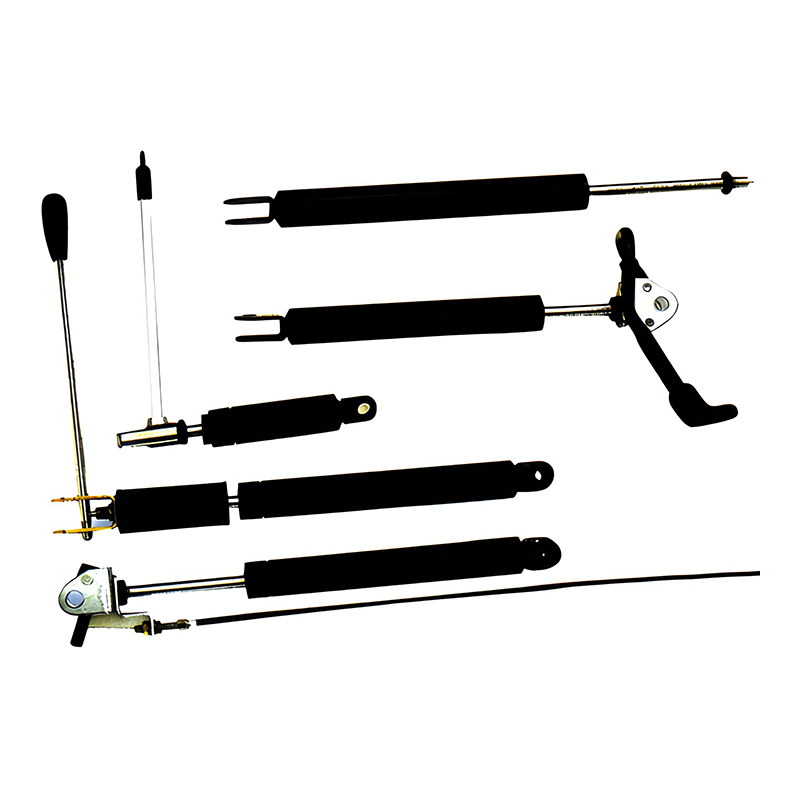 Lockable Gas Spring with Adjustable PositioningA gas spring with an internal oil-and-gas dual-lock system that stops precisely at any position, ideal for office chairs, hairdressing chairs, and hospital beds.View Product →
- Check the operating temperature range. Indoor furniture sees roughly 10–40 °C and needs no extra cushion. Outdoor equipment can see –30 °C to +80 °C, which means the spring must be sized at the cold end so it still lifts the load on winter mornings.
- Request the force curve and test a sample. Ask for P1 and P2 readings, push-pull hysteresis, and end-damping behaviour. Verify the sample at the extremes of your temperature range, not only on the bench, before approving production.
Suppliers with an integrated production line, such as ADF, can usually deliver custom force settings faster because gas charging, rod finishing, and final testing happen in one plant rather than across three subcontractors.
Maintenance and Compliance: Protecting the Near-Constant Force
A gas spring loses its constant-force character when nitrogen leaks past the seals. In practice, most leaks start from a damaged rod, a side load, or an incorrectly drilled mounting hole.
- Mount the spring in the orientation recommended by the manufacturer, usually rod-down, so the oil film stays in contact with the rod seal.
- Keep the spring axis aligned with the motion path. Even a 2–3 degree angular misalignment increases side force and accelerates seal wear.
- Protect the rod from weld spatter, paint, and stone impact. A scratched rod is the leading cause of premature failure.
- Replace gas springs in matched pairs. Swapping one side of a lid or seat creates torsion and uneven force distribution.
- Wipe the rod periodically and inspect for oil film on the outside of the cylinder, which indicates seal bypass.
Pressure equipment rules apply because the cylinder contains nitrogen under high pressure. In the EU, surface treatments and materials must meet RoHS substance limits and REACH registration expectations for exported parts. Shipping documentation must identify the pressure charge correctly for transport. At end of life, the cylinder must be depressurized in a controlled manner: never drill into a charged spring, never expose it to fire, and recycle the steel body afterward.
The monitoring metric is simple: if an installed spring measures 10% below its nameplate P1 at the same temperature, seal loss has begun and replacement should be scheduled. Our guide to factors that affect the service life of cabinet gas springs describes the typical failure modes and inspection intervals in greater depth.
So, are gas springs constant force? Yes, in the way that matters for industrial design: they deliver a stable, repeatable force across the whole stroke, with a small and predictable rise and a temperature coefficient you can calculate in advance. No, in the strict mathematical sense: the curve is not perfectly flat, and seal friction adds a visible gap between the push and pull readings.
Treat the phrase "constant force" as a design feature, not a law of physics. Size the spring at the lowest operating temperature, keep the stroke away from the internal stops, choose a lockable or auto-return version when the application demands intermediate holding or self-closing, and always verify the force curve with the manufacturer's test data. Do that, and a gas spring becomes one of the most reliable motion-control components you can buy.