 English
 русский
 Deutsch
 日本語
Quick answer: specify a nitrogen gas spring by the force it must deliver at the real mounting angle, then confirm stroke, rod diameter, damping, and temperature tolerance. Buying by extended length alone is the fastest route to a seat that sinks, a lid that will not stay up, or a handle that feels wrong in winter.
A gas spring that fails early often gives no warning beyond a change in feel. The cylinder may still hold pressure, but the force curve no longer matches the load. That is why a sample test should measure force at the working temperature and at the actual installation geometry, not only on a bench with the rod vertical.
Content
How Nitrogen Gas Springs Store and Release Force
A nitrogen gas spring is a sealed cylinder containing pressurized nitrogen, a piston, a rod, and often a small oil charge for damping. The nitrogen provides the spring force; the oil controls speed near the end of stroke and reduces metal-to-metal noise. The basic relationship is simple: F = P × A, where P is internal pressure and A is the effective piston area.
That formula explains why two springs with the same body length can feel completely different. A larger rod reduces the chamber volume as it extends, so extension force is usually slightly higher than compression force. A larger piston area raises force at the same pressure. A longer stroke changes the volume change and the force rise. If the supplier quotes only "100 N", ask whether that is initial force, final force, or force at a stated extension.
Preload pressure
Sets the base force. A ±10% pressure change moves the force by roughly ±10% at constant temperature.
Rod and piston area
Changes both force and sensitivity to side load. A thin rod bends more easily; a thick rod raises extension force.
Oil damping
Controls closing speed and end-of-stroke feel. Too little damping feels harsh; too much feels sluggish in cold weather.
End mounting
Sets the line of action. A ball socket, eyelet, or bracket that is misaligned turns force into side load and shortens seal life.
Mounting choice changes side load and service life. This overview of end mounting methods for gas springs is useful when the bracket drawing is still open.
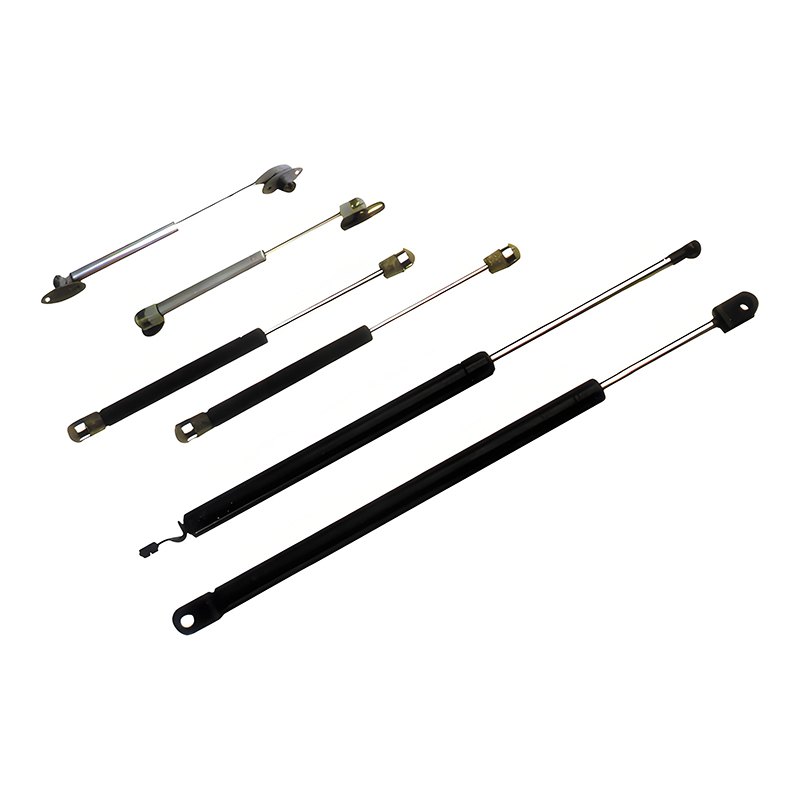
 Gas Springs and Gas Lift CylindersReview the gas spring family to compare end mounting, force, stroke, finish, and locking options before finalizing bracket drawings and approved specifications.View Product →
Selection Data That Changes the Outcome
The purchase specification should separate "catalog value" from "approved value". The comparison below shows the checks that most often prevent a sample-to-production surprise.
Specification
Typical buyer target
What to verify
Risk if ignored
Force at 20°C
±5% for seating, ±10% for general industrial
Force at stated extension and test speed
Feel mismatch, returns, assembly rework
Stroke
Match drawing within 1 mm
Full travel without bottoming or over-travel
Short travel, hard stop, damaged seal
Rod diameter
Common 6, 8, and 10 mm
Surface finish, hardness, straightness
Bending, seal scoring, leakage
Temperature range
Check force at -10°C and 60°C
Force change and damping behavior
Stiff in winter, fast in summer
Cycle life
20,000 to 100,000+ cycles depending on design
Test report and sample size
Early pressure loss, warranty cost
Salt spray
48 to 500 hours depending on finish
Coating thickness and rod protection
Corrosion at the seal, seizure
Mounting alignment
Minimize side load across full stroke
Angle, eyelet wear, bracket stiffness
Rod scoring, noise, short life
Table note: targets depend on the application; agree the test method, sample size, and acceptable force band before production.
Hidden Metric: Temperature Quietly Moves the Force
Nitrogen pressure follows absolute temperature at constant volume. A spring set at 20°C (293 K) will show about 114% of nominal force at 60°C (333 K), and about 90% at -10°C (263 K). That is not a defect; it is physics. The practical question is whether the application still works at both ends.
-10°C · 90%
20°C · 100%
60°C · 114%
Use this as a screening check. If the handle is acceptable at 20°C but the lid will not stay open at 0°C, the spring is under-specified or the mounting geometry is wrong. A supplier can adjust preload, rod diameter, or damping, but only if you give the temperature range and the load at the handle.
Where the Demand Usually Sits
For a catalog built around seating, transport, and industrial equipment, demand usually clusters in a few application families. The split below is an indicative planning mix based on the product-page spread, not a third-party market-share estimate.
Office seating and height adjustment: 40%
Bar stools and compact seating: 15%
Automotive and industrial supports: 25%
Lockable and automatic return: 20%
The lesson for buyers is not the exact percentage. It is that a single force band will not fit all four groups. Office chair cylinders are judged on smooth height adjustment and return rate; lockable springs are judged on holding force and release feel; bar-stool springs need a different stroke and load range; automotive and industrial supports need corrosion and cycle data.
A Five-Step Sourcing Sequence
The cheapest sample is rarely the cheapest project. A one-point return rate on a seating program can erase the savings from a cheaper spring, so validate the force band before you negotiate the price.
1
Define the load case
Measure the force at the handle or seat at the installation angle. State whether the spring must hold, lift, lower, or lock.
2
Fix the mounting geometry
Confirm eyelet, ball socket, bracket, and stroke. A small change in the pivot point can change the effective force at the handle.
3
Check the environment
Temperature, salt spray, dust, and cycle rate decide the coating, seal, and damping choice. Do not use a seating spring in a wet industrial bay without the right finish.
4
Validate samples
Test force at 20°C and 60°C, cycle the spring, listen for noise, and check rod runout. A sample that passes only at room temperature is not approved.
5
Lock the batch
Put force tolerance, marking, inspection record, packaging, and lead time into the purchase order. Keep a retained sample for every lot.
For a program sourced from East China, capacity and port access matter as much as the sample. ADF's Changzhou plant lists 6,000 m² of floor space, 130+ employees, 15 production lines, and more than 20,000 tons of annual capacity, with trucking access to Shanghai and Nantong ports. Those numbers are a starting point for a supplier audit, not a substitute for one.
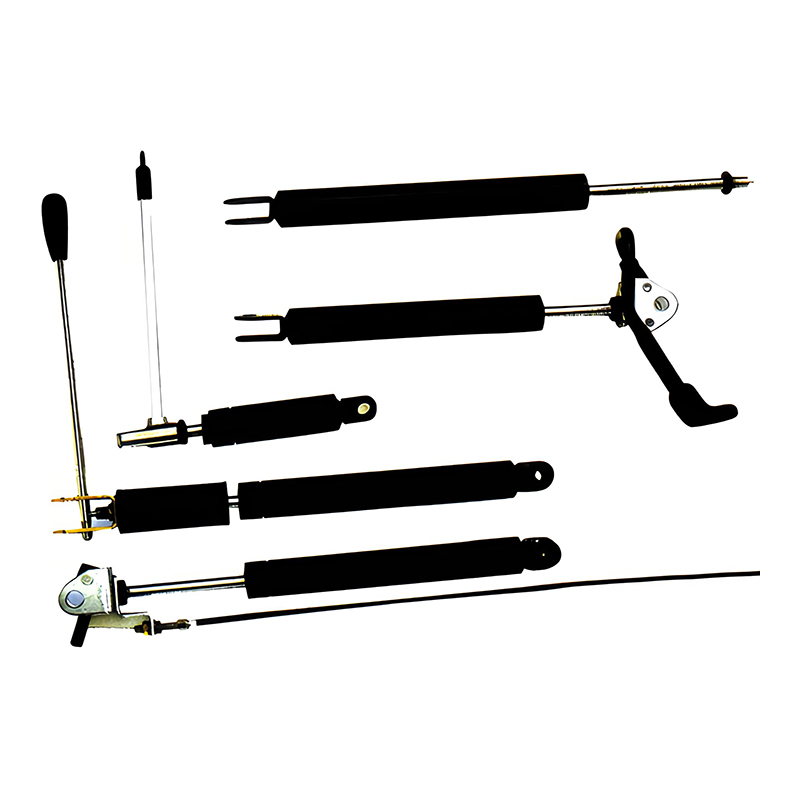 Lockable Gas Spring3:The special feature and characteristic of the productsView Product →
Maintenance and Compliance Checks
Nitrogen gas springs are sealed units. Do not open, recharge, or weld a pressurized cylinder. Maintenance is mostly about protecting the rod and the seal.
- Keep the rod clean. Dust, grit, and dried lubricant can score the chrome and damage the seal.
- Avoid side load. A misaligned bracket or worn eyelet concentrates force on the rod guide and shortens life.
- Check mounting wear at each service interval. Replace worn bushings before they damage the rod.
- Store in a dry area, away from high heat. Do not use the spring as a structural member or a safety lock unless the design allows it.
For compliance, ask for the pressure test record, cycle test report, material certificate, and coating specification. If the spring is exported, confirm the applicable transport and packaging requirements for pressurized components, and keep the safety data sheet with the shipment. A supplier that claims "international standards" should be able to name the test standard and show the latest lot record.
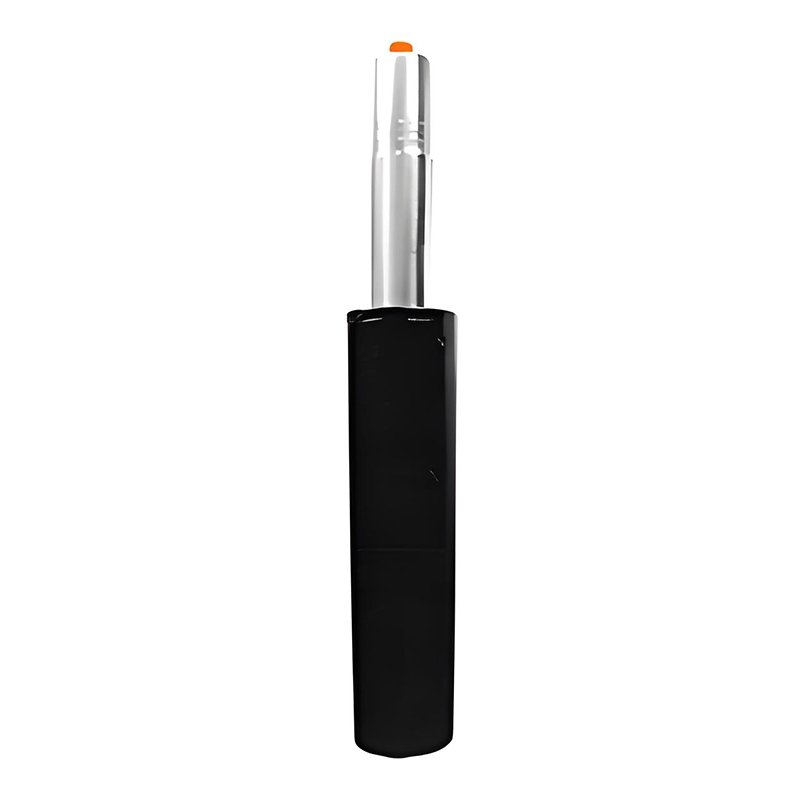
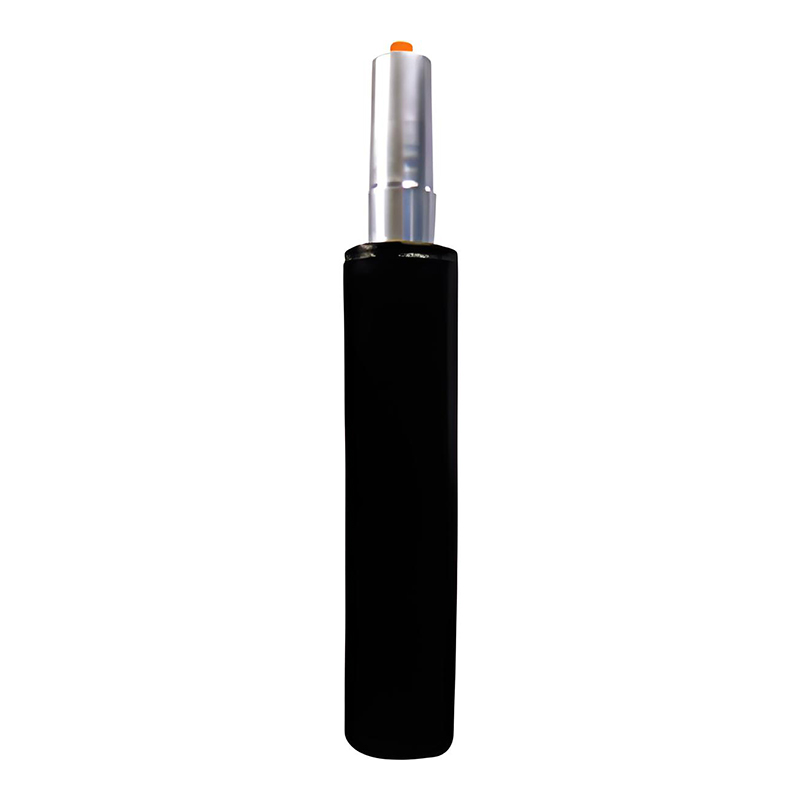
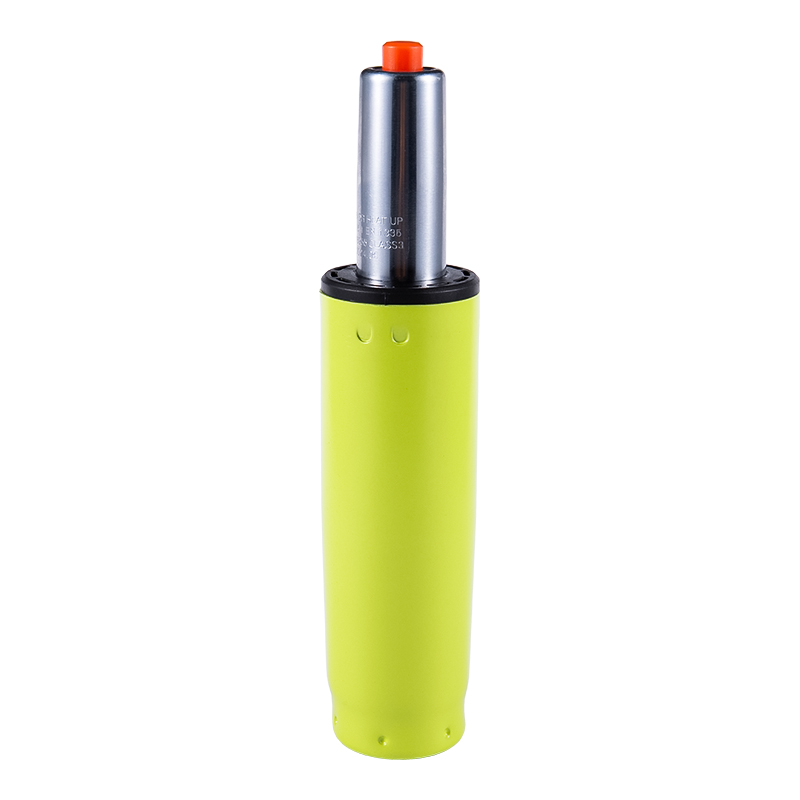 Standard Height Heavy Duty Office Chair Gas Lift CylindersHeavy-duty office chair gas lift cylinders for large and gaming chairs, rated 300–500 N, with A/B/C dimensions for fit checks.View Product →
What to Send Before You Ask for a Quote
A useful inquiry includes the drawing, mounting points, stroke, extended and compressed lengths, load at the handle, target force at 20°C, operating temperature range, cycle life, finish, and annual volume. If the application is a seat or a lid, add a photo or a short video of the motion. That single step removes more ambiguity than a page of catalog numbers.
If you are comparing suppliers, ask for a sample test plan before the first production order. The right nitrogen gas spring is not the one with the highest force on the label; it is the one that holds the load, moves smoothly, and keeps its feel across the temperature range you actually use. To discuss a specific seat, hatch, or industrial support, send the drawing and load data to ADF.