 English
 русский
 Deutsch
 日本語
日本語
Content
- 1 What a Lockable Gas Spring Is and How It Works
- 2 Locking Mechanisms Used in Lockable Gas Springs
- 3 Common Control Methods for Lockable Gas Springs
- 4 Key Parameters for Selecting a Lockable Gas Spring
- 5 Typical Applications of Lockable Gas Springs
- 6 Installation and Positioning Considerations
- 7 Maintenance and Service Life Expectations
- 8 Advantages of Using Lockable Gas Springs in Design
What a Lockable Gas Spring Is and How It Works
A lockable gas spring is a controlled motion component designed to lift, lower, and hold loads in a fixed position. Unlike standard gas springs that move freely under force, a lockable gas spring can be locked at any point along its stroke. This locking function allows precise positioning and stable load support in applications where safety and adjustability are required.
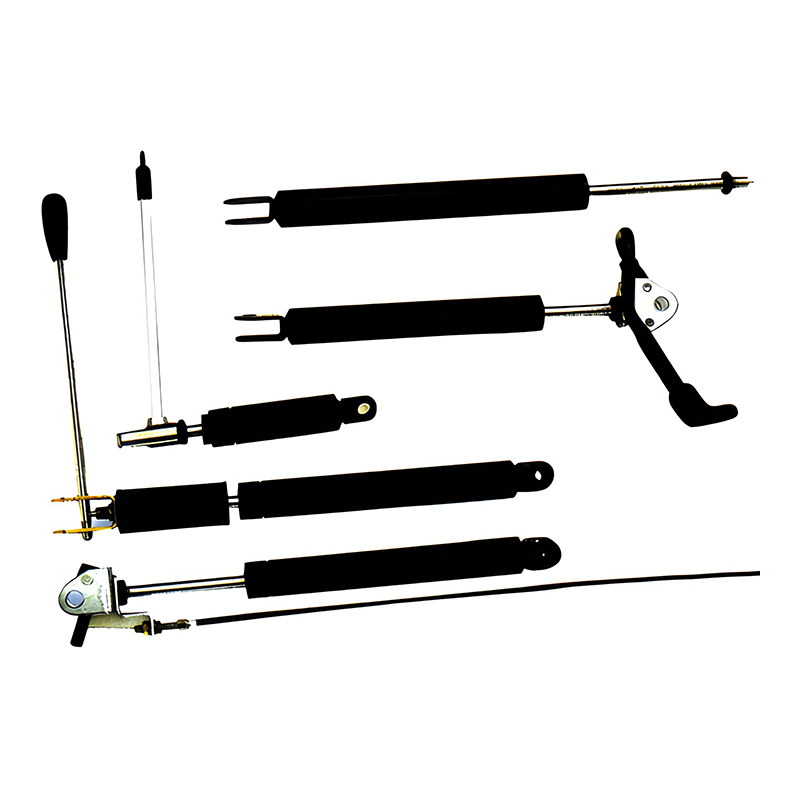
The internal structure typically includes a pressurized gas chamber, piston rod, sealing system, and an integrated locking mechanism. When the lock is engaged, internal fluid or mechanical elements restrict piston movement, holding the rod securely in place.
Locking Mechanisms Used in Lockable Gas Springs
Different locking principles determine how and where the gas spring can be held. Selecting the appropriate mechanism depends on load direction, adjustment frequency, and control requirements.
Rigid Locking Systems
Rigid lockable gas springs are designed to hold loads with minimal movement when locked. These systems are commonly used in applications where position accuracy is critical, such as medical equipment or industrial workstations.
Elastic Locking Systems
Elastic locking designs allow limited movement under load when locked. This controlled flexibility helps absorb shocks and vibrations, making them suitable for seating systems and adjustable furniture.
Common Control Methods for Lockable Gas Springs
Lockable gas springs can be activated through different control methods, depending on how the locking function needs to be engaged during operation.
- Mechanical lever control, allowing direct manual engagement and release
- Cable or Bowden control for remote activation in enclosed structures
- Button or handle actuation integrated into user interfaces
The control method influences ease of use, installation complexity, and long-term reliability.
Key Parameters for Selecting a Lockable Gas Spring
Proper selection ensures stable operation and long service life. Several technical factors must be evaluated during the design or replacement process.
| Stroke length | Determines the adjustable range of movement |
| Force rating | Defines load capacity during lifting and holding |
| Locking direction | Compression, extension, or bidirectional locking |
| Mounting orientation | Affects lubrication and locking consistency |
Typical Applications of Lockable Gas Springs
Lockable gas springs are used across multiple industries where controlled positioning and safety are essential. Their ability to hold loads at variable heights makes them suitable for both manual and assisted adjustment systems.
- Medical beds, examination chairs, and patient support equipment
- Adjustable office furniture and ergonomic seating systems
- Industrial machinery covers and access panels
- Vehicle interiors and specialty compartments
Installation and Positioning Considerations
Correct installation plays a significant role in performance and lifespan. Lockable gas springs are often designed to operate with the piston rod facing downward, which supports internal lubrication and consistent locking behavior.
Mounting points should be aligned to prevent side loading, as uneven forces can lead to premature wear or reduced locking reliability.
Maintenance and Service Life Expectations
Lockable gas springs are typically maintenance-free under normal operating conditions. Regular visual inspection helps identify seal wear, oil leakage, or reduced locking performance.
Replacing a lockable gas spring at the appropriate service interval maintains safety and ensures consistent positioning in demanding applications.
Advantages of Using Lockable Gas Springs in Design
By combining controlled motion with reliable holding capability, lockable gas springs simplify mechanical design and reduce the need for additional locking hardware. This integration improves usability while maintaining structural efficiency.
Their adaptability across different load ranges and environments makes lockable gas springs a practical solution for adjustable systems requiring both movement and stability.