 English
 русский
 Deutsch
 日本語
日本語
Content
What Is a Lockable Gas Spring and How Does It Work
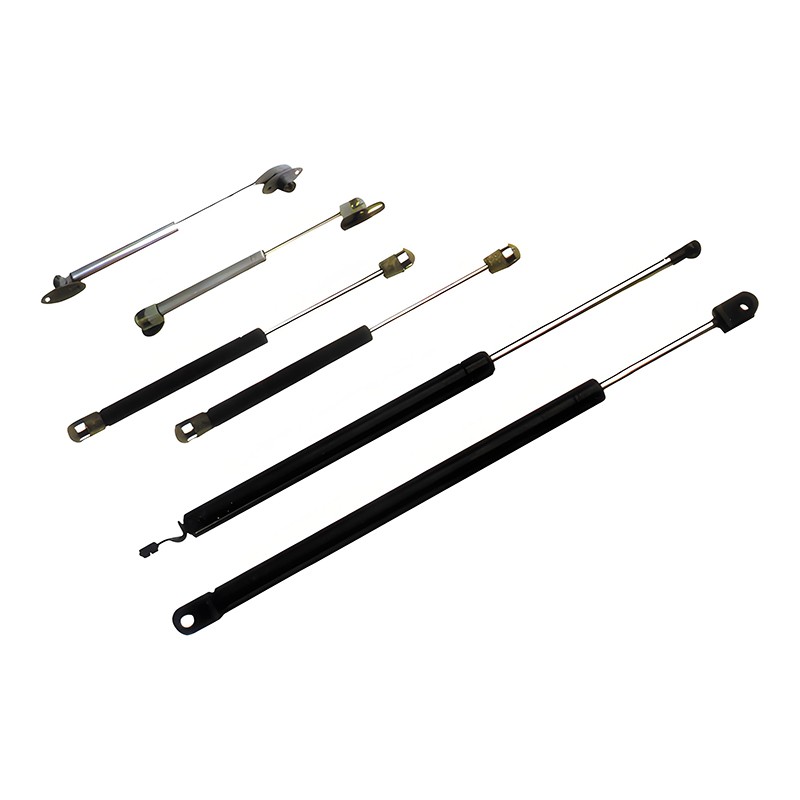
A lockable gas spring is a precision-engineered mechanical component that uses compressed nitrogen gas — and in advanced models, a combination of oil and gas — to provide controlled, adjustable force along a linear axis. Unlike standard gas springs that move freely between two endpoints, a lockable gas spring can be stopped and held securely at any intermediate position along its stroke range. This positional locking capability is what sets it apart and makes it indispensable in applications where height, angle, or tilt must be fixed on demand.
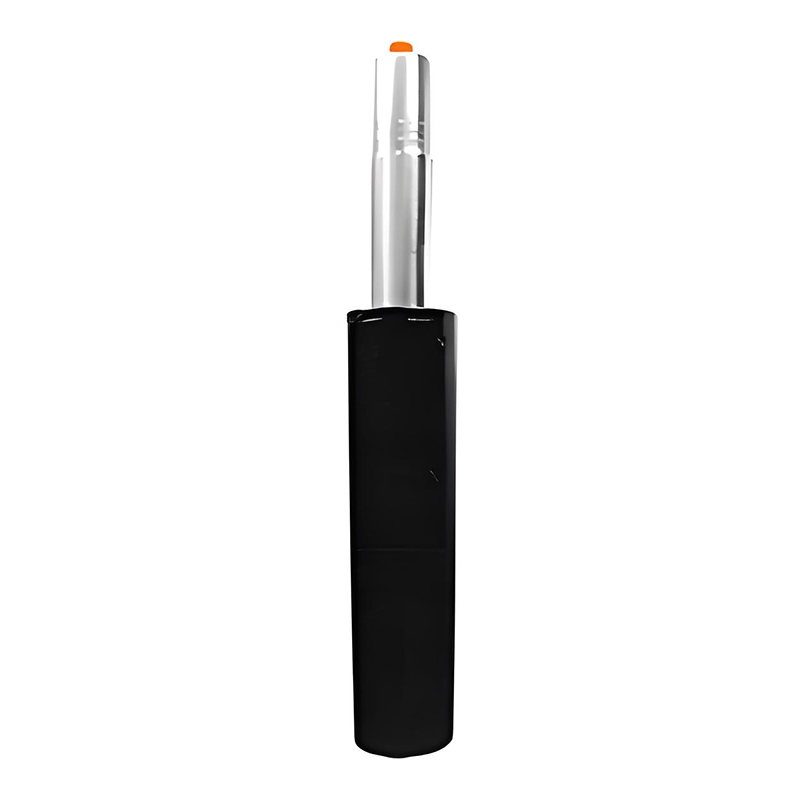
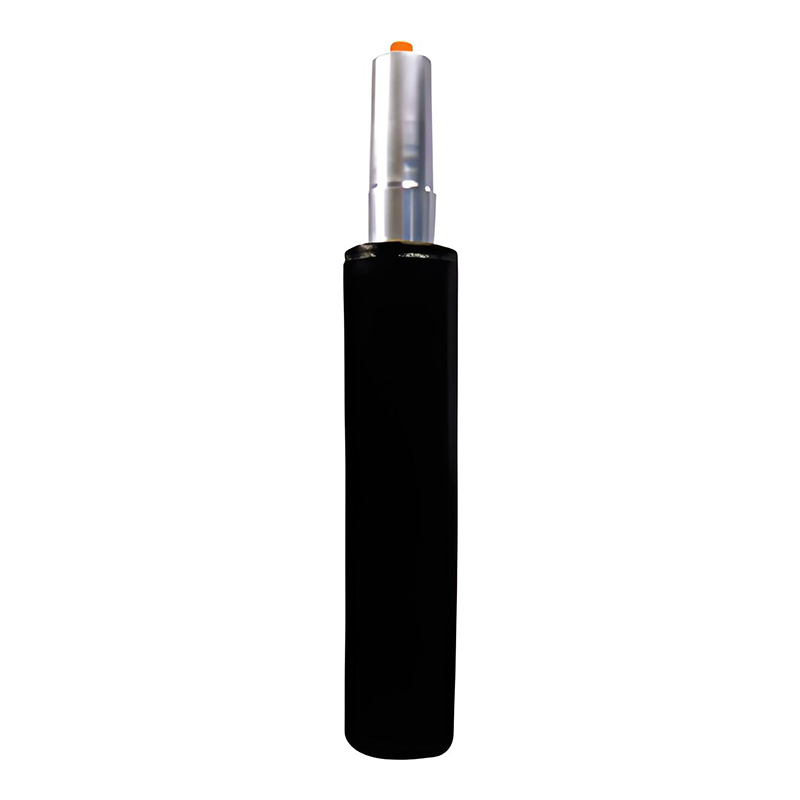
The core mechanism relies on an internal valve system, typically actuated by a push-button or lever. When the valve is open, gas and oil flow freely between chambers, allowing the piston rod to move. When the actuator is released, the valve closes, trapping the fluid on both sides of the piston and creating a hydraulic lock that resists movement in either direction. This is the foundation of the internal oil and gas dual-lock system found in high-performance lockable gas springs — a design that ensures the spring stops precisely at any position rather than drifting or settling under load.
The dual-lock architecture is particularly significant because oil, being incompressible, provides a rigid positional hold once the valve closes. Gas alone can exhibit minor compressibility under heavy loads, leading to subtle creep over time. By combining both media, manufacturers achieve a locking mechanism that is both immediately responsive and mechanically stable under sustained static loads — a critical requirement for seating applications where users sit at an adjusted position for extended periods.
Adjusting Backrest Angle with Precision and Control
One of the primary functions of the lockable gas spring in seating design is to adjust the backrest angle of the office chair. Traditional recline mechanisms rely on mechanical ratchets or friction-based systems that offer only a limited number of fixed positions. A lockable gas spring eliminates this constraint entirely — users can recline the backrest to any angle within the spring's stroke range and lock it in place with a single button release, achieving a truly personalized ergonomic position.
This continuous angular adjustment is particularly valuable in executive and ergonomic office chairs, where the relationship between lumbar support, recline angle, and armrest position determines whether a chair truly supports healthy posture or simply approximates it. With a lockable gas spring integrated into the backrest mechanism, the chair can be adjusted to a suitable angle as needed — whether that means a nearly upright 95 degrees for focused keyboard work or a relaxed 120-degree recline for reading and video calls.
The transition between positions is equally important. A high-quality lockable gas spring delivers smooth and quiet motion during adjustment, with no jarring resistance, rattling, or sudden drops. This smoothness is engineered through tight internal tolerances, high-viscosity oil selection, and precision valve calibration — all of which contribute to an adjustment experience that feels controlled and deliberate rather than mechanical and abrupt.
Force Range and Load Capacity: 450N to 1200N Explained
The support strength of a lockable gas spring is measured in Newtons (N), representing the force it exerts along its axis. A wider force range means a single product family can address a broader spectrum of application requirements without requiring custom engineering for each use case. The force range of 450N to 1200N in professional-grade lockable gas springs covers the vast majority of seating and positioning applications encountered in commercial and industrial environments.
To put these numbers in practical context: a 450N spring exerts approximately 45 kilograms of force, making it suitable for lighter-duty applications such as adjustable monitor arms, smaller chairs, or equipment lids. At the upper end, a 1200N spring — approximately 122 kilograms of force — is engineered for heavy-duty passenger seating, large reclining chairs, or industrial positioning equipment where user weight and dynamic loading demands maximum structural support.
Force Range Reference by Application
| Force Range | Approximate Load | Typical Application |
|---|---|---|
| 450N – 550N | 45–56 kg | Lightweight office chairs, equipment panels |
| 600N – 800N | 61–82 kg | Standard office chairs, hairdressing chairs |
| 900N – 1000N | 92–102 kg | Heavy-duty executive chairs, medical chairs |
| 1100N – 1200N | 112–122 kg | Passenger seats, industrial positioning |
Selecting the correct force rating is essential for both safety and user experience. An under-specified spring will struggle to hold its locked position under load, leading to gradual drift and potential failure. An over-specified spring will feel stiff and unresponsive during adjustment. Matching force rating to actual application load — with a standard safety margin of 20–30% above expected dynamic load — ensures long-lasting stability and safety across the product's operational lifespan.
Key Applications: From Hairdressing Chairs to Passenger Seats
The engineering versatility of the lockable gas spring makes it a preferred component across industries where adjustability, reliability, and safety converge. Its perfect combination of high performance and versatility means a single well-engineered spring family can serve radically different end markets with equal effectiveness.
In hairdressing chairs, the requirements are uniquely demanding. Stylists need to make precise and delicate adjustments to seat height and recline angle multiple times throughout the day, accommodating clients of varying heights and service types — from a quick trim to an extended color treatment requiring full recline. The lockable gas spring enables these micro-adjustments silently and smoothly, without disturbing the client experience. The highly responsive locking mechanism means a stylist can fine-tune a position with one hand while managing the client with the other, and trust that the chair will hold that position without creeping or settling.
For passenger seats in commercial vehicles, aircraft cabins, or rail coaches, the performance demands shift toward durability, load capacity, and fail-safe locking. These environments subject the gas spring to high cycle counts — thousands of adjustments per year — combined with the dynamic shock loads inherent in vehicle operation. A lockable gas spring in this context must deliver not just comfort and demanded durability but must also comply with relevant safety standards governing seat mechanisms in passenger transport. The oil-and-gas dual-lock system provides the mechanical redundancy required to meet these standards, ensuring the seat cannot inadvertently recline or shift under braking or turbulence loads.
Beyond these two primary applications, lockable gas springs are also widely deployed in medical examination tables, adjustable workstations, dental chairs, drafting tables, and ergonomic monitor arms — anywhere that stepless positional control and reliable locking are required in a compact, maintenance-free package.
Installation, Operation, and Maintenance Advantages
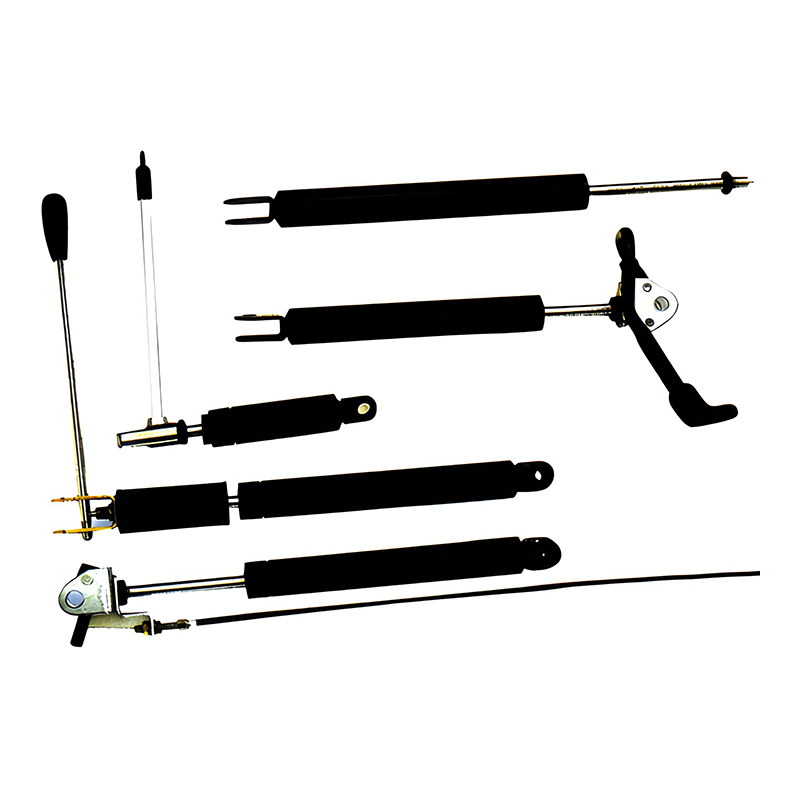
One of the most practical advantages of modern lockable gas springs is how straightforward they are to integrate into new and existing product designs. They are easy to install and operate without the need for complex adjustments or ongoing maintenance, which reduces both manufacturing assembly time and total cost of ownership over the product's service life. Most lockable gas springs use standardized end fittings — ball joints, clevis brackets, or threaded rod ends — that connect directly to host structure mounting points without requiring specialized tooling or calibration procedures.
From an end-user perspective, operation is entirely intuitive. A single actuator — most commonly a push-button integrated into the rod end — opens the internal valve, allowing movement. Releasing the button re-engages the lock instantly. There are no levers to pull, pins to insert, or rotary mechanisms to turn. This simplicity is not accidental; it is the result of deliberate engineering to minimize the interaction steps required for adjustment, providing users with a truly hassle-free experience.
Maintenance requirements are minimal by design. The internal oil and gas charge is permanently sealed within the cylinder body — there are no external reservoirs to fill, no seals to inspect, and no lubrication points to service. The cylinder tube and piston rod are typically manufactured from precision-drawn steel with corrosion-resistant surface treatments, ensuring the mechanism remains functional and cosmetically acceptable across years of regular use. This self-contained, sealed architecture is precisely what allows lockable gas springs to deliver reliable performance over time without requiring the kind of preventive maintenance schedules that hydraulic or pneumatic systems typically demand.
- No lubrication required: Internal oil provides permanent self-lubrication throughout the spring's operational life.
- Sealed system: No risk of contamination or charge loss under normal operating conditions.
- Corrosion resistance: Surface-treated steel construction withstands humid and high-use environments without degradation.
- High cycle life: Engineered for tens of thousands of lock-unlock cycles before performance degradation, far exceeding the service life of most host products.
- Ergonomic integration: Smooth operation and responsive locking actively enhance the ergonomic design of any seating or positioning product in which the spring is incorporated.
These combined characteristics — effortless adjustment, precise locking, broad force range, and zero-maintenance operation — make the lockable gas spring one of the most cost-effective ergonomic components available to furniture and equipment designers today. Whether the priority is user comfort, operational durability, or design simplicity, a properly specified lockable gas spring delivers measurable value across all three dimensions simultaneously.