 English
 русский
 Deutsch
 日本語
A pair of 300 mm struts on a 1.1 m² anchor locker lid, replaced twice in one season, usually tells the same story: the force was picked by eye and the rod was chrome-plated carbon steel. The hatch is rarely the problem. Hatch struts fail because the specification was never written down — force, stroke, mounting geometry and finish were all guessed, and the sea is unforgiving about guesses.
Get four numbers right and a hatch strut will outlast the upholstery: extension force, extended and compressed length, mounting geometry, and rod material. Get any one of them wrong and the strut quietly becomes a wear item — or the hatch becomes something that falls on a hand during a squall.
Content
- 1 The Short Answer: Four Numbers Decide Whether a Strut Lasts
- 2 How a Hatch Strut Behaves Under Load
- 3 Rod and Finish: What Salt Water Actually Attacks
- 4 The Hidden Variable: Force Drifts With Temperature
- 5 Where Hatch Struts Are Used
- 6 Holding a Hatch Open: Support Struts vs Lockable Struts
- 7 Installation Sequence That Avoids Comebacks
- 8 Maintenance, Inspection and Compliance Notes
The Short Answer: Four Numbers Decide Whether a Strut Lasts
- Extension force: sized at 1.15–1.25× the static hatch moment, never at exactly 1.0×.
- Stroke: full extension must occur 5–10 mm before the hinge stop, so the strut never becomes the end stop.
- Geometry: the strut should sit close to 90° to the hatch in the open position, and the closed position must still clear the seal.
- Material: 316 stainless with passivation for salt water; plated carbon steel only for freshwater and trailer boats.
Order the force before the length. Extension force — often labelled P1 on the cylinder — is what actually holds the lid up; extended and compressed lengths only have to fit the space the boat already gives you. A strut sized at exactly the static load will feel weak in a cold locker and over-strong at midday, and it will not hold the lid against a breeze on deck.
The static moment is simple arithmetic: hatch weight (in newtons, so kilograms × 9.81) multiplied by the horizontal distance from the hinge to the hatch centre of gravity, divided by the perpendicular distance from the hinge to the strut's line of action. A 9 kg hatch with its centre of gravity 380 mm from the hinge and a strut acting 190 mm out needs roughly 177 N across the pair — about 88 N each — before any margin.
How a Hatch Strut Behaves Under Load
Extension force is not compression force
The rod displaces volume, so the cylinder pushes harder than it resists. Expect compression force to be roughly 15–25% below the quoted extension force — which is why a strut that lifts easily can still slam on the way down.
The hardest point is the first few degrees
As the hatch opens, the perpendicular moment arm grows and the force needed drops. The closed position is the worst case, so always size for the closed geometry, not for how it feels at 45°.
Nitrogen pressure tracks temperature
A sealed gas spring follows the ideal gas relationship, so force changes about 0.3–0.4% per °C. That is a real 12–14% swing between a winter locker and a summer deck.
A strut is a damper, not a restraint
A depressurised strut holds nothing. Any hatch that opens above deck level or over a berth needs a mechanical latch, strap or lockable strut as a second line of defence.
For hatch lids, the working component is a compression-only support strut: fixed force, fixed stroke, no adjustment. It is the simplest and most reliable option when the hatch geometry is settled and the lid only needs help going up and a soft landing coming down.
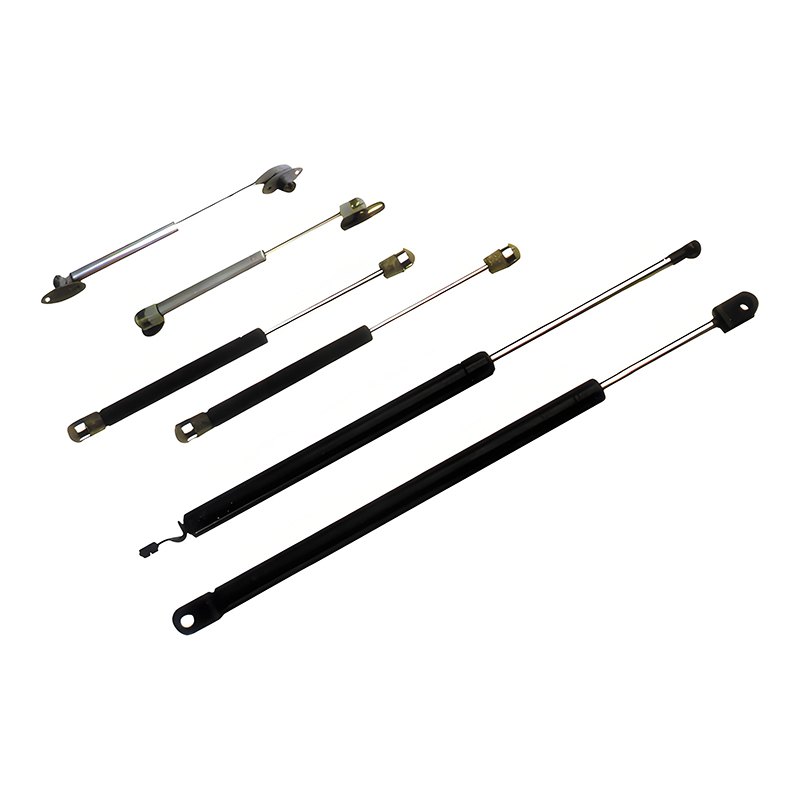 Fixed-Force Support Gas Spring for Hatch LidsA compression-only support strut for settled hatch geometry, offering fixed force and stroke with no adjustment for simple lift assistance and soft closing.View Product →
Rod and Finish: What Salt Water Actually Attacks
The rod seal fails before the gas does, and it fails because of pitting on the rod surface. That makes the rod finish the single biggest determinant of service life on a boat — more important than brand, packaging or the force label.
Indicative neutral salt spray ranges to ISO 9227 / ASTM B117. Ask the supplier for an actual test report on the finished rod, not just the base material.
The Hidden Variable: Force Drifts With Temperature
A strut that feels perfect in a 20 °C workshop is not the strut the hatch will meet in February or in August. The chart below shows typical force deviation against a nominal 20 °C rating.
88%
-20 °C
93%
0 °C
100%
20 °C
107%
40 °C
114%
60 °C
Two practical consequences follow. First, a hatch must hold open at the coldest temperature it will realistically see, so size with a margin rather than at the limit. Second, an over-specified strut in a hot climate makes a light lid hard to close and puts extra load on the hinge and seal — which is where water ingress starts.
Where Hatch Struts Are Used
- Anchor lockers and console lids — 38%
- Engine bay and machinery hatches — 27%
- Cabin berths, seats and storage — 20%
- Tenders and RIBs — 15%
The split is indicative of typical small-craft refit demand rather than a formal market study, but it usefully separates the requirements. Locker lids are light and often need lockable or friction behaviour because a lid that swings fully open over a bow is a hazard. Engine hatches are heavy, need high force with controlled damping, and sit in the harshest vapour environment on the boat.
Holding a Hatch Open: Support Struts vs Lockable Struts
A fixed-force support strut pushes the lid up and lets it come down under its own weight. It cannot stop mid-travel, and it cannot hold a lid open against wind from the wrong angle. Where the hatch must stay at a chosen angle — electronics lockers, sun pads, cockpit tables that convert to berths — a mechanically lockable strut is the correct component: it locks in compression at any point in the stroke and releases with a cable or lever.
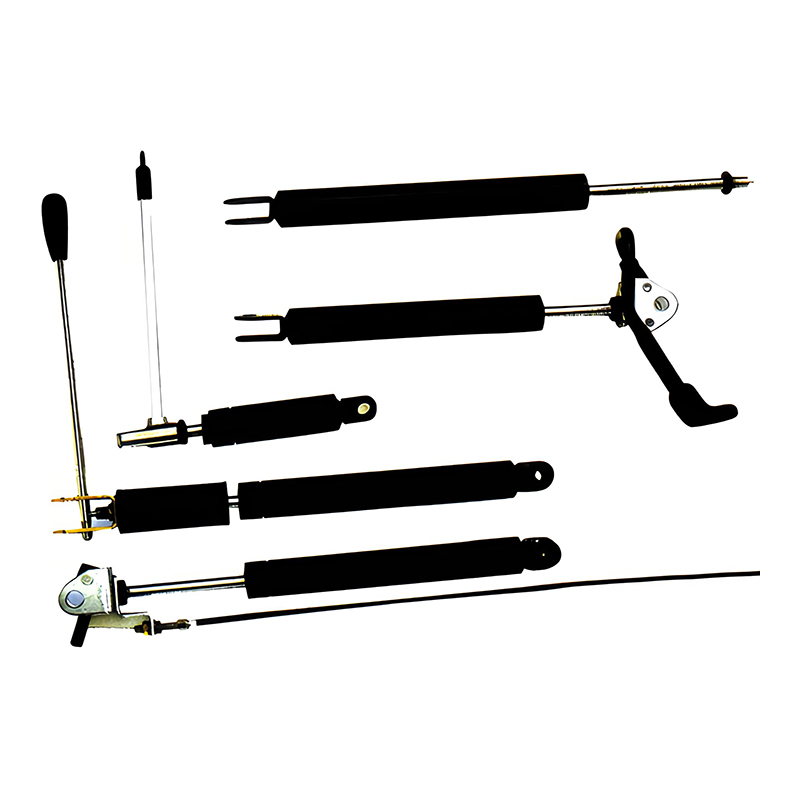 Lockable Gas Spring for Adjustable Position HoldingA mechanically lockable strut that holds at any point in the stroke, suited to hatches or seats where a chosen angle must be maintained.View Product →
The trade-off is complexity. Lockable struts add a release mechanism, more sealing points and a cable path that must not chafe. Specify them only where position holding is genuinely required; on a simple anchor locker lid, a plain support strut plus a stainless latch is cheaper, lighter and less to go wrong.
Installation Sequence That Avoids Comebacks
- Weigh the hatch and find its centre of gravity. Weigh the finished lid with hardware and hatch catch fitted — not the bare moulding on a specification sheet.
- Mark the mounting points from the open position. Aim for the strut to sit close to 90° to the hatch when fully open, and stop 5–10 mm short of the hinge travel limit.
- Match the end fittings to the structure. Ball studs, eyelets and brackets each load the deck or hatch skin differently; a review of common end mounting methods before drilling saves reinforcement work later.
- Trial-fit one strut first. Confirm the lid holds at full open, closes without slamming, and that the rod does not foul the seal or the hatch gasket at any point.
- Fit the pair, then add the mechanical restraint. Matched force in both struts prevents the lid from twisting; a latch or strap prevents a pressurised failure from becoming an injury.
Maintenance, Inspection and Compliance Notes
- Rinse the rod and seal area with fresh water after saltwater use. Salt crystals under the wiper seal abrade the rod on every stroke.
- Do not grease the rod. Lubricant traps grit and turns a sliding seal into a grinding paste.
- Inspect for pitting rather than for force loss. A pitted rod is a failing strut even while it still holds the lid.
- Replace struts in pairs. A new strut against a tired one twists the lid and loads one hinge.
- For EU supply, expect CE documentation and plating that meets REACH and RoHS; nitrogen-filled struts also carry a pressurised-article classification (UN 3164) that affects air freight paperwork.
A supplier with in-house tube drawing, rod finishing and assembly can usually control seal quality and force tolerance better than a trading intermediary — which matters most on saltwater parts, where a 0.02 mm rod defect decides whether the strut survives three seasons or ten. Ask for the force tolerance, the salt spray report and the inspection standard in writing before the first order, and keep the specification on file so the second order matches the first.
Changzhou Andefu Gas Spring Co., Ltd. manufactures gas springs and cylinders from a 6,000 m² plant with 15 production lines and an annual capacity above 20,000 tons, working from customer drawings or samples and inspecting each process step. For boat hatch projects, that means the force, stroke, end fitting and rod finish can be fixed to your geometry rather than chosen from a catalogue — and the fastest way to start is to send the hatch weight, mounting sketch and operating environment through the contact page.