 English
 русский
 Deutsch
 日本語
日本語
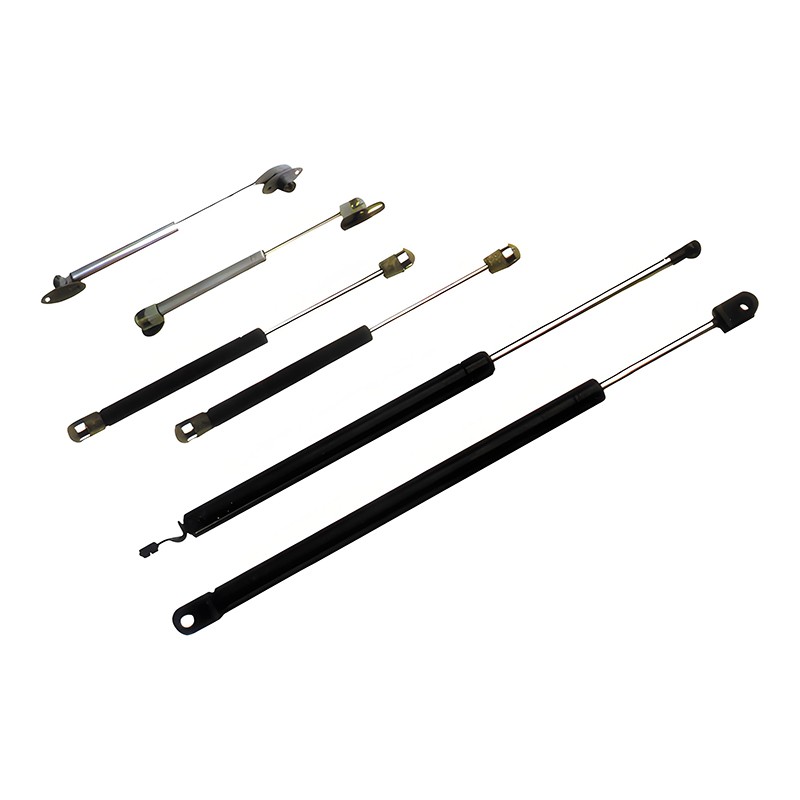
A maintenance buyer sends over a photo of a worn chair cylinder and one question: which size do I order? The answer almost always sits in four numbers, and only two of them really need a caliper. A gas spring size chart is a matching tool, not a shopping list — you read it from your measurements, never the other way around.
The short version: a gas spring size chart is a four-number match — extended length, stroke, body and rod diameter, and force in newtons. The rated force is normally quoted 5 mm before the end of extension on hydraulically damped springs, and 10 mm on dynamically damped ones.
Match the stroke exactly or slightly upward, keep the force inside a ±10% band, and confirm the end fittings before you order. A chart row narrows the search; the mounting geometry decides how much of that force actually reaches the lid.
What follows is the working sequence we use with customers: the four defining numbers, a reference chart of standard combinations, the measurement routine, the variables that quietly break a clean match, and the selection logic that keeps a replacement order from coming back.
Content
The Four Numbers That Define a Gas Spring Size
Every column in a size chart is a restatement of one of these four values. Get all four right and the brackets, sockets and levers usually follow without a second thought.
Extended length
Measured centre-to-centre with the rod fully out — eyelet to eyelet, or ball socket to ball socket. Never measure the tube alone, because the end fittings add 20 to 60 mm that the chart assumes you already counted.
Stroke
Extended length minus compressed length, taken along the rod axis. A 300 mm extended spring with a 100 mm stroke compresses to 200 mm; if your mounting only allows 210 mm, the lid will stall before it closes.
Body and rod diameter
Industrial gas springs commonly run 15 mm to 28 mm body diameter with 6 mm to 12 mm rods. This pair fixes both the force ceiling and whether the spring physically enters your bracket.
Force in newtons
A pressure figure translated into push. It shifts with temperature and with mounting angle, so the number on the label is a reference point, not a constant.
Get one of the four wrong and the symptom is predictable: too short a stroke and the mechanism will not close, too high a force and the user cannot pull the lid down, too small a body and the spring bends or the force cap is unreachable.
A Reference Gas Spring Size Chart
Tube and rod combinations are standardised because the tooling behind them is expensive. That is why a handful of sizes cover most of the market. The ranges below are typical for industrial, seating and cabinet applications, with forces quoted at 20 °C.
Body / rod (mm)
Extended length (mm)
Stroke (mm)
Typical force (N)
Typical application
15 / 6
150 - 400
40 - 120
50 - 400
Small cabinet flaps, light lids, display cases
18 / 8
200 - 600
60 - 200
100 - 700
Seating, storage hatches, light machinery guards
19 / 8
250 - 700
80 - 250
150 - 900
Bar stools, adjustable chairs, general fixtures
22 / 10
300 - 900
100 - 350
200 - 1500
Machine covers, luggage hatches, vehicle doors
25 / 10
400 - 1000
150 - 400
400 - 2000
Heavy covers, industrial cabinets, tailgates
28 / 12
500 - 1200
200 - 500
600 - 2500
Agricultural and construction equipment panels
Typical industrial and seating ranges at 20 °C. Final length, force and tolerance always follow the drawing or the original sample.
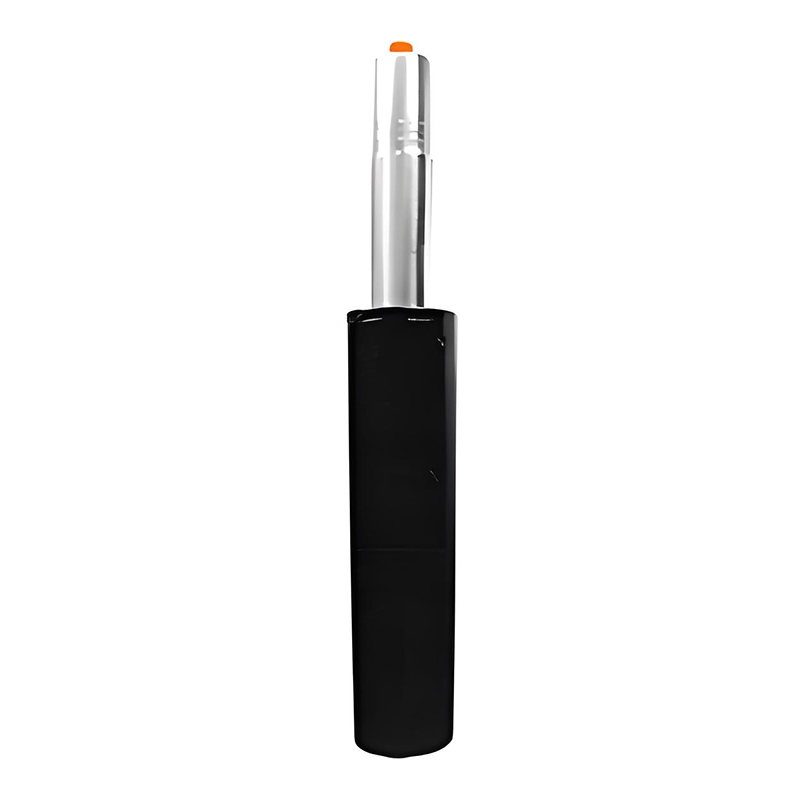
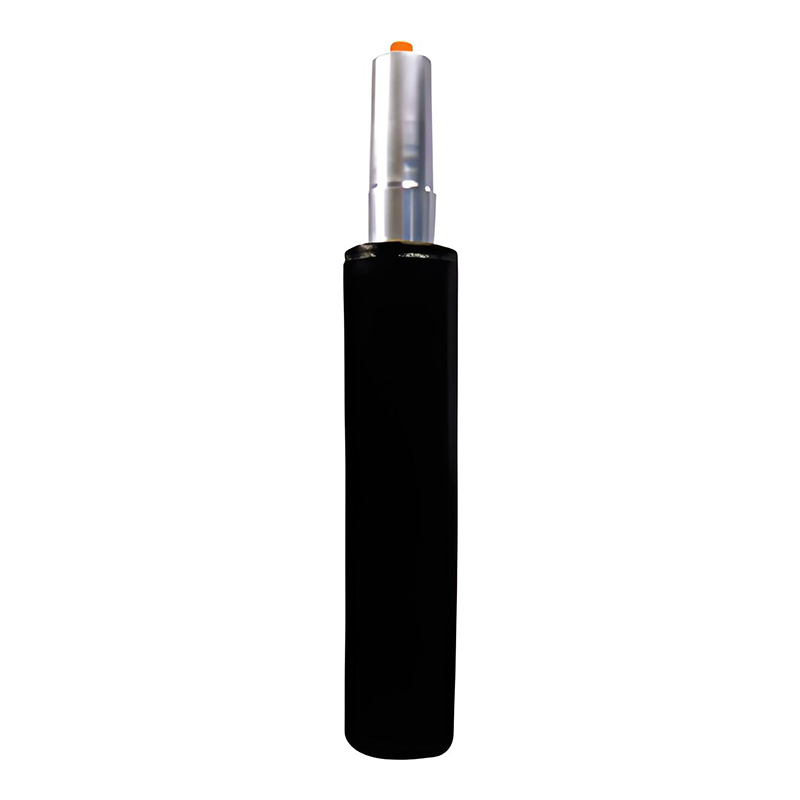
Office chair lift cylinders sit outside this logic. They are telescopic units specified by travel stroke, outer tube diameter and load class rather than extended length, and they mount through a standard taper. If you are replacing one, measure the travel with the chair at its lowest and highest setting rather than trying to match a chart row.
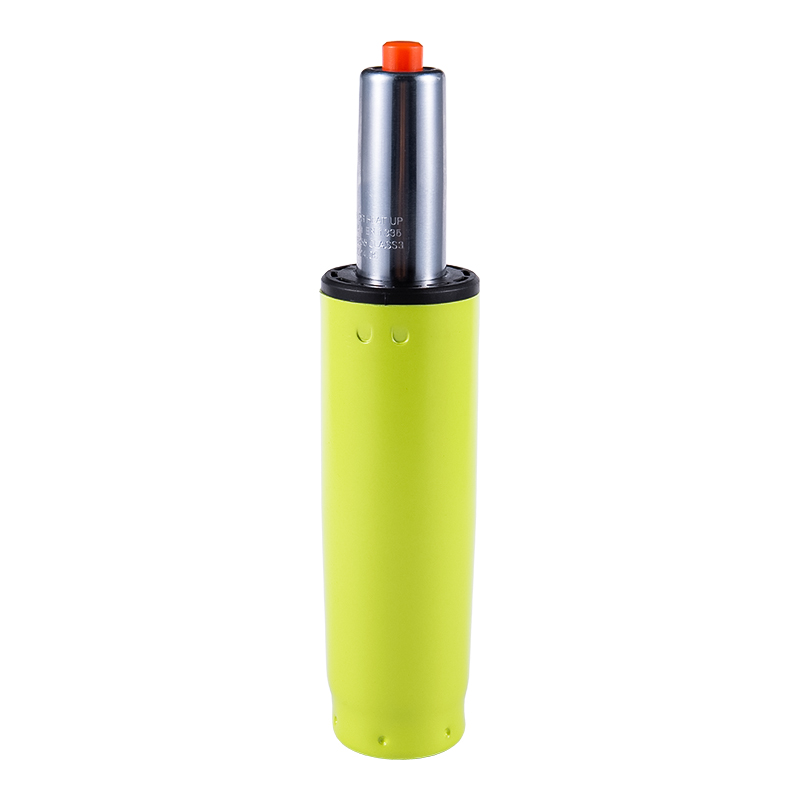 Standard Height Heavy Duty Office Chair Gas Lift CylindersThese 300–500 N office chair gas lift cylinders suit heavy-duty seating and come in multiple stroke sizes for replacements; load class affects lever feel.View Product →
Chair cylinders also behave differently in one practical sense: a heavier-rated unit does not simply lift more, it changes the feel of the lever, so the load class matters as much as the stroke.
How to Measure Before You Buy
Five measurements, ten minutes, one caliper and a tape. This is the routine that removes most ordering errors.
- Extend the spring fully and measure centre-to-centre between mounting holes. Write this down as your extended length.
- Compress it against a firm surface until it bottoms out on the internal stop, then measure again. Extended minus compressed is the stroke.
- Measure the outer tube diameter over the middle of the body and the rod diameter just behind the seal. Both are usually nominal values, so 21.8 mm means a 22 mm tube.
- Read the force marking from the old unit. It is often printed in newtons, sometimes in pounds, and occasionally encoded in a colour band on the rod.
- Identify the end fittings — ball socket, eyelet, threaded stud or bracket. A correct length with the wrong socket is still the wrong spring.
Substitution rules are more forgiving than most buyers expect. Extended length can deviate if the mounting slots allow adjustment, but stroke should never be shorter than the original. Force can usually move by ±10% without a complaint, and up to 20% upward on a lid that has always felt heavy. If your application uses a non-standard socket or stud, it is worth reviewing the common end mounting methods for gas springs before you commit to a chart row.
Hidden Variables That Break a Clean Chart Match
Two springs with identical labels can behave very differently on the same machine. The dominant variable is temperature, because the force comes from a compressed nitrogen charge and that charge follows gas law behaviour: roughly 3% per 10 °C around room temperature.
86%
-20 °C
93%
0 °C
100%
20 °C
107%
40 °C
114%
60 °C
Relative force against a 20 °C rating, derived from the nitrogen charge behaving as an ideal gas. A spring that holds perfectly in a showroom can feel weak on a loading dock in January and stiff enough to resist closing in a summer workshop.
- Damping: an internal oil damper slows the last few millimetres of travel, which is why the rated point is quoted before the end of the extension, not at full extension.
- Mounting angle: a spring that does not act perpendicular to the hinge converts part of its force into a sideways load, so the effective lift drops even though the gauge reads correctly.
- Geometry: two springs on one lid halve the load each but double the cumulative error when their forces differ.
- Time: gradual gas loss across years of cycles is normal, so a replacement of the same nominal force usually feels stronger than the tired unit it replaces.
Where Each Size Class Ends Up
Demand clusters around a few size classes, and knowing where your application sits helps you sanity-check a chart row before you order.
- Seating and adjustable furniture: 42%
- Automotive panels, tailgates and compartments: 21%
- Industrial machinery guards and covers: 19%
- Cabinets, hatches and storage: 11%
- Medical, retail and other equipment: 7%
A rough market split used for orientation, not a measure of any one supplier's production mix.
Seating is where volume lives, and it is also where the sizing tolerances are tightest, because a stroke that is 10 mm short is instantly obvious to the person sitting on the chair. Bar stools and similar adjustable seats sit in the middle of that band and often use a heavier charge than the frame suggests, because the seat has to hold at height under an uneven load.
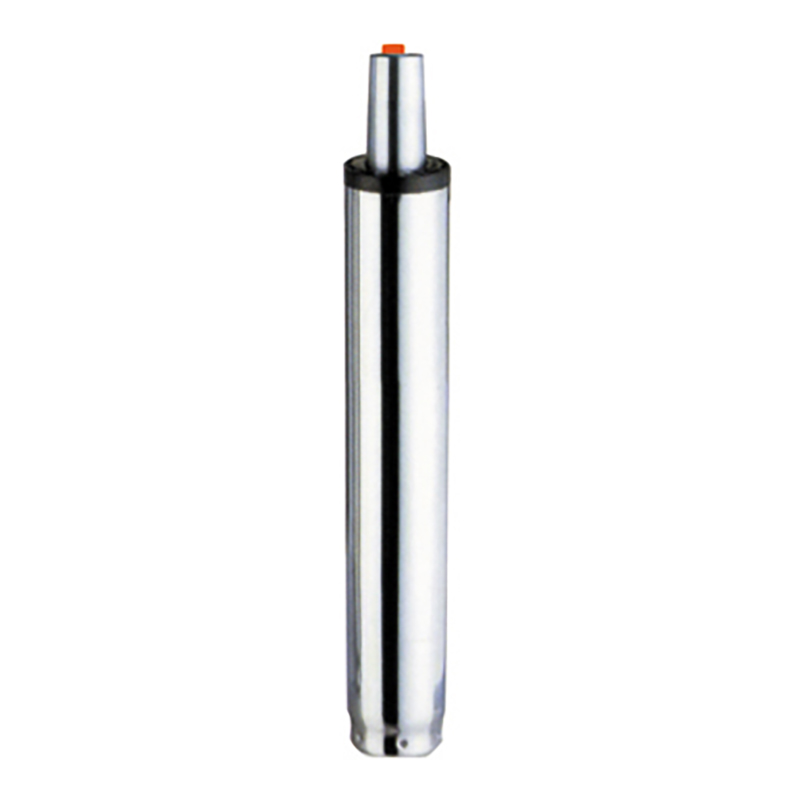 ADF-243 Bar Stool Gas Springs, 120 mm TravelThe ADF-243 series fits bar stools and similar seating, with 120 mm travel, 10/20 mm connection options, and damped quiet height adjustment.View Product →
Industrial and automotive panels tolerate wider length windows because the mounting brackets usually include slotted holes, but they demand far better corrosion protection and far more attention to the force at temperature extremes.
Selection Guide and the Cost of a Wrong Size
A wrong spring rarely fails loudly. It returns as a complaint, a warranty claim or a line stoppage, and by then the freight, handling and labour cost far exceed the part price. The sequence below keeps that number small.
Step 1: Define the load
Weigh the lid or seat and decide whether the spring should merely hold position or assist the lift. Holding requires less force than lifting.
Step 2: Fit the body
Choose the largest body diameter your bracket will accept. A larger tube reaches the same force at lower internal pressure, which is easier on the seal.
Step 3: Set the stroke
Take the real travel of the mechanism and add a small margin. Confirm the compressed length clears every obstacle at full closure.
Step 4: Check the extremes
Recalculate the force at your coldest and hottest operating conditions. If the low-temperature case sags, move up one force step.
Step 5: Lock the interfaces
Fix the end fittings, plating and friction behaviour, then run a sample before the batch. Position-holding applications need a lockable unit, which keeps the mechanism steady anywhere along the stroke instead of only at full extension.
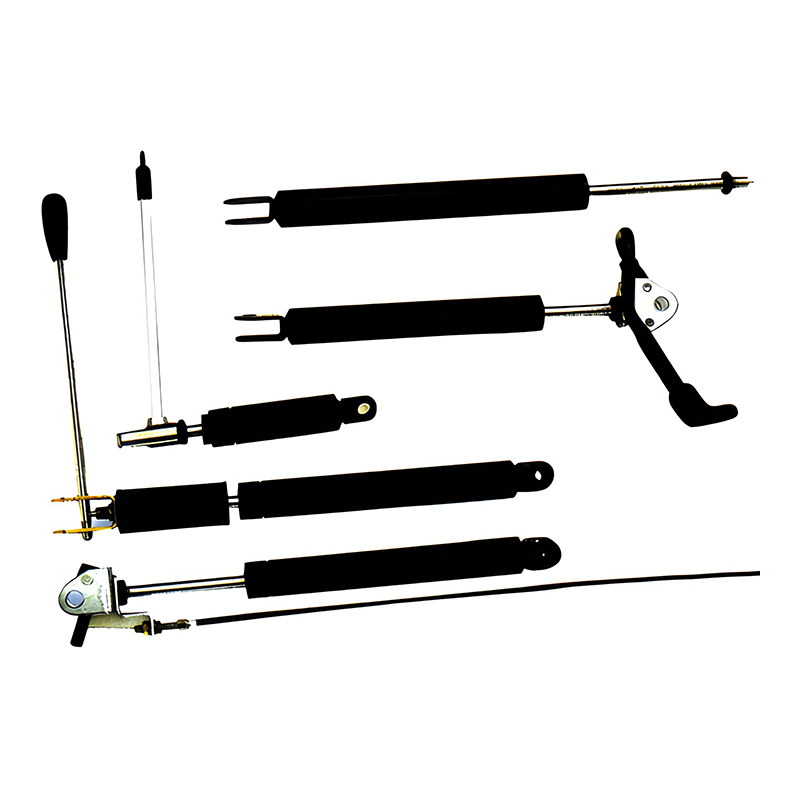 Lockable Gas Springs for Office and Hairdressing ChairsFor position-holding chair and bed adjustment, this lockable gas spring locks at any point and supports 450–1200 N for seating and hospital beds.View Product →
The arithmetic is simple. One measured sample and a signed drawing cost a few hours; a returned batch of 500 units costs the part price several times over in reverse freight, re-inspection and the production window you lose while waiting for the replacement.
Maintenance and Compliance Notes
Gas springs are pressure vessels, even the small ones. They cannot be repaired, adjusted or refilled in the field, and opening one is dangerous. When a unit loses force, it is replaced, not serviced.
- Store springs with the rod down and keep them out of direct sun. Solvent or paint on the rod damages the seal and shortens service life.
- For disposal, depressurise the cylinder in a controlled way before scrapping, following your local pressure-vessel guidance.
- Ask for the force test record at 20 °C, a dimensional report and salt spray results for the plating. A documented 48 to 96 hours of neutral salt spray is a reasonable benchmark for exterior use.
- Where the application is regulated — vehicle interiors, medical equipment, lifting equipment — confirm the applicable standard and the cycle life before you approve the size.
Changzhou Andefu Gas Spring builds gas springs and cylinders to customer drawings or samples, with in-process inspection on every operation and testing equipment in house. The plant covers 6,000 square metres with 15 production lines, and sits within easy reach of the Nantong and Shanghai ports, which keeps export shipments predictable for buyers matching a chart row to a production drawing. If your measurements fall between two standard sizes, send the drawing or the original sample through our contact page and we will quote the closest custom build rather than force the nearest catalogue number.