 English
 русский
 Deutsch
 日本語
日本語
A gas spring that lifts a heavy hatch but stalls near the end of stroke is often not a force problem alone. Mounting position sets the lever arm, the usable stroke, and the oil path around the rod seal. For most lid, hatch, and cover applications, the practical starting point is simple: put the moving-end pivot about 20% to 30% of the lid length from the hinge, keep the rod pointing down in the closed position for a compression gas spring, and avoid crossing the hinge line unless self-rise or self-close behavior is intended. Those three choices affect peak force, opening speed, and seal life more than a small change in cylinder pressure.
Core conclusion: gas spring mounting position is a geometry decision first and a force decision second. The mounting points define leverage, stroke share, and the direction of seal lubrication. A correct position can make a standard spring feel controlled; a poor position can make an oversized spring feel unstable.
- Moving pivot: 20% to 30% of lid length from the hinge for typical lift applications.
- Orientation: rod down in the closed position for compression gas springs.
- Angle: stay below 60 degrees from vertical unless the spring is guided or otherwise supported.
- Validation: check full stroke, over-center behavior, and thermal drift before releasing tooling.
Content
- 1 How mounting position controls force and motion
- 2 Mounting position comparison: what changes when you move the pivot
- 3 Hidden indicators that decide success
- 4 Where mounting position matters most
- 5 Step-by-step: calculate and validate a gas spring mounting position
- 6 Maintenance and compliance checks after installation
How mounting position controls force and motion
A gas spring is a force element with a changing lever arm. When the moving pivot is close to the hinge, the spring needs high force to create torque. When it is far from the hinge, less force is needed, but the stroke may be used inefficiently. The mounting position therefore sets the ratio between spring extension and lid rotation. A 5 mm change in pivot location can shift opening feel more than a 10% change in gas charge, especially on short lids.
Three mechanisms to check before ordering
Leverage ratio
The perpendicular distance from the hinge to the spring axis converts spring force into torque. If this distance is too small, the spring must be oversized, which increases stress on hinges and brackets.
Stroke allocation
A spring mounted at a shallow angle may run out of stroke before the lid reaches full open. The last 20 mm of travel often determines whether the lid locks smoothly or stops with a jolt.
Seal lubrication
In compression gas springs, rod-down orientation keeps the oil near the seal. Rod-up mounting can leave the seal drier, increasing friction and wear over thousands of cycles.
End fittings also matter. A ball socket allows slight misalignment; a clevis or eye fitting constrains motion. If the mounting position creates side load, the rod may bend or the seal may wear unevenly. Reviewing common end mounting methods early can prevent a later bracket redesign.
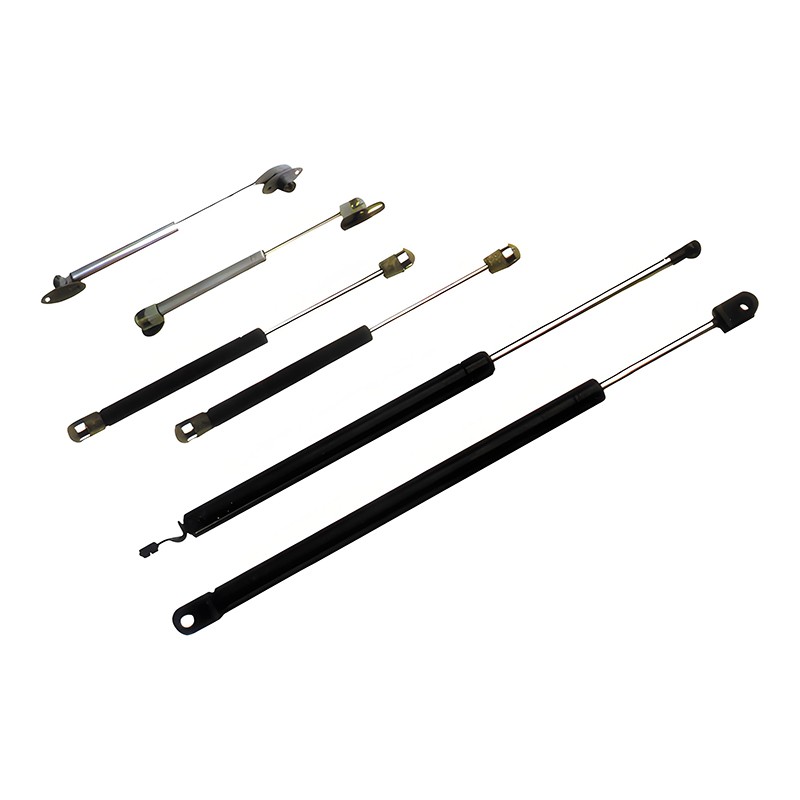 Support Gas SpringThe "support gas spring" is a highly efficient and stable gas spring device specifically designed to provide reliable support functionality. It is mainly used to suppo...View Product →
Mounting position comparison: what changes when you move the pivot
Use this comparison as a first-pass screen. It is based on a typical horizontal lid with a compression gas spring, but the trends apply to cabinet doors, machine guards, and vehicle hatches. The goal is not to find a universal percentage; it is to understand which trade-off you are accepting.
These are relative trends, not fixed rules. Hinge friction, lid mass distribution, and gas spring force tolerance of plus or minus 10% can shift the final result. The safe approach is to calculate, then build a mock-up before committing to production brackets.
Hidden indicators that decide success
Force at mid-stroke is visible on a datasheet. The following indicators are hidden in the mounting geometry and are often responsible for field complaints. The chart shows a relative index from a 25% pivot baseline: higher values mean better performance or lower risk.
Smooth opening
Stroke use
Thermal margin
Seal life index
A mounting position that scores well on smooth opening but poorly on stroke use may still fail when the lid gasket adds resistance. A position with good thermal margin is less likely to sag in a hot vehicle interior or stiffen in a cold warehouse. If the seal life index drops, check rod-down orientation and side-load from the end fittings before changing gas pressure.
Where mounting position matters most
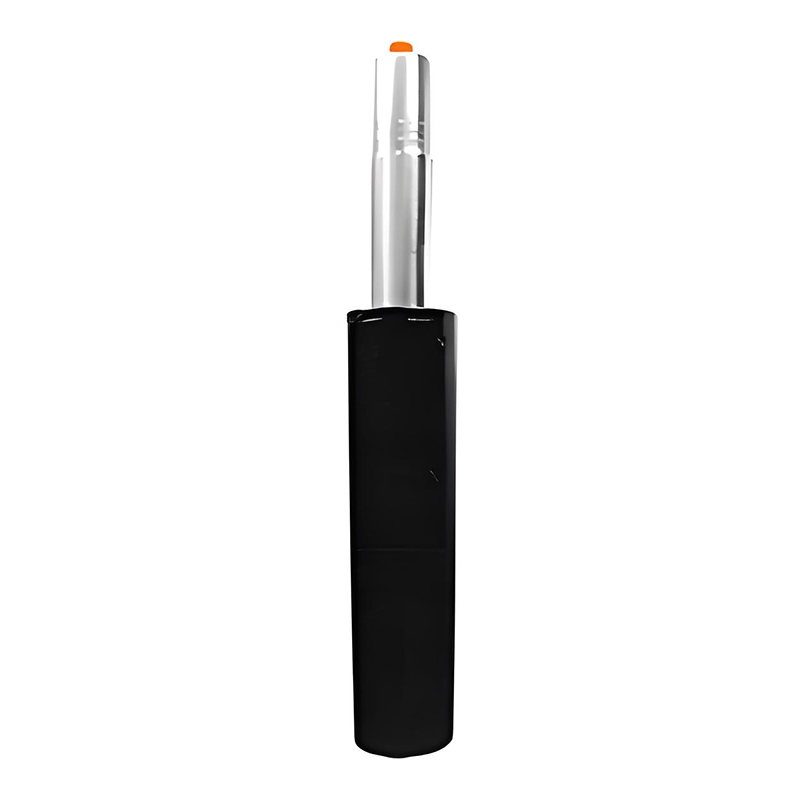
Mounting position is not equally critical in every application. Office chair gas lifts are mostly vertical and constrained by the seat post, so the frame often fixes the geometry. Automotive hatches, industrial covers, and machine guards have more freedom, which means geometry errors are more common and more expensive. The distribution below is an engineering estimate for gas spring support applications, not an official market statistic.
Seating and office chairs: 36% Automotive hatches and cabinets: 28% Industrial covers and machinery: 22% Medical and other equipment: 14%
In seating, the main risk is a replacement cylinder that fits but has the wrong stroke or force. In hatches and covers, the main risk is a pivot placed for packaging rather than for leverage. Both can be avoided by checking mounting position before the first prototype is signed off.
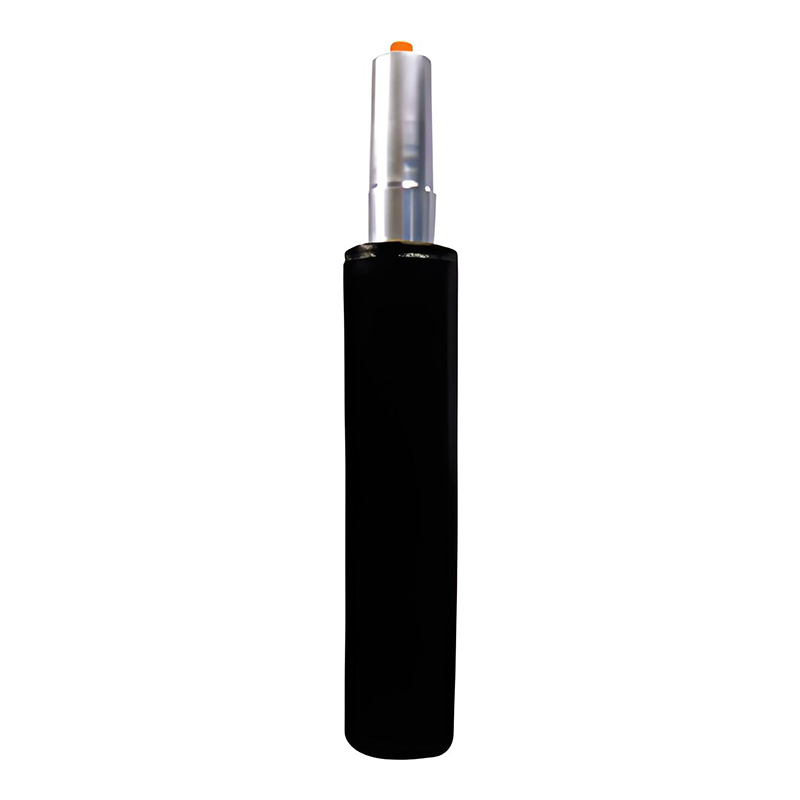 Automatic Spring Lift Gas StrutsThe automatic spring lift gas struts is an innovative and high-performance gas spring system designed to meet the demands of applications requiring exceptional flexibi...View Product →
Step-by-step: calculate and validate a gas spring mounting position
A reliable mounting position comes from a short sequence of measurements and one physical check. Do not skip the mock-up: it exposes interference, over-center behavior, and handling feel that calculations alone cannot capture.
- Measure lid length, hinge location, and required open angle. Record the lid mass and center of gravity.
- Place the moving pivot at 20% to 30% of lid length from the hinge as a starting point. Keep the fixed pivot so the spring axis avoids the hinge line unless over-center action is needed.
- Check the full stroke. Confirm the spring reaches the open position with at least 5 mm of unused travel and does not bottom out in the closed position.
- Verify rod-down orientation in the closed position. If the design requires rod-up, choose a spring with suitable seal and lubrication, or add a guide.
- Test at room temperature, then at the expected hot and cold extremes. A spring that feels correct at 20 C may sag at 60 C or become stiff at -10 C.
- Record the final pivot coordinates on the drawing. Include tolerances for bracket position, because a 2 mm shift can change opening force noticeably on short lids.
For lift-only covers
Use a standard compression gas spring. The mounting position should create no over-center crossing, so the spring holds the cover open without pushing it closed.
For position holding
A lockable gas spring adds a mechanical or hydraulic lock. The mounting position still controls leverage, but the lock must not be used to compensate for a badly placed pivot or side load.
For heavy hatches
Use two springs or a larger rod diameter. Check that the mounting points and hinge can take the reaction force, not just the gas spring itself.
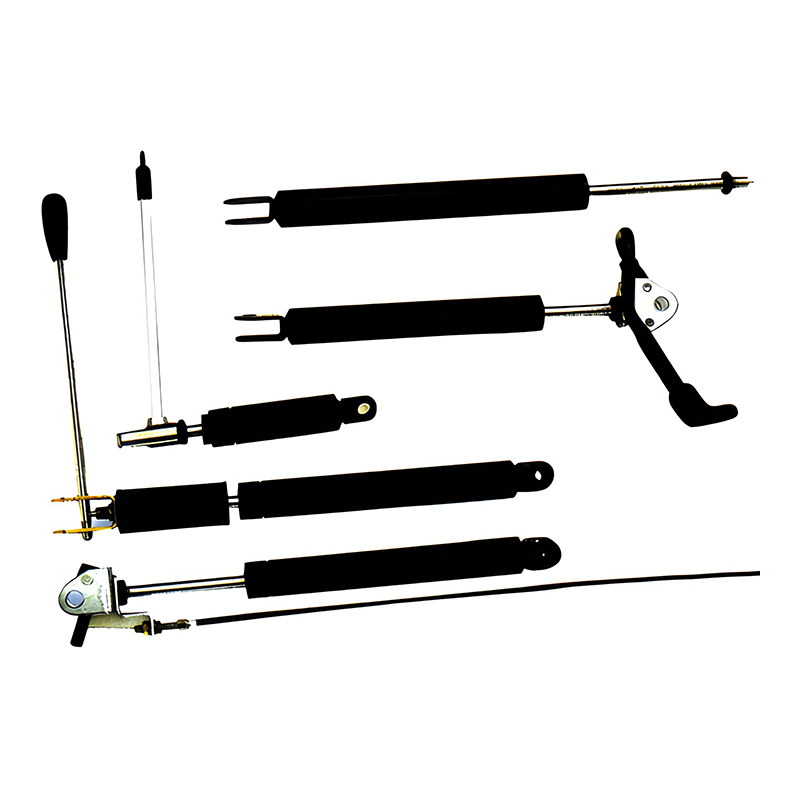 Lockable Gas SpringThe lockable gas spring is used to adjust the backrest angle of the office chair, and can be adjusted to a suitable angle as needed. The lockable gas spring is a perfe...View Product →
Maintenance and compliance checks after installation
Mounting position is fixed at design, but it affects every maintenance interval. A spring that runs at an extreme angle or with side load will show earlier seal wear, rod scoring, or inconsistent force. Include these checks in the assembly and service instructions.
- Inspect the rod for scoring or oil film. A dry or scratched rod often points to side load from the mounting position.
- Check the ball sockets or clevis pins for play. Excess play changes the effective pivot location and can cause noise or over-center behavior.
- Confirm that the spring is not used as a structural stop. The hinge or a separate bumper should limit travel, not the gas spring internal stop.
- Review safety requirements for the application. For overhead or pedestrian-accessible covers, a secondary support or lock may be required even if the gas spring holds position.
- Record replacement part numbers with force, stroke, and end fitting details. A replacement with the same body length but different force can change the safe opening speed.
Mounting position is easy to overlook because it is drawn once and then buried in the assembly. Treat it as a controlled dimension. For application-specific review, discuss your mounting layout with the engineering team before releasing drawings, especially when the lid is heavy, the open angle is unusual, or the spring must hold position under load.