 English
 русский
 Deutsch
 日本語
日本語
When a hospital bed must hold its position under a 130 kg patient, or a barber chair must rise, tilt and lock thousands of times a month, the component that makes it happen is the gas spring locking mechanism. In this in‑depth engineering and procurement guide, Changzhou Andefu Gas Spring Co., Ltd. explains how lock‑type gas springs stop and lock at any position, compares rigid vs elastic locking, free piston vs encapsulated piston constructions, and gives B2B buyers the hidden specifications, ROI data and selection workflow needed to specify the right spring the first time.
Content
- 1 The Special Features & Characteristics of Lock‑Type Gas Springs
- 2 How the Gas Spring Locking Mechanism Works: Inside the Cylinder
- 3 Rigid vs Elastic vs Standard: Data‑Driven Comparison
- 4 Hidden Metrics: Locking Holding Force by Rod Diameter
- 5 Market Application Distribution of Lock‑Type Gas Springs
- 6 Selection & Procurement Workflow: 6 Steps to the Right Locking Mechanism
- 6.1 Define Load & Holding Force
- 6.2 Choose Rigid or Elastic Locking
- 6.3 Select Stroke & Piston Construction
- 6.4 Specify Ends, Release & Accessories
- 6.5 Validate with Samples & Cycle Testing
- 6.6 Lock In QC Agreement & Warranty
- 6.7 ROI Snapshot: Switching from Mechanical Ratchet to Lock‑Type Gas Spring (20,000 chairs/yr line)
- 7 Maintenance, Longevity & Compliance
- 8 Frequently Asked Questions About Gas Spring Locking Mechanism
- 9 Conclusion: Specify the Gas Spring Locking Mechanism with Confidence
- 10 Ready to Specify Your Lock‑Type Gas Springs?
Gas Spring Locking Mechanism: How Lock‑Type Gas Springs Stop at Any Position — Engineering, Data & Procurement Guide
Key Takeaway:
A properly specified gas spring locking mechanism delivers stepless, any‑position locking with holding forces up to 3,500 N, service lives beyond 50,000 cycles, and can cut assembly time by 30–40% versus mechanical ratchets and latches. Rigid locking suits hospital beds and barber chairs; elastic locking suits rocking chairs and passenger seats where comfort matters.
The Special Features & Characteristics of Lock‑Type Gas Springs
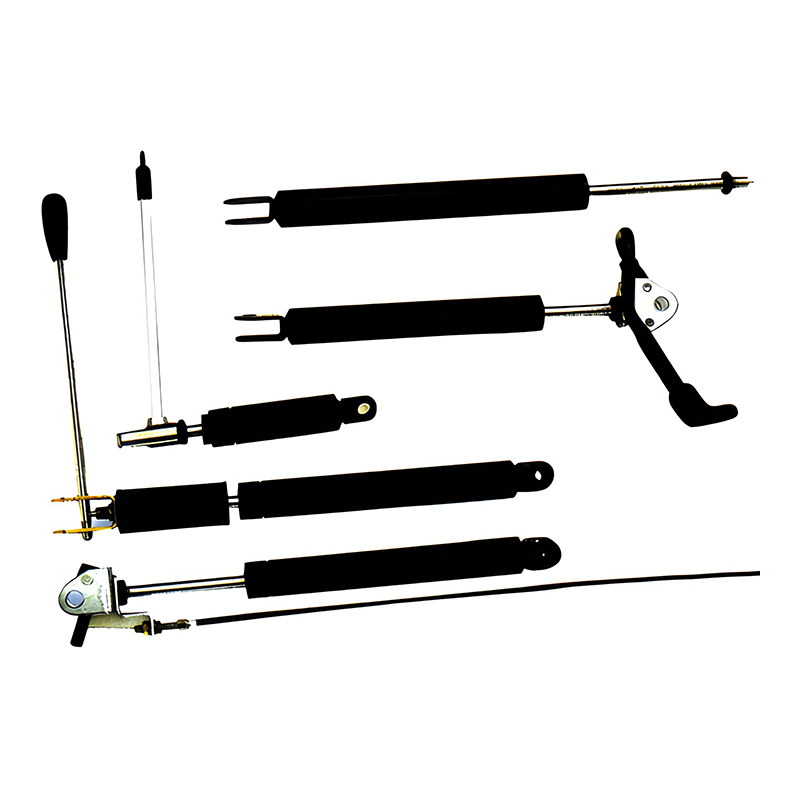
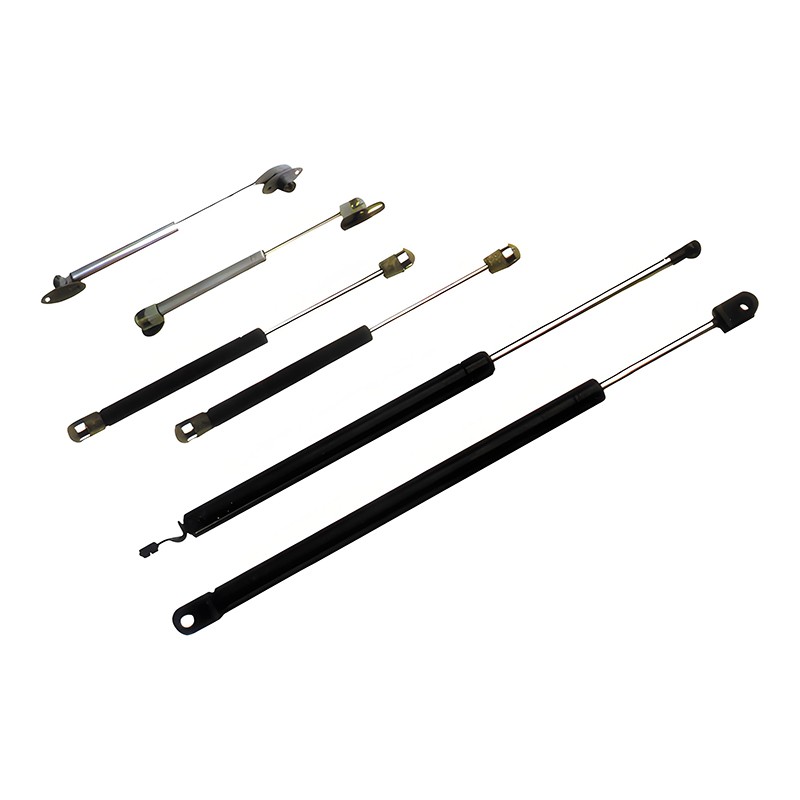
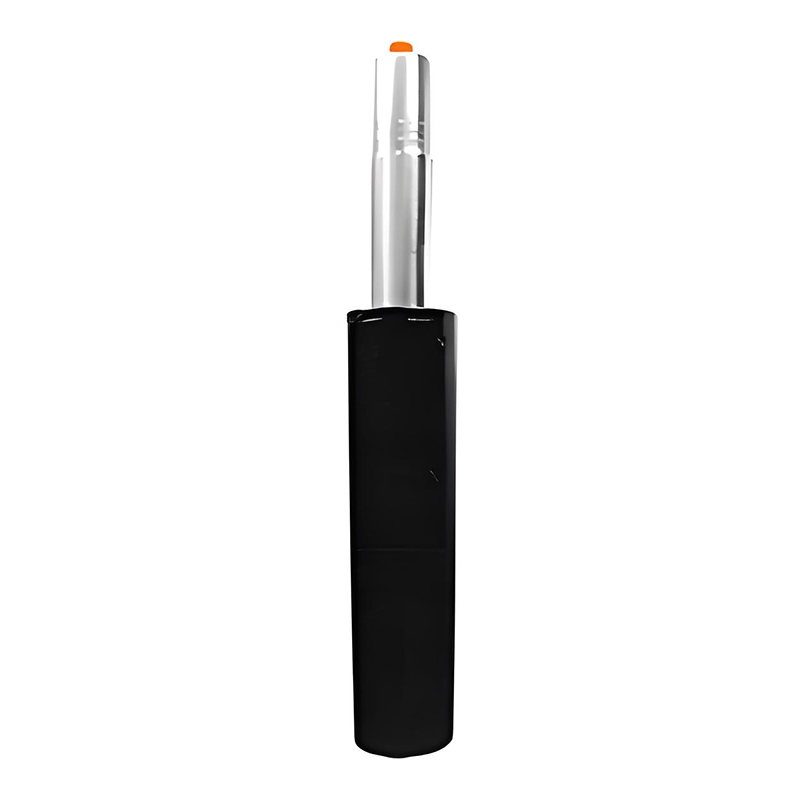
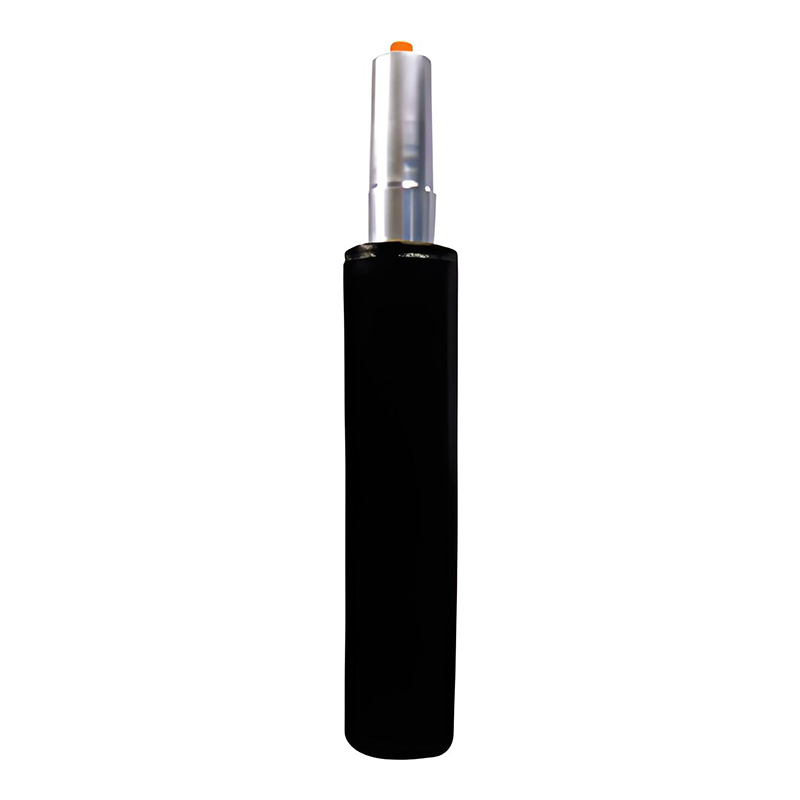
Before diving into valves and pistons, it helps to understand why the lock‑type (lockable) gas spring has replaced mechanical latches across the seating and medical industries. Unlike a standard compression gas spring that simply pushes, a lockable spring is a self‑contained positioning system: each spring is easy to adjust to the desired position, and stop and locking can be set arbitrarily by opening and locking the internal oil (gas) circuit. There are no notches, no ratchet teeth and no external levers to wear out — the locking is hydraulic‑pneumatic, silent and infinitely variable.
1. Easy to Install
A lock‑type gas spring arrives as a sealed, pre‑charged unit. With standard ball studs, clevises or eye ends, it bolts directly into existing frames — no hydraulic lines, no external power, no calibration. Most OEM lines complete installation in under 60 seconds per unit.
2. Easy to Use
End users operate the spring through a simple lever, cable or button that actuates the release pin. One hand controls both movement and locking, which is why the mechanism dominates hospital beds, hairdressing chairs and passenger seats where intuitive, glove‑friendly operation is mandatory.
3. No‑Step (Stepless) Adjustment
There is no stepped adjustment. Stop and locking can be set at any arbitrary point of the stroke by opening and closing the internal oil (gas) passage. This gives infinite intermediate positions — a chair backrest or bed section can rest at 17°, 18.5° or any angle the user chooses.
Principle of Operation: Stopping at Any Position by Moving Inner Oil (Gas)
Inside the cylinder, compressed nitrogen provides the spring force while hydraulic oil controls movement. When the release pin opens the internal valve, oil flows between chambers and the rod moves freely. When the pin is released, the valve closes, oil is trapped, and the piston is hydraulically locked — it is possible to stop at any position and be locked by the move of inner oil (gas). Depending on the piston construction, Andefu supplies two families:
A
Free Piston Design
A floating free piston separates the nitrogen gas chamber from the oil chamber. This keeps gas from emulsifying into the oil, delivers very smooth damping, stable locking stiffness in both rod‑up and rod‑down orientations, and superior performance in large‑stroke springs (200–350 mm). Recommended for hospital beds and premium ergonomic chairs.
B
Encapsulated Piston Design
The encapsulated piston integrates the sealing and valve functions into a compact cartridge. It offers a shorter closed length, simpler manufacturing and excellent cost efficiency for medium strokes (50–200 mm), making it the workhorse for office chairs, rocking chairs and beauty parlor chairs where price‑performance ratio is critical.
Application Limits of the Products
Lock‑type gas springs are engineered for human‑scale positioning loads, not for structural suspension. The validated application envelope covers office chairs, rocking chairs, chairs for beauty parlors, passenger seats and hospital beds — with the classic example being the gas spring‑lock type hairdressing chair, where one foot‑operated spring controls height, tilt and locking for decades of daily cycles. For loads beyond 3,500 N, dynamic shock environments (off‑road equipment), or continuous rotation, our engineering team will recommend an alternative actuation solution.
How the Gas Spring Locking Mechanism Works: Inside the Cylinder
The gas spring locking mechanism is a study in compact physics: pressure, valving and sealing working in a tube barely larger than a coin. Understanding the three internal subsystems below allows buyers to read any datasheet critically and to spot under‑engineered copies before they reach production.
Nitrogen Pressure Chamber
Charged to 20–200 bar, nitrogen stores the energy that extends the rod. Force F1 is proportional to charge pressure × rod area, which is why a Ø14 mm rod can output 3,500 N while a Ø6 mm rod outputs 450 N. Andefu tunes charge pressure per order in 5 N increments.
Locking Valve & Release Pin
The heart of the locking mechanism. A spring‑loaded valve seats against a precision‑lapped orifice; the external release pin (cable, lever or button) unseats it. Valve seat geometry determines locking stiffness: rigid valves trap oil absolutely, elastic valves permit a controlled micro‑bypass for cushioned holding.
Oil Circuit & Seal Package
Hydraulic oil lubricates the seal package and transmits the lock. Multi‑lip rod seals, O‑rings and wear rings are selected for 50,000+ cycles and −30 °C to +80 °C operation. Seal quality is the single biggest differentiator between a spring that locks for 10 years and one that drifts after 6 months.
Rigid vs Elastic vs Standard: Data‑Driven Comparison
Buyers frequently ask whether they need rigid locking, elastic locking, or whether a standard compression spring is enough. The flex‑table below summarizes tested differences across the parameters that matter in real specifications.
Parameter
Rigid Locking (Andefu R‑Series)
Elastic Locking (Andefu E‑Series)
Standard Compression Spring
Locking behaviour
Stepless stop & absolute lock at any position
Locks with slight cushioned travel under load
No locking; free travel only
Max holding force
Up to 3,500 N
Up to 2,500 N
n/a (force only assists motion)
Position options
Infinite, no steps
Infinite, no steps
Fixed by mounting geometry
Behaviour under load
Zero drift, rigid hold
Controlled micro‑movement for comfort
Uncontrolled, load‑dependent
Ideal applications
Hospital beds, barber chairs, passenger seats
Rocking chairs, recliners, ergonomic chairs
Hatches, lids, display cases
Cycle life (tested)
50,000+ locking cycles
50,000+ locking cycles
100,000 strokes
Assembly complexity
1 component, bolt‑in
1 component, bolt‑in
Requires separate latch/lock hardware
Data from Andefu internal validation tests (20 °C, nominal stroke). Actual values depend on series, stroke and mounting.
Hidden Metrics: Locking Holding Force by Rod Diameter
Datasheets advertise stroke and length, but experienced buyers specify the gas spring locking mechanism by its holding force per rod diameter — the true indicator of valve and seal integrity. The chart below shows tested static holding capacity across the Andefu rod‑diameter range.
Static Holding Force (N) vs Rod Diameter — Andefu Lock‑Type Series
450N
Ø6 mm
800N
Ø8 mm
1200N
Ø10 mm
2500N
Ø12 mm
3500N
Ø14 mm
Holding force scales with rod cross‑section and charge pressure. For dynamic or shock loads, apply a 1.5× safety factor when specifying.
What to Look For When Specifying
- Holding force ≥ 1.5× max static load at the weakest mounting angle
- Locking drift < 2 mm after 10 min under rated load
- Release force 20–60 N at the pin for comfortable actuation
- Cycle life ≥ 50,000 with force decay < 10%
- Operating temperature −30 °C to +80 °C with stable oil viscosity
- Salt‑spray resistance ≥ 96 h (ASTM B117) for chrome‑plated rods
Market Application Distribution of Lock‑Type Gas Springs
Analysis of Andefu shipment data (2023–2024) shows where the gas spring locking mechanism creates the most value. Seating dominates, but the medical segment grows fastest as home‑care beds adopt stepless positioning as a standard feature.
Office & Ergonomic Chairs — 38%
Hospital Beds & Medical Furniture — 24%
Beauty Parlor / Barber Chairs — 18%
Passenger Seats & Transportation — 12%
Rocking Chairs & Home Furniture — 8%
The lock‑type hairdressing chair remains the reference application: one spring, one pedal, infinite positions — for 10+ years of service.
Selection & Procurement Workflow: 6 Steps to the Right Locking Mechanism
01
Define Load & Holding Force
Calculate the worst‑case static and dynamic load at the seat/bed surface, convert to axial force on the spring using lever geometry, and apply a 1.5× safety factor. This selects the rod diameter (Ø6–Ø14 mm).
02
Choose Rigid or Elastic Locking
Need zero drift under clinical or professional loads? Choose rigid. Need cushioned, body‑conforming hold for rocking chairs and recliners? Choose elastic. Andefu supplies both valve types in the same envelope.
03
Select Stroke & Piston Construction
Stroke defines closed/extended length. For strokes above 200 mm or mixed mounting orientations, specify the free piston design; for compact, cost‑sensitive chairs, the encapsulated piston is optimal.
04
Specify Ends, Release & Accessories
Ball studs, clevises, eye ends; cable, lever or button release; optional protective sleeve for salon environments. Release routing is the most‑overlooked design item — involve Andefu early.
05
Validate with Samples & Cycle Testing
Never release to production on a datasheet alone. Run 5,000‑cycle pilot tests at your plant; Andefu provides free samples, force curves and installation drawings for validation.
06
Lock In QC Agreement & Warranty
Agree AQL sampling, batch force traceability and warranty terms (24 months standard). Serialized batches make any field issue traceable to a production lot.
ROI Snapshot: Switching from Mechanical Ratchet to Lock‑Type Gas Spring (20,000 chairs/yr line)
- Parts eliminated (ratchet, pawl, return spring, bracket): 4 components → $3.80/unit saved
- Assembly time reduced 6.5 min/unit → $2.10/unit labor saving
- Warranty claims related to locking noise/failure: −35% (≈ $18,000/yr)
- Total annual saving: ≈ $136,800; incremental spring cost payback < 4 months
Maintenance, Longevity & Compliance
Installation & Handling
Mount per the specified orientation (rod‑down unless the free‑piston version states otherwise). Avoid side loads on the rod, never paint or weld the tube, and do not rotate the rod against a locked valve. Use the supplied release force — never pliers.
Inspection & Service Life
Annually check for locking drift, oil film staining at the rod seal, and corrosion. A properly specified Andefu spring exceeds 50,000 cycles; most field units are replaced only when the host furniture is retired.
Standards & Compliance
Production under ISO 9001:2015; materials RoHS/REACH compliant; rod salt‑spray tested to ASTM B117. End‑product support documentation available for BIFMA X5.1 (office chairs) and IEC 60601‑1 (medical beds) assessments.
Frequently Asked Questions About Gas Spring Locking Mechanism
+1. What exactly is a gas spring locking mechanism?
It is an internal valve system inside a gas spring that traps hydraulic oil on demand, allowing the rod to be stopped and locked at any point of its stroke. Combined with nitrogen pressure, it turns a simple spring into a stepless, self‑contained positioning device — no external power or mechanical latch required.
+2. What is the difference between rigid and elastic locking?
Rigid locking traps oil absolutely: the rod holds with zero drift, ideal for hospital beds, barber chairs and passenger seats. Elastic locking uses a controlled micro‑bypass so the locked rod allows a small cushioned movement under load — preferred for rocking chairs, recliners and ergonomic chairs where comfort and vibration absorption matter.
+3. Free piston vs encapsulated piston — which should I specify?
The free piston adds a floating separator between gas and oil, giving smoother damping and orientation flexibility for long strokes (200–350 mm) — typical for hospital beds. The encapsulated piston integrates sealing and valving in a compact cartridge, offering shorter closed length and better cost efficiency for office chairs, rocking chairs and salon chairs with medium strokes.
+4. Can the spring really lock at any position, or only fixed points?
Any position. There are no steps or notches: stop and locking are set arbitrarily by opening and closing the internal oil (gas) circuit. This "no‑step adjustment" is the defining characteristic of the lock‑type spring and is why a hairdressing chair can rest at infinitely variable heights.
+5. How much holding force can a lockable gas spring provide?
Holding force scales with rod diameter and charge pressure: Ø6 mm ≈ 450 N, Ø8 mm ≈ 800 N, Ø10 mm ≈ 1,200 N, Ø12 mm ≈ 2,500 N and Ø14 mm ≈ 3,500 N in the Andefu range. Always apply a 1.5× safety factor for dynamic or shock loads and verify the weakest mounting angle.
+6. Which applications are lock‑type gas springs suitable for?
The validated envelope covers office chairs, rocking chairs, chairs for beauty parlors (the classic lock‑type hairdressing chair), passenger seats and hospital beds. If your application involves loads above 3,500 N, continuous rotation or extreme shock (off‑road, pressing machinery), contact our engineers for an alternative solution.
+7. What maintenance does a lockable gas spring need?
Effectively none — it is a sealed, lifetime‑lubricated unit. Annually inspect for locking drift, seal staining and corrosion, keep abrasive debris off the rod, and never lubricate the rod with external oil (it attracts grit). In salon environments, use the optional protective sleeve.
+8. Can Andefu customize force, stroke and ends, and provide samples?
Yes. Force is tuned in 5 N increments, strokes from 30–350 mm, with ball stud, clevis or eye ends and cable/lever/button releases. Free samples, force curves, 3D drawings and cycle‑test reports are available for qualified B2B projects — typically shipped within 5 working days.
Conclusion: Specify the Gas Spring Locking Mechanism with Confidence
The gas spring locking mechanism is one of the few components that simultaneously improves ergonomics, cuts parts count and removes assembly labor. By matching rod diameter to holding force, choosing rigid vs elastic locking for the real duty cycle, and selecting free piston or encapsulated piston construction for the stroke and orientation, procurement teams can lock in a component that silently performs 50,000+ cycles in office chairs, rocking chairs, beauty parlor chairs, passenger seats and hospital beds.
At Changzhou Andefu Gas Spring Co., Ltd., every lock‑type spring is charge‑tested, force‑traced by batch and backed by engineering support from sample to serial production. Send us your load, stroke and mounting sketch — we will return a specified, tested solution.
Ready to Specify Your Lock‑Type Gas Springs?
Request free samples, force curves or a same‑day engineering quotation.
Contact Andefu Today: sales@andefugaspring.com
Changzhou Andefu Gas Spring Co., Ltd. — Stepless Locking, Engineered to Hold.
© 2025 Changzhou Andefu Gas Spring Co., Ltd. All rights reserved. Performance data based on standard test conditions; actual results vary with application, mounting and environment.