 English
 русский
 Deutsch
 日本語
日本語
Start a gas strut calculation with the hinge, not the spring. The force you need depends almost entirely on where the strut is mounted relative to the pivot and the center of gravity. Move a mounting bracket 20 mm closer to the hinge, and the required strut force can change by a third.
Core conclusion: Use a moment balance, not a weight-only rule. A rough starting point is 13 N of force per pound of lid weight, then adjust for the lever arm and opening angle.
This article explains how to perform that calculation, what hidden variables will affect the result, and how to turn the numbers into a reliable production strut.
Content
- 1 Understanding the Basic Moments in a Gas Strut Calculation
- 2 Single Gas Strut vs Dual Gas Struts: What the Data Shows
- 3 The Hidden Variables That Change Your Calculation
- 4 Industry Applications and How They Shape Your Calculation
- 5 A Sizing Process That Keeps Your Project on Budget
- 6 Maintenance, Compliance, and Long-Term Reliability
Understanding the Basic Moments in a Gas Strut Calculation
The standard equation is F = (W × Lw) / Ls, where F is the strut force, W is the weight of the lid, Lw is the perpendicular distance from the pivot to the line of action of the weight, and Ls is the perpendicular distance from the pivot to the strut axis. If the strut is at an angle θ to the lid, Ls equals the strut mounting distance times sin θ. Measure both lever arms at the closed position and again at the open position; the higher force requirement usually occurs when the lid is nearly closed.
Required force
This is your starting point from the moment balance, but specify whether you mean force at full extension, mid-stroke, or closed position.
Stroke
Stroke controls how far the lid opens. It must match the available travel between mounted end points without over-extension.
Mounting points
Moving a bracket changes the lever arm and the effective force. A small mounting change can create a large force change.
The same formula applies to small lids, tailgates, and expensive machine guards. If you only need to hold a cover open, choosing a standard product is straightforward, but you still have to verify that the support gas spring will hold at the open position without overloading the frame.
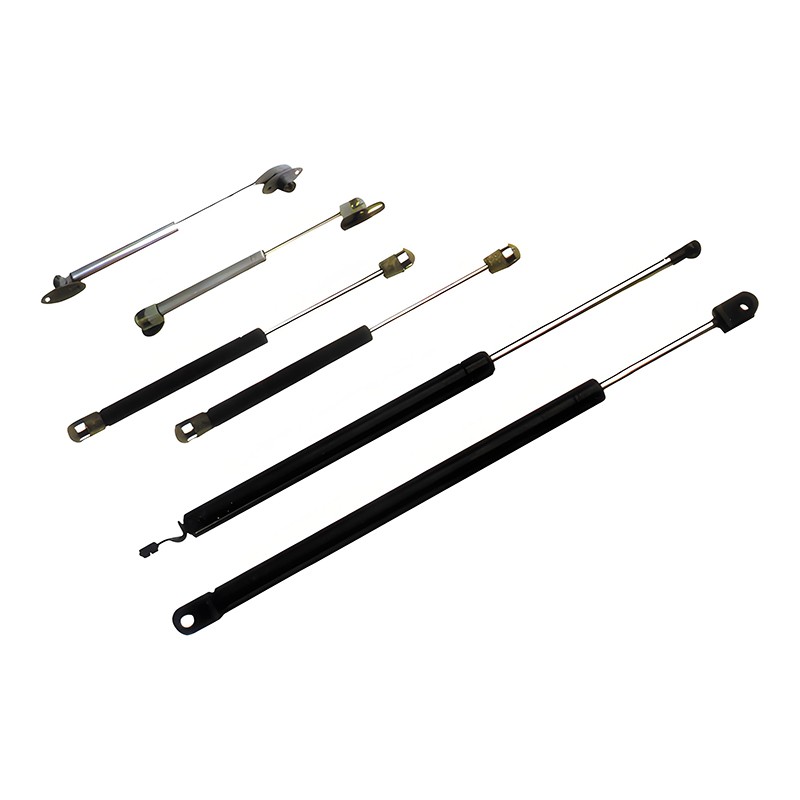 Gas Spring Support Manufacturers, Gas Spring Lift Support SuppliersADF is Gas Spring Support Manufacturers, Gas Spring Lift Support Suppliers and Gas Strut Lift Support Factory in China, offer Gas Strut L...View Product →
Single Gas Strut vs Dual Gas Struts: What the Data Shows
Many projects move from one strut to two for visual symmetry. The calculation, however, does not simply divide the force by two. Use the simplified comparison below as a first screen.
Factor
Single strut
Dual struts
Effective force
Use the full calculated force
Size each strut at 50–60% of the calculated force
Stability
Less stable under side loads
Better lateral control
Mounting space
One set of brackets
Two sets of brackets needed
Cost
Lower component cost
Higher component cost, lower stress per strut
Failure behaviour
One failure means immediate drop
One failure leaves partial support
Simplified comparison for gas strut sizing on hinged covers.
When two struts run in parallel, tolerances in bracket position and friction can make one strut carry much more than its share. A 55–60% sizing factor prevents premature wear and uneven movement.
The Hidden Variables That Change Your Calculation
The moment formula gives you a static number. A production gas strut must deliver that number over its service life, but temperature, friction, and mounting accuracy all shift the effective force.
- Temperature: gas pressure changes roughly 3–5% per 10°C. A strut selected for a warm workshop can feel too weak on a cold morning.
- Friction hysteresis: breakaway force is higher than running force. This helps hold a lid steady, but it makes the initial pull feel heavier than the calculation suggests.
- Mounting angle error: a 5° error in the bracket angle can reduce the effective perpendicular lever arm by 10–20%.
- Non-uniform load: if the assumed center of gravity is off by 10% toward the free edge, the required force climbs directly.
These factors combine in the real installation. The chart below shows a relative estimate of their effect on effective strut force.
If you want to understand the underlying mechanics rather than only the calculation, read how gas spring rods work; it explains the rod pressure area and why rod diameter matters.
Industry Applications and How They Shape Your Calculation
Gas struts appear in four large application groups: office seating, automotive closures, industrial machinery, and furniture or medical equipment. The distribution is not universal, but it helps explain why a single calculation method is never enough.
Office seating 35%
Automotive 25%
Industrial 25%
Furniture and medical 15%
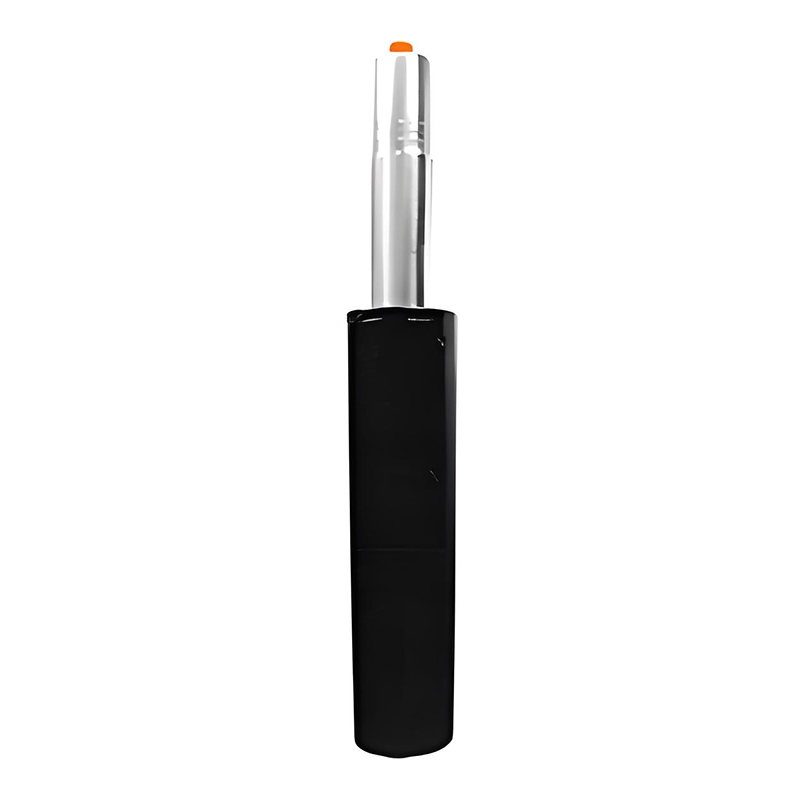
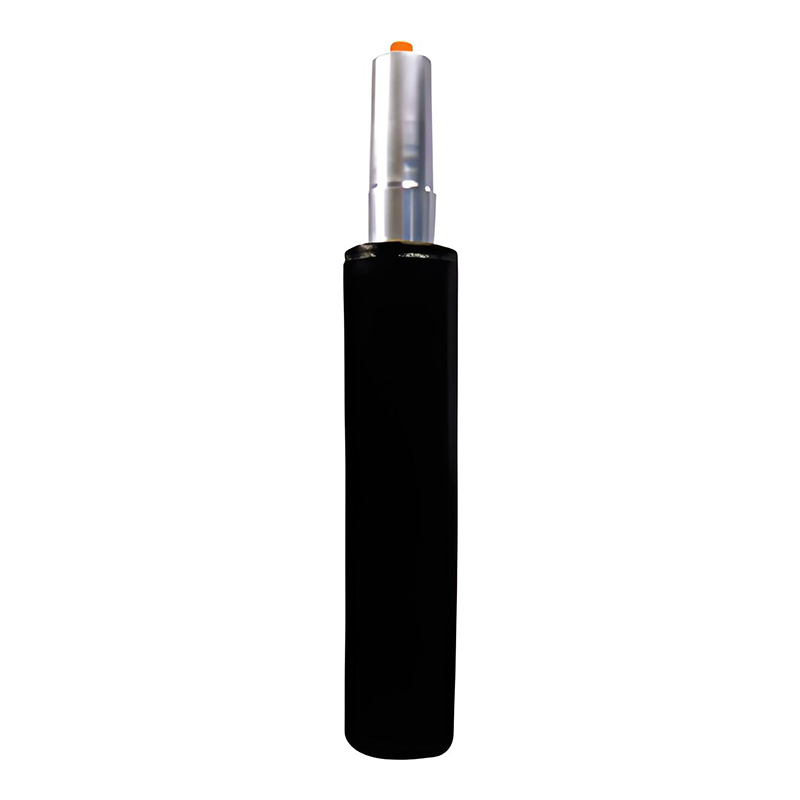
Office seating is one of the most visible segments. The calculation here must include friction from the column and the user's repeated compression. In our production experience, standard-height heavy-duty office chair gas lift cylinders need a carefully defined force window, not just a minimum force, to avoid a chair that rises too slowly or too quickly.
Industrial and medical equipment often require position-holding rather than simple extension. A lockable gas spring is a different product class: the calculation must verify the locking force at the desired stop point, not only the opening assist.
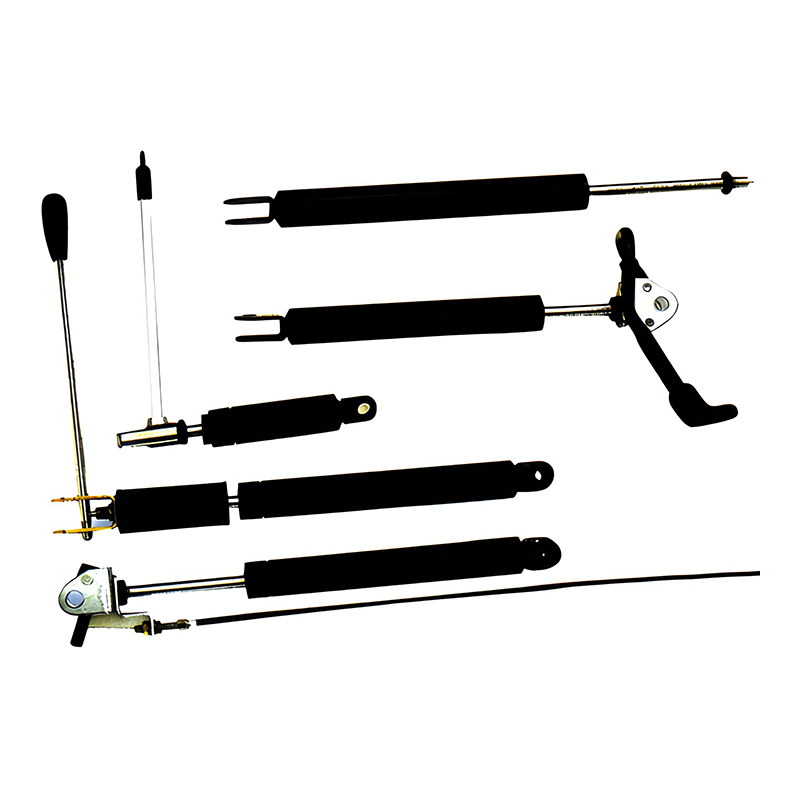 Lockable Gas Spring Manufacturers, Locking Gas Springs SuppliersChina Adjustable Locking Gas Springs Manufacturers, Lockable Gas Springs Suppliers and Factory, ADF offer Custom Lockable Gas Struts, Adj...View Product →
Automotive tailgates and tool boxes place a high premium on cycle life, so the force calculation should be accompanied by life testing at temperature extremes.
A Sizing Process That Keeps Your Project on Budget
Most calculation errors are discovered in the prototype phase, when changing bracket locations is already expensive. A quick five-step process reduces that risk.
- Define the moving part: weight, center of gravity, and open/close angle.
- Select preliminary mounting points in CAD or on the actual frame.
- Measure lever arms at both closed and open positions.
- Calculate required force at the worst-case position.
- Choose a standard gas strut with at least 10–15% safety margin; confirm stroke and end fittings.
Use the worst-case load position in your calculation. If the standard stroke does not match your opening angle, ask a manufacturer to modify the end fittings or rod length. Working directly with a supplier that can develop from your drawing or sample shortens iteration time. You can contact our engineering team before the final specification is locked, especially if you need a custom force or bracket.
Maintenance, Compliance, and Long-Term Reliability
Calculations do not stop at assembly. A strut with the right force will still shorten its life if it is exposed to abrasive dust, excessive heat, or repeated side loads.
- Keep piston rods clean; wipe regularly and avoid paint or dirt build-up.
- Check for an oil film or visible leakage at the rod seal; a wet rod indicates seal wear.
- Avoid over-extension beyond the internal stop; if the lid is over-slammed, add a rubber bumper.
- Respect the temperature range specified by the manufacturer, usually -20°C to 80°C unless a low-temperature variant is ordered.
- For safety-critical doors, use a mechanical catch or positive stop as backup.
Choose a supplier that controls the manufacturing process at every step and tests units before shipment. This is especially important for gas struts sold into furniture, automotive, and medical equipment, where a sudden failure is a liability. In our workshop, each process step is inspected, and the product range is built with the same discipline. If you provide a drawing or sample, the development team can adapt the spring, rod, and bracket to the actual calculation, not the other way around.