 English
 русский
 Deutsch
 日本語
日本語
Content
- 1 How Bar Stools Gas Springs Work and Why They Matter
- 2 Bar Stool Counter Height: Understanding the Adjustment Range Requirement
- 3 ADF-243 Series Specifications and What Each Parameter Means in Practice
- 4 Built-In Damping: The Difference Between Smooth and Jarring Height Adjustment
- 5 Silver Finish and Aesthetic Integration in Modern Bar and Café Interiors
- 6 Selecting and Installing Bar Stools Gas Springs: Practical Guidance
How Bar Stools Gas Springs Work and Why They Matter
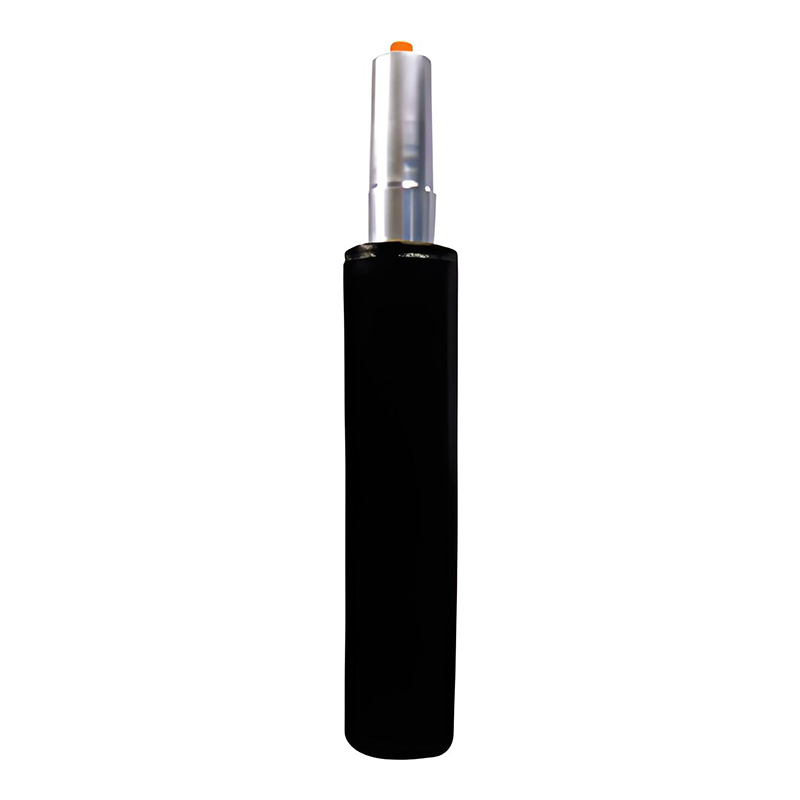
Bar stools gas springs are pneumatic cylinders that allow the seat height of a stool to be adjusted smoothly and held securely at any position within the available stroke range. They operate on a simple but precise principle: compressed nitrogen gas is sealed inside the cylinder, and a valve pin — activated by the lever or paddle mechanism beneath the seat — releases or locks the gas pressure to permit or prevent piston movement. When the user sits down and presses the lever, the seat lowers under body weight. When the lever is pressed without load, the gas pressure pushes the seat upward. The result is effortless, stepless height adjustment that mechanical ratchet systems cannot replicate.
In bar and café environments, this mechanism is subjected to considerably more daily cycles than an office chair gas spring. Patrons adjust seat height frequently, and the spring must handle repeated actuation without pressure loss, valve wear, or cylinder scoring. A gas spring engineered specifically for bar stool applications uses heavier tube walls, a more robust valve assembly, and surface treatments suited to the aesthetic demands of high-visibility seating environments — factors that generic office chair cylinders are not designed to provide.
Bar Stool Counter Height: Understanding the Adjustment Range Requirement
Selecting the correct gas spring begins with understanding the target seating height range. Bar stool counter height seating typically positions the seat between 580 mm and 760 mm from the floor, designed to pair with bar counters and kitchen islands in the 900–1050 mm height range. This is distinctly different from standard counter stools (seat height 580–650 mm) or drafting-height stools (seat height 760–800 mm), and a gas spring specified for one category will not necessarily deliver adequate adjustment range for another.
The stroke length of the gas spring directly determines how much height adjustment the user has available. A 120 mm stroke — as featured in the ADF-243 series — covers the full ergonomic range most bar counter height applications require, accommodating users of varying stature at a single fixed counter surface. Shorter-stroke cylinders restrict adjustment flexibility and force users to accept a fixed or near-fixed seating height, which reduces comfort and limits the stool's appeal across a diverse customer base in commercial settings.
For stools intended to serve both bar counter height and standard counter positions — common in open-plan hospitality layouts where seating must adapt to different surface heights — a large travel range gas spring is essential. The ability to be freely raised, lowered, and positioned across the full stroke without intermediate lock points gives the stool the flexibility commercial environments demand.
ADF-243 Series Specifications and What Each Parameter Means in Practice
The ADF-243 series bar stools gas springs are engineered around a set of dimensional and mechanical parameters that directly determine compatibility and performance. Understanding what each specification means in context — not just as a number — allows furniture designers and procurement teams to evaluate fit with confidence.
| Specification | ADF-243 Value | Practical Implication |
|---|---|---|
| Outer tube length | 210 mm | Determines the retracted height contribution to overall stool height at lowest position |
| Inner tube length | 58 mm | Controls the piston travel and contributes to overall extended length |
| Overall length (extended) | 388 mm | Maximum installed height; must fit within the stool's structural envelope at full extension |
| Adjustment stroke | 120 mm | Total usable height adjustment range from lowest to highest seat position |
| Connection diameter (S-210-10) | 10 mm | Suits slender-column stool designs with narrower mechanism housings |
| Connection diameter (D-210-20) | 20 mm | Suits heavier-duty or wider-column constructions requiring a larger interface bore |
The availability of two connection diameter options — 10 mm in the S-210-10 model and 20 mm in the D-210-20 — is a practical accommodation to the diversity of bar stool structural designs currently in production. A single connection diameter would force designers to either modify their column geometry or accept a poorly fitting interface, both of which introduce cost and structural compromise. By offering both diameters within the same series, the ADF-243 maintains dimensional consistency in all other parameters while adapting to the actual construction requirements of different chair designs.
Built-In Damping: The Difference Between Smooth and Jarring Height Adjustment
A gas spring without a damping system releases stored pressure abruptly when the valve is opened. In practice, this means the seat either drops suddenly under load or shoots upward when unloaded — both of which produce an unpleasant, unprofessional user experience. In a retail or hospitality environment where first impressions of product quality matter, an undamped cylinder immediately communicates low quality regardless of the stool's aesthetic design.
The built-in damping system in the ADF-243 series restricts the rate of piston movement by introducing controlled resistance to gas flow within the cylinder. The result is stable and noise-free operation during height adjustments — the seat moves at a consistent, controlled pace whether ascending or descending, with no sudden lurching or audible hissing. This is particularly important in quiet café environments or high-end bar settings where ambient noise levels are low and mechanical sounds from furniture would be conspicuous.
Damping also protects the internal seals and valve components from impact stress. An undamped cylinder that reaches the end of its stroke at full speed subjects the end cap and piston seal to repeated impact loads that accelerate wear and eventually cause nitrogen leakage. Damped cylinders distribute this deceleration force over a longer travel distance, extending service life measurably under commercial use conditions.
Silver Finish and Aesthetic Integration in Modern Bar and Café Interiors
Gas springs are typically concealed components, but in bar stool designs — particularly open-frame or pedestal constructions where the column is exposed — the finish of the cylinder is directly visible to the end user. A matte black or raw steel finish is functional but visually mismatched with the polished metal, chrome, and brushed aluminum elements that define contemporary bar and café aesthetics.
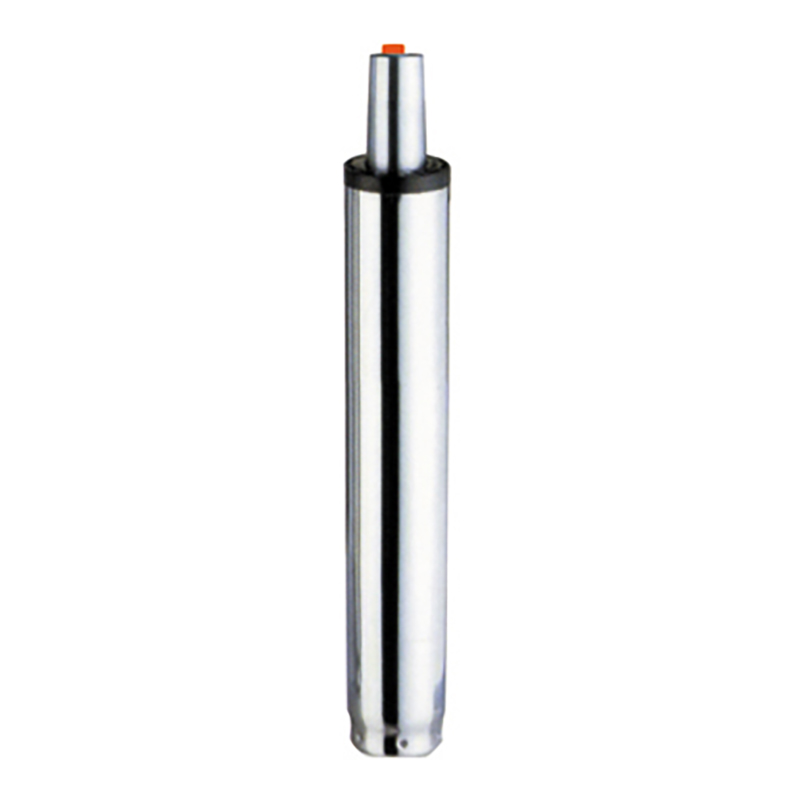
The ADF-243 series addresses this directly with a sleek, high-end silver finish applied to the outer tube. This finish is not merely cosmetic — it provides corrosion resistance in environments where cleaning agents, spilled beverages, and humidity are routine, while delivering a visual character that complements chrome footrests, stainless steel counter edges, and aluminum seat frames. Whether placed by a bar counter or in a high-end leisure setting, the silver finish integrates naturally without requiring additional shrouding or cover components that add weight and assembly complexity.
For furniture designers working to a defined visual language — industrial, Scandinavian minimal, contemporary hospitality — the ability to specify a gas spring that contributes positively to the overall aesthetic rather than detracting from it reduces the design constraints around column geometry and cover design. The ADF-243 series functions as both a precision mechanical component and a stylish addition to any bar stool design.
Selecting and Installing Bar Stools Gas Springs: Practical Guidance
Correct selection and installation of bar stools gas springs ensures long service life and consistent user experience. The following checklist covers the critical decision points for both new designs and replacement applications:
- Verify seat height range against counter height: Confirm that the gas spring's stroke, combined with the stool's fixed structural height at lowest position, places the seat within the target bar stool counter height range of 580–760 mm at both extremes of adjustment.
- Match connection diameter to column bore: Measure the internal diameter of the stool's column socket precisely before specifying S-210-10 (10 mm) or D-210-20 (20 mm). A loose fit allows lateral movement and accelerates wear on both the cylinder and the column interface.
- Check overall extended length against structural clearance: At full extension (388 mm for the ADF-243), the cylinder must not exceed the available space between the base and seat plate. Insufficient clearance prevents full stroke use and may damage the cylinder end fittings.
- Confirm load rating against intended user weight: Gas spring load class must match the maximum expected user weight plus the weight of the seat and any cushion assembly. Undersized cylinders compress under load and fail to hold the selected height position.
- Inspect and replace at first sign of pressure loss: A cylinder that no longer holds height or descends slowly under load has lost nitrogen pressure and should be replaced before complete failure. Continuing to use a degraded cylinder accelerates wear on the actuation mechanism and seat plate attachment.
Whether specifying for a new bar stool product line or sourcing replacements for an existing commercial installation, matching the gas spring specification precisely to the structural and ergonomic requirements of the application ensures that every height adjustment delivers the smooth, controlled, noise-free performance that defines a quality seating product in a demanding hospitality environment.