 English
 русский
 Deutsch
 日本語
日本語
Content
- 1 A Gas Lift Cylinder Is a Precision Gas Spring, Not a Simple Tube of Compressed Air
- 2 Safety Standards and the Class System That Defines Load Capacity
- 3 The Sinking Chair and How the Internal Seal Fails
- 4 Measuring the Cylinder for Correct Replacement Sizing
- 5 Removal Techniques and the Tools That Actually Work
- 6 Installation Procedure and Avoiding Premature Seal Damage
- 7 Non-Standard Cylinder Configurations and Specialty Office Seating
- 8 Disposal and the Hazard of Residual Gas Pressure
A Gas Lift Cylinder Is a Precision Gas Spring, Not a Simple Tube of Compressed Air
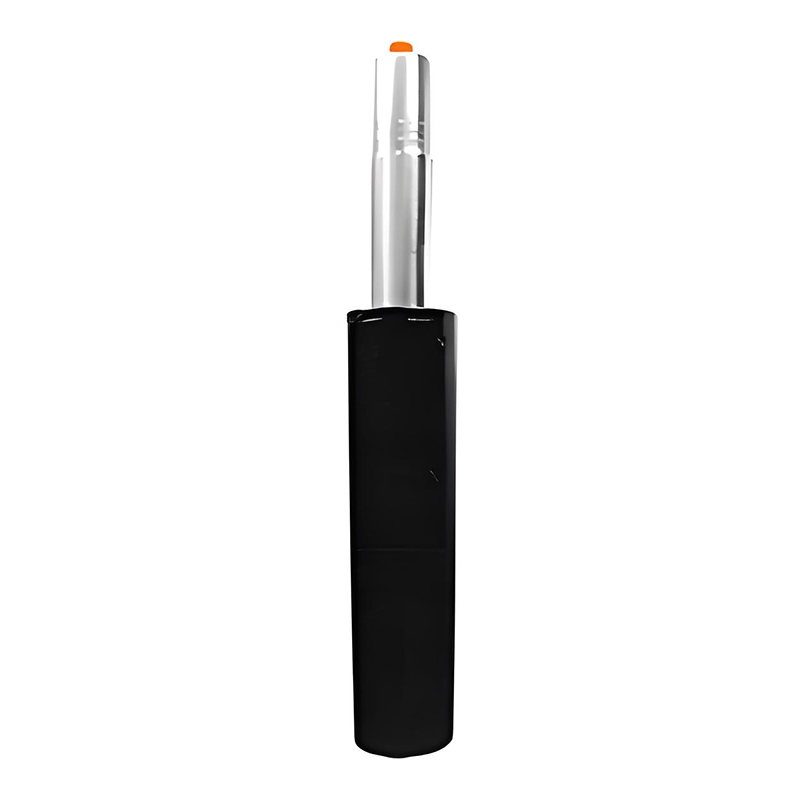
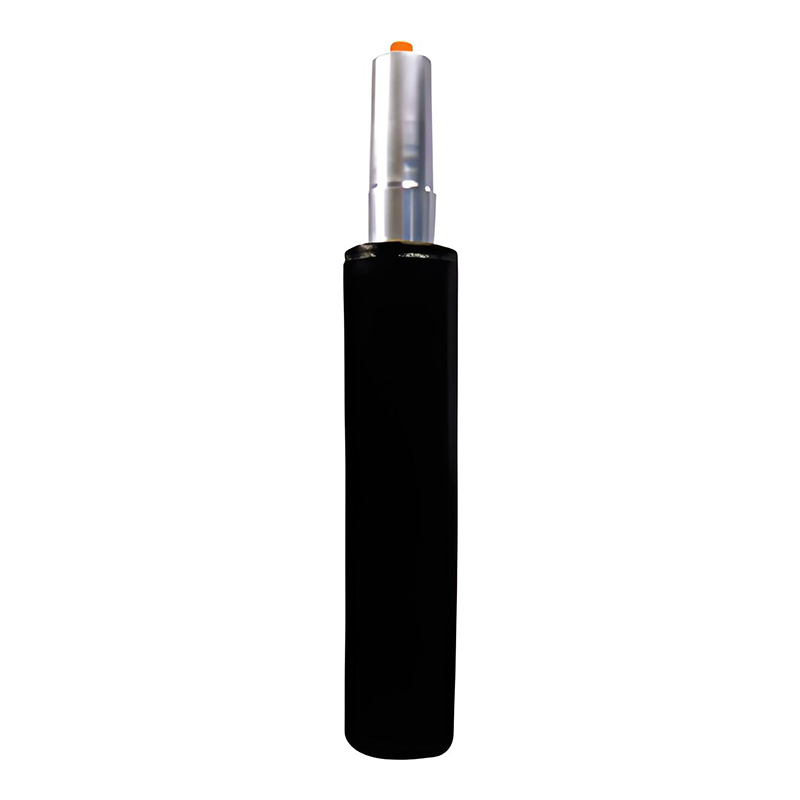
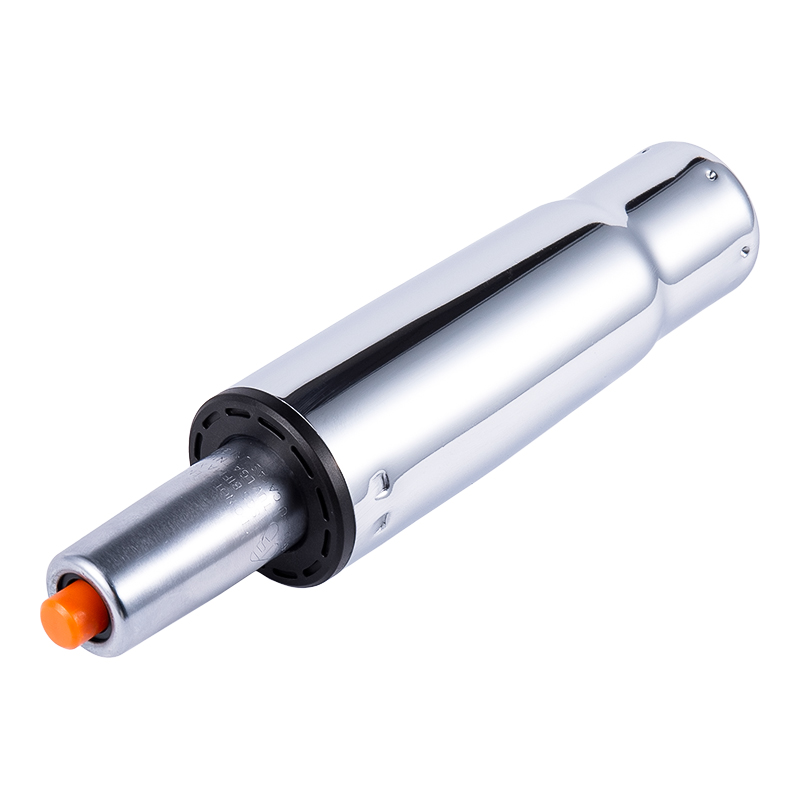
The component that adjusts the height of an office chair is a gas lift cylinder—a sealed, self-contained gas spring that uses pressurized nitrogen gas and a metering valve to support and adjust the seated user's weight. When the actuation lever is pressed, it opens a valve inside the cylinder that allows nitrogen to flow between two internal chambers across a piston. The gas pressure, typically charged to between 25 and 40 bar depending on the cylinder class, supports up to 150 kilograms in heavy-duty units. The outer casing is a precision-drawn steel tube with a chrome-plated piston rod that must maintain a surface finish of 0.1 microns Ra or finer at the seal interface. Any scratch, pit, or corrosion spot on this rod surface will destroy the internal polyurethane seal within hundreds of actuation cycles, causing the chair to sink gradually under load. The cylinder does not contain a coil spring and does not rely on mechanical compression; the lifting force comes entirely from the pressurized nitrogen acting against the differential area of the piston rod cross-section inside the cylinder body.
Safety Standards and the Class System That Defines Load Capacity
Office chair gas lift cylinders are categorized by safety classes defined under the DIN 4550 and EN 16955 international standards, which specify dimensional requirements, wall thickness, gas charge limits, and mandatory burst testing. Class 1 cylinders have an outer tube diameter of 28 millimeters with a wall thickness of 1.5 millimeters, suitable for light-duty applications up to 80 kilograms. Class 2 cylinders use a 28-millimeter tube with a thicker 2.0-millimeter wall, increasing the burst margin. Class 3 cylinders step up to a 38-millimeter outer tube with a 2.0-millimeter wall, the most common specification for standard office chairs rated to 120 kilograms. Class 4 cylinders, the heaviest grade, use a 40-millimeter or larger tube with a minimum 2.5-millimeter wall thickness and are tested to support dynamic loads exceeding 150 kilograms with a minimum burst pressure of 120 bar. The class rating is typically laser-etched on the outer casing or printed on an adhesive label. Installing a Class 2 cylinder in a chair designed for Class 4 places the user on a component operating beyond its safety margin—the cylinder may not burst immediately, but fatigue cycling at elevated load reduces its service life from years to months.
| Class | Outer Tube Diameter | Wall Thickness (min) | Max Rated Load | Typical Application |
|---|---|---|---|---|
| Class 1 | 28 mm | 1.5 mm | Up to 80 kg | Light-duty, occasional use chairs |
| Class 2 | 28 mm | 2.0 mm | 80–100 kg | Standard home office chairs |
| Class 3 | 38 mm | 2.0 mm | 100–120 kg | General office, 8-hour daily use |
| Class 4 | 40 mm+ | 2.5 mm | 120–150+ kg | Heavy-duty, 24/7 shift-use chairs |
The Sinking Chair and How the Internal Seal Fails
The most common symptom of a failing gas lift cylinder is a chair that gradually sinks when occupied and requires periodic re-adjustment. This failure is caused by an internal piston seal that no longer maintains a gas-tight barrier between the two pressure chambers. The seal, typically a polyurethane lip seal or O-ring energized by the gas pressure itself, degrades through a combination of wear from piston rod cycling, chemical breakdown from微量 moisture ingress, and compression set from long periods of static load. When the seal leaks, nitrogen migrates from the high-pressure chamber to the low-pressure chamber around the piston, equalizing the pressure on both sides and eliminating the differential force that supports the seat. The cylinder still contains gas—it has not vented to atmosphere—but the internal pressure balance means the piston rod no longer extends under load. This failure mode is non-repairable; the cylinder is a sealed unit welded closed at the factory, and no commercially available seal kit exists to rebuild it. The only corrective action is replacement with a new cylinder of the correct class and dimensional specification.
Measuring the Cylinder for Correct Replacement Sizing
Office chair gas lift cylinders are not universally interchangeable. Three critical dimensions must match for a replacement cylinder to fit the chair base and seat mechanism. The outer tube diameter determines fitment into the chair base's tapered socket, with 28-millimeter and 38-millimeter being the two predominant sizes. The stroke length, measured as the exposed chrome rod travel from fully retracted to fully extended, determines the chair's height adjustment range and typically measures 60, 80, 100, or 120 millimeters. The piston rod end fitting, which inserts into the seat mechanism, comes in two standard configurations: a top-actuated design where the actuation button protrudes from the top of the rod and is pressed by a lever plate in the mechanism, and a side-actuated design where the rod has a machined groove or flat that engages a side-pull cable actuator. Measuring the existing cylinder before ordering a replacement is the single step that prevents the frustration of receiving a part that does not fit. The measurement protocol is straightforward: measure the outer tube diameter with calipers at the untapered section, measure the chrome rod diameter, measure the exposed stroke length from the top of the outer tube to the underside of the rod end fitting with the rod fully extended, and photograph the rod end configuration to match the actuation type.
Base Socket Taper and the Reason Stuck Cylinders Resist Removal
The cylinder-to-base connection is a self-locking taper, typically a Morse-style taper with an included angle of 1 to 2 degrees. When the chair is assembled at the factory, the cylinder is pressed into the base socket with several hundred kilograms of force, creating a metal-to-metal friction lock that does not require threads or fasteners. Over years of use, fretting corrosion at the taper interface effectively welds the cylinder to the base, which is why removing a stuck cylinder requires significantly more force than installation. The taper is designed to tighten further under load—every time the user sits, the cylinder is driven microscopically deeper into the socket—so a cylinder that has been in service for five years will be more tightly wedged than a newly installed one.
Removal Techniques and the Tools That Actually Work
Removing a gas lift cylinder from a chair base requires overcoming the taper lock without damaging the base socket, which is typically cast aluminum or glass-reinforced nylon. The most effective method uses a pipe wrench applied to the cylinder body with the chair base inverted and braced. The pipe wrench's serrated jaws bite into the cylinder's steel outer tube, and a sharp rotational twist breaks the taper bond. Penetrating oil applied to the top of the base socket and allowed to wick down into the taper joint for 30 minutes before attempting removal can make the difference between a cylinder that releases with moderate effort and one that requires extreme measures. For cylinders that remain stuck after the pipe wrench method, a dead-blow hammer applied to the cylinder body while maintaining rotational pressure with the wrench delivers the shock needed to fracture the fretting corrosion bond. The cylinder is then removed from the seat mechanism using a similar pipe wrench technique or, for top-actuated cylinders, by striking the exposed piston rod with a hammer and drift after removing the seat plate.
- Remove the chair base from the cylinder first, then remove the cylinder from the seat mechanism. Attempting both simultaneously complicates the process.
- A rubber mallet is insufficient for cylinder removal. Use a dead-blow hammer with a minimum 1-kilogram head weight for effective shock transmission.
- Protect the chrome rod surface during removal. A single deep scratch from improper tool contact will ruin a new cylinder upon installation.
- Do not heat the cylinder or base with a torch. The pressurized nitrogen inside the cylinder expands dangerously with heat, and the aluminum base can crack from thermal stress.
Installation Procedure and Avoiding Premature Seal Damage
Installing a new gas lift cylinder is mechanically simpler than removal but has specific requirements that prevent immediate damage to the new part. The base socket must be clean and free of burrs, corrosion, or remnants of the previous cylinder's outer coating. Any raised defect inside the socket will score the new cylinder's outer tube during installation and potentially create a stress riser. The cylinder is inserted into the base socket and then seated by striking the top of the cylinder body with a soft-faced dead-blow hammer, not by striking the piston rod. Striking the rod transmits the impact force directly into the internal seal and valve assembly, which can cause immediate seal damage and a brand-new cylinder that leaks from the first day of use. The correct method is to place a block of wood or a plastic drift against the top edge of the cylinder outer tube and strike that block, driving the cylinder body into the taper socket without loading the internal components. Once the cylinder is fully seated in the base, the seat mechanism is lowered onto the piston rod and secured according to the chair's specific mechanism design.
Non-Standard Cylinder Configurations and Specialty Office Seating
Some office chairs, particularly ergonomic designs from manufacturers such as Herman Miller, Steelcase, and Humanscale, use gas lift cylinders with non-standard dimensions or proprietary actuation mechanisms. A Herman Miller Aeron chair, for example, uses a side-actuated cylinder with a specific rod-end profile and a stroke length calibrated to the chair's kinematic tilt mechanism. Substituting a generic cylinder in these chairs results in incorrect seat height range, incompatible actuation geometry, or a seat that cannot lock at the desired height. Drafting chairs and stool-height seating use extended-stroke cylinders with overall rod travel exceeding 200 millimeters, and these cylinders must be rated for the increased bending moment applied to the rod when the seat is at maximum extension. The cylinder class requirements apply equally to extended-stroke designs, but the bending load at full extension must be calculated against the rod diameter and the cylinder's internal guide bushing length to ensure the assembly meets the same safety factor as a standard-stroke cylinder at a lower extension.
Disposal and the Hazard of Residual Gas Pressure
A used gas lift cylinder, even one that has completely lost its lifting function, still contains pressurized nitrogen. The gas has equalized internally but has not vented, and the cylinder remains a sealed pressure vessel. Drilling into a gas lift cylinder to release pressure is extremely dangerous—the sudden release of compressed gas can propel the drill or the cylinder itself with enough force to cause serious injury. The cylinder should never be incinerated, as the heat will cause the internal pressure to rise until the cylinder body ruptures explosively. Proper disposal follows local regulations for pressurized gas cylinders. In most jurisdictions, this means the cylinder should be depressurized in a controlled manner by a waste management facility equipped to handle gas springs, or it can be returned to an office furniture recycling program that accepts complete chair assemblies. The cylinder should be disposed of with the piston rod in the extended position, which indicates to a waste handler that the unit may contain gas pressure, rather than with the rod compressed and the gas charge hidden.